The Trump administration has sought Michigan voter records, ordered new federal mail-ballot procedures and deployed Justice Department election monitors in Michigan. Courts have blocked some of those actions while leaving other established federal powers intact. With the Nov. 3 midterm election one month away, here’s what the president and federal government legally can — and cannot — do.
LANSING — Thirty days before Michigan voters choose members of Congress and state officials, the Trump administration has already been involved in several legal and policy disputes over how elections are administered.
President Donald Trump issued a March 31 executive order directing federal agencies to pursue new citizenship-verification measures and ordering the U.S. Postal Service to develop new procedures governing mail ballots.
The Justice Department sought Michigan’s unredacted statewide voter-registration database. It also sent federal election monitors to Detroit, Hamtramck, Lansing and East Lansing during Michigan’s August primary.
The administration says its actions are intended to protect election integrity, prevent illegal voting and enforce federal election laws.
Michigan officials challenged several administration actions in federal court and prevailed. Other federal powers, including enforcement of federal voting-rights and election laws, remain firmly established.
For voters trying to determine what Washington could actually do during the next month, the starting point is the Constitution:
The Constitution assigns regulation of congressional elections to the states and Congress. It does not assign that authority to the president.
Trump Cannot Unilaterally Cancel The Congressional Election
Federal law establishes the Tuesday after the first Monday in November of every even-numbered year as Election Day for members of the U.S. House of Representatives.
This year that date is Nov. 3.
The Constitution’s Elections Clause gives states authority to establish the “Times, Places and Manner” of congressional elections while allowing Congress to make or alter those regulations.
The president is not given that authority.
That means Trump cannot unilaterally cancel or postpone the Nov. 3 congressional election through an executive order.
Michigan, meanwhile, has a highly decentralized election system. More than 1,600 county, city and township clerks are responsible for administering elections, purchasing and testing equipment and hiring poll workers.
Michigan’s independent, bipartisan Board of State Canvassers has authority to certify results for statewide and federal offices and certain other elections.
Trump Ordered New Federal Mail-Ballot Procedures — Courts Blocked Their Use
Trump’s March 31 executive order directed federal agencies to pursue citizenship-verification measures and directed USPS to initiate rulemaking establishing new requirements for mail and absentee ballots in federal elections.
Among the provisions, the order called for Official Election Mail markings, unique Intelligent Mail barcodes and USPS review of ballot-envelope designs.
It also called for state-specific lists of voters participating in mail voting and directed that USPS not transmit mail or absentee ballots from individuals unless they were enrolled on the appropriate list.
The White House said the measures were intended to protect election integrity, verify eligibility and prevent unlawful use of the mail in federal elections.
Michigan and other states sued.
On June 25, a federal court blocked challenged portions of the executive order from being implemented for the Nov. 3 election in Michigan and the other states that brought the lawsuit, concluding that the challenged provisions were unconstitutional and exceeded presidential authority.
A separate legal fight continued over the USPS rule implementing the mail-ballot provisions.
On Sept. 14, the U.S. Supreme Court declined to lift a preliminary injunction blocking mandatory implementation of the USPS rule for the November election.
That means the challenged mandatory USPS provisions cannot currently be implemented for Michigan’s Nov. 3 election under the injunction the Supreme Court declined to disturb.
USPS is now preparing to accelerate election-mail delivery under the rules currently in effect.
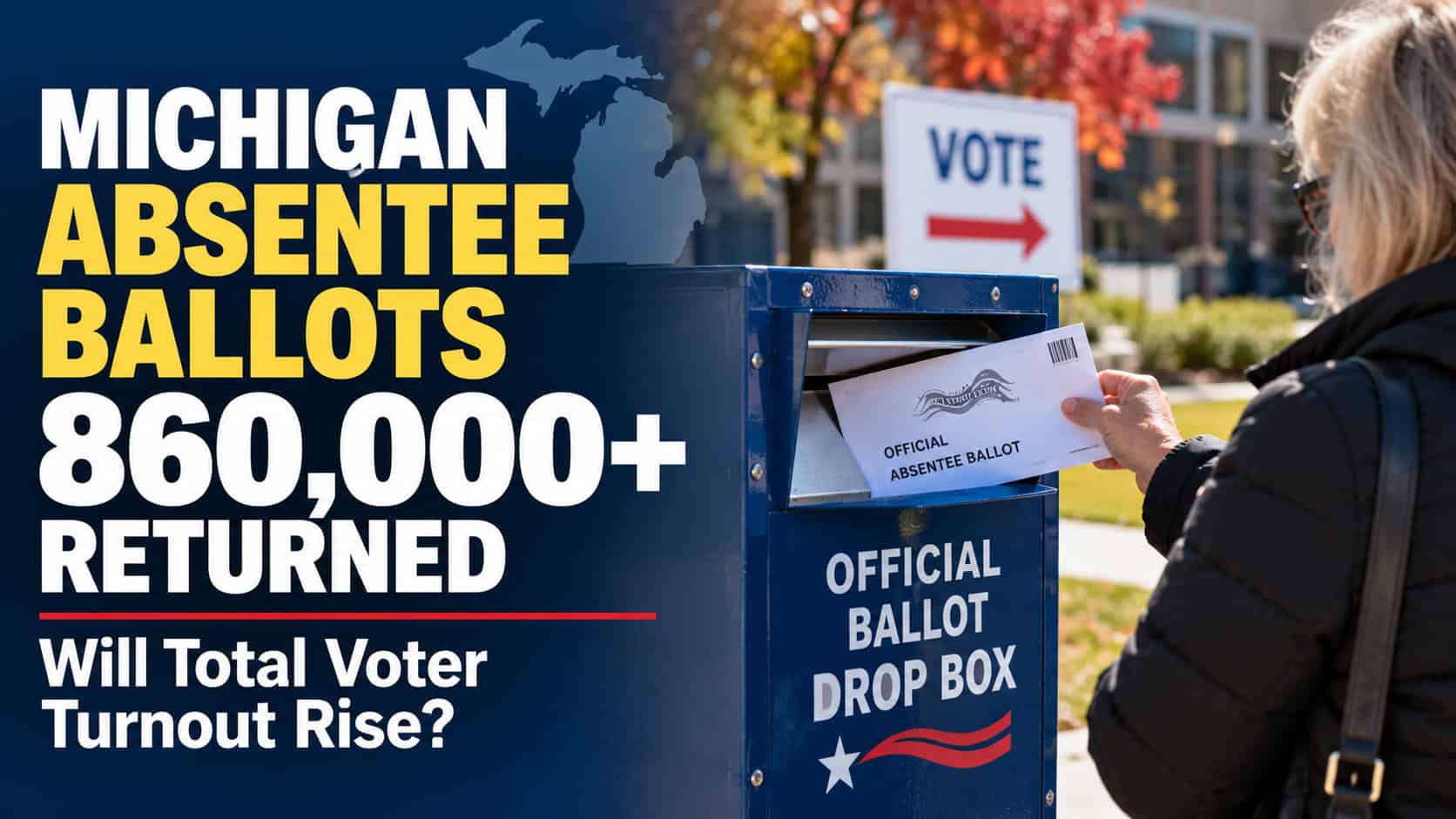
On Oct. 1, USPS announced extraordinary measures for the midterms, including expedited ballot handling, additional deliveries and pickups and extended hours at some postal facilities.
Justice Department Sought Michigan’s Voter File — And Lost In Court
A second major confrontation involved Michigan’s Qualified Voter File.
The Justice Department demanded an unredacted electronic copy of Michigan’s statewide voter-registration database containing sensitive information including full dates of birth, driver’s-license numbers, Social Security numbers and personal identification-card numbers.
DOJ said it wanted the information to determine Michigan’s compliance with federal voter-list maintenance requirements.
Michigan provided a public version with personal identifying information redacted but refused to provide the complete unredacted database.
The federal government sued.
The lawsuit initially asserted claims under the National Voter Registration Act, Help America Vote Act and Title III of the Civil Rights Act of 1960.
The federal district court rejected the government’s claims.
DOJ appealed the remaining Civil Rights Act issue.
On June 24, the U.S. Sixth Circuit Court of Appeals affirmed dismissal, concluding that Michigan’s Qualified Voter File was not a record subject to disclosure under the provision of the Civil Rights Act invoked by DOJ.
DOJ sought rehearing before the full Sixth Circuit.
The court denied that request Aug. 17.
DOJ Can Monitor Michigan Elections
The federal government nevertheless retains significant election-law enforcement authority.
The Justice Department’s Civil Rights Division enforces federal laws including the Voting Rights Act, National Voter Registration Act, Help America Vote Act, Uniformed and Overseas Citizens Absentee Voting Act, Americans with Disabilities Act and Civil Rights Acts.
DOJ says it regularly deploys personnel to monitor compliance with federal civil-rights laws during elections.
During Michigan’s Aug. 4 primary, DOJ personnel monitored polling locations in Detroit, Hamtramck, Lansing and East Lansing.
The Justice Department said its monitoring was intended to ensure transparency, ballot security and compliance with federal law.
DOJ also said Civil Rights Division personnel would remain available through Nov. 3 to receive questions and complaints about possible violations of federal voting-rights laws.
Federal monitoring does not transfer administration of Michigan elections to the Justice Department. State and local election officials continue to administer elections under Michigan and applicable federal law.
Could Trump Send Troops To Polling Places?
Federal law imposes a specific restriction.
Under 18 U.S.C. §592, a federal official who orders, brings or keeps troops or armed personnel under federal authority at a location where a general or special election is being held can face criminal penalties.
The statute contains an exception when such force is necessary to repel armed enemies of the United States.
Gen. Dan Caine, chairman of the Joint Chiefs of Staff, said in August that the military has no plans to send federal military personnel or federalized National Guard members to polling places during the midterms.
Caine also said the military has no plans to seize ballots, voting machines or other election-related materials.
The Federal Government Still Has Significant Authority
The limits on presidential power do not mean Washington has no role in elections.
Congress has enacted numerous federal election laws.
DOJ can enforce federal voting-rights laws and investigate suspected violations of federal criminal law. Federal courts can also issue orders affecting election procedures when litigants establish a legal basis for judicial intervention.
The distinction is important:
The federal government possesses specific powers granted by the Constitution and federal statutes. The president does not possess general authority to take over Michigan’s election administration.
COULD THE PRESIDENT DO THIS?
Cancel or postpone the Nov. 3 congressional election by executive order?
No. Election Day is established by federal law, and the Constitution gives election-regulation authority to states and Congress rather than the president.
Order Michigan to stop conducting its election?
Not through presidential order alone. Michigan administers its elections subject to Michigan and applicable federal law. Courts can intervene when a valid legal case establishes grounds for doing so.
Impose the administration’s new USPS mail-ballot requirements for this election?
Not under the current court orders. The challenged mandatory provisions are blocked for the November election.
Obtain Michigan’s unredacted Qualified Voter File under the Civil Rights Act theory DOJ pursued?
Not under the Sixth Circuit’s ruling. The appeals court rejected that claim, and the full court subsequently declined rehearing.
Send Justice Department election monitors to Michigan?
Yes. DOJ has federal election-law enforcement responsibilities and monitored four Michigan cities during the August primary.
Station military troops at polling places for ordinary election-security purposes?
Federal law prohibits federal officials from bringing or keeping troops or armed personnel at election locations, subject to the statute’s narrow exception for repelling armed enemies of the United States.
Investigate suspected violations of federal election law?
Yes. Federal law-enforcement agencies retain their lawful investigative and enforcement authority.
What Happens After Nov. 3?
Election Day presents only one set of legal questions.
The period after the polls close raises another.
Could federal investigators obtain Michigan ballots or voting equipment while votes are still being counted?
Could a federal criminal investigation delay certification?
Under what circumstances could a federal court stop certification of a congressional race?
What happens if Michigan certifies a winner while a federal investigation remains underway?
And who ultimately resolves a contested U.S. House or Senate election?
Those questions involve Michigan election law, federal criminal authority, the federal courts and Congress’s constitutional authority over elections and qualifications of its own members.
Part 2 of this MITechNews series will examine what can — and cannot — happen after Michigan voters cast their ballots Nov. 3.