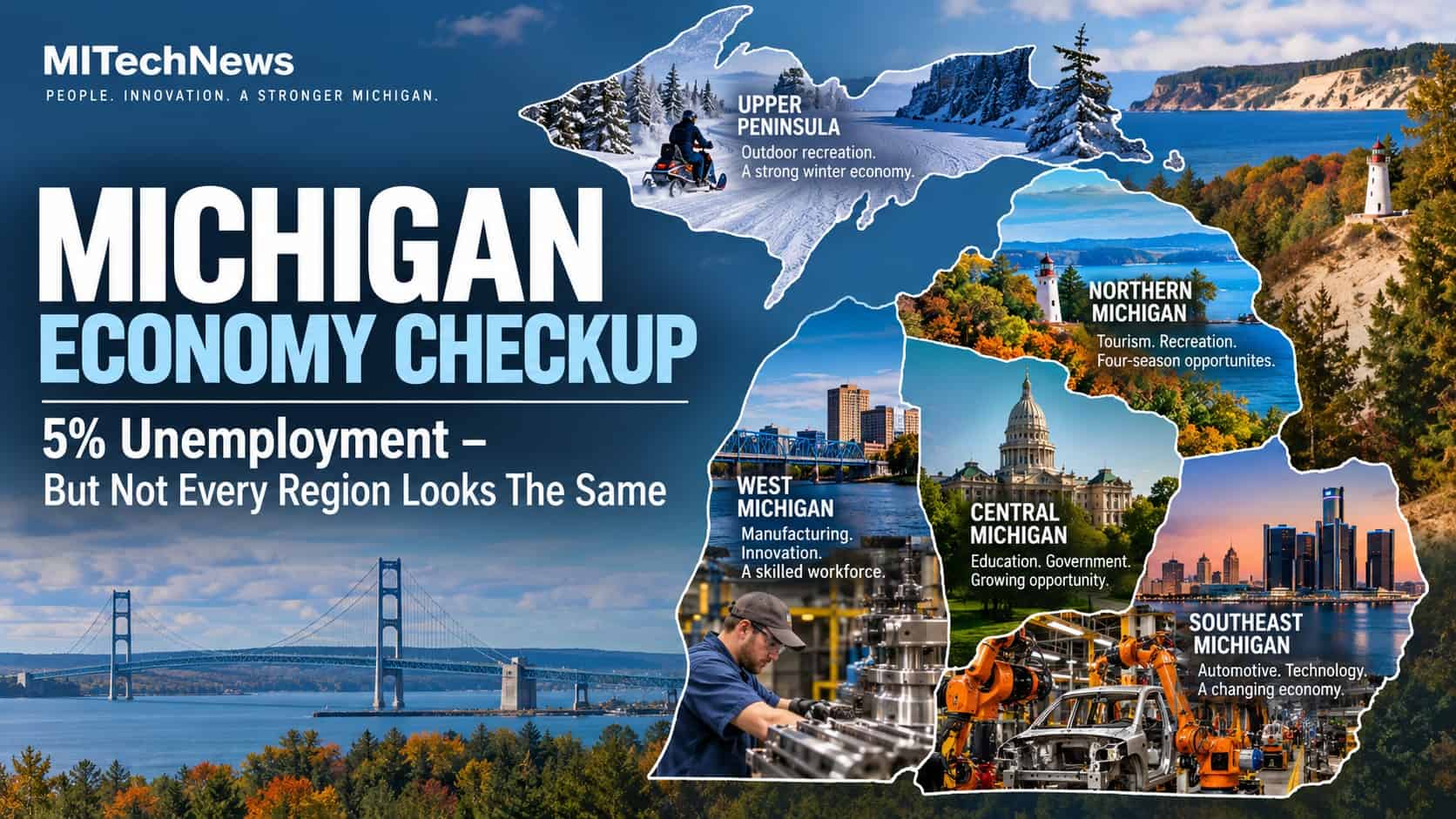
WASHINGTON — A sharp slowdown in U.S. hiring could be particularly troubling for Michigan, where unemployment already stands at 5.0 percent — well above the national rate — and the state lost 25,000 employed workers in August.
The U.S. economy added just 29,000 jobs in September, while the national unemployment rate increased to 4.2 percent, according to the latest federal jobs report.
For Michigan workers, there was one encouraging sign: manufacturing added 9,000 jobs nationally in September. But weakness in professional and business services and financial activities raises concerns for a state heavily dependent on manufacturing as well as thousands of white-collar jobs tied to the auto industry and other major employers.
And workers face another problem: paychecks are struggling to keep pace with prices.
The latest available Consumer Price Index shows prices were 3.4 percent higher in August than a year earlier, while average hourly earnings have been growing at roughly 3 percent annually. Real average hourly earnings — wages adjusted for inflation — declined 0.1 percent in August.
Michigan’s September employment report won’t be released until Oct. 20, so it is too early to know whether the sharp national hiring slowdown continued here during September.
But Michigan entered the month in a relatively vulnerable position.
The state’s 5.0 percent August unemployment rate was nearly a full percentage point above the national rate, while the number of employed Michigan residents fell by approximately 25,000 during August. The state’s labor force also declined by roughly 25,000.
Those numbers make the September national report especially relevant to Michigan workers and employers.
Previous Months Revised Down
The September report wasn’t weak only because employers added just 29,000 jobs.
The federal government also revised previous employment estimates substantially lower.
July employment was revised from a gain of 21,000 jobs to a loss of 10,000, while August was revised from 162,000 jobs added to 133,000.
Combined, July and August employment was 60,000 jobs lower than previously reported.
The three most recent months now look like this:
- July: -10,000 jobs
- August: +133,000 jobs
- September: +29,000 jobs
Together, employers added approximately 152,000 jobs over those three months, an average of only about 51,000 per month.
That represents a substantial slowdown from the pace of job creation earlier in the economic expansion.
Where Jobs Were Added
The September report wasn’t uniformly negative.
Health care added 17,000 jobs, making it one of the strongest major employment sectors during September, although hiring was below the industry’s average of about 33,000 jobs per month during the previous year.
Construction added 11,000 jobs, roughly matching its recent monthly average.
For Michigan, perhaps the most important number was manufacturing’s gain of 9,000 jobs nationally.
Manufacturing employment has increased by about 72,000 jobs since reaching a recent low in December 2025.
Whether Michigan participated in that rebound won’t be known until the state’s September employment report is released.
Where Jobs Were Lost
Other parts of the economy moved in the opposite direction.
Financial activities lost 7,000 jobs in September.
Professional and business services also remained weak, continuing concerns about hiring in white-collar occupations.
That matters in Michigan beyond Detroit’s factory floors. Automakers, suppliers, banks, insurers, technology companies and other major employers support large numbers of workers in engineering, information technology, finance, accounting, administration and other professional occupations.
Weakness in those sectors therefore can affect Michigan even when national manufacturing employment is increasing.
Unemployment Moves Higher
The national unemployment rate increased to 4.2 percent in September, compared with 4.1 percent in August.
About 7.1 million Americans were unemployed.
Another 4.5 million Americans were working part time for economic reasons — people who wanted full-time employment but couldn’t find it or had their hours reduced.
Approximately 1.9 million Americans had been unemployed for 27 weeks or longer.
Wages Versus Inflation
For workers who have jobs, the purchasing-power numbers also deserve attention.
Average wages are increasing, but recent wage growth of roughly 3 percent annually is slightly below the latest 3.4 percent annual inflation rate.
That doesn’t mean every worker is worse off. Wage changes vary considerably by occupation and industry, while individual households experience inflation differently depending on what they buy.
But nationally, the latest BLS figures show that real average hourly earnings declined 0.1 percent in August after adjusting wages for inflation.
September inflation numbers have not yet been released. The Bureau of Labor Statistics is scheduled to release the September Consumer Price Index Oct. 14.
Michigan Numbers Come Next
The next important test for Michigan comes Oct. 20, when the state releases its September employment report.
That report should provide a clearer answer to several questions: Did Michigan unemployment continue rising? Did manufacturing participate in the national September increase? Did employment continue declining? And did Michigan’s labor force shrink again?
For now, the national report sends a mixed but increasingly cautious signal.
American employers are still adding jobs, but hiring has slowed dramatically. Michigan entered that slowdown with unemployment already substantially above the national rate.
For Michigan workers, that makes what happens next in manufacturing and white-collar employment particularly important.