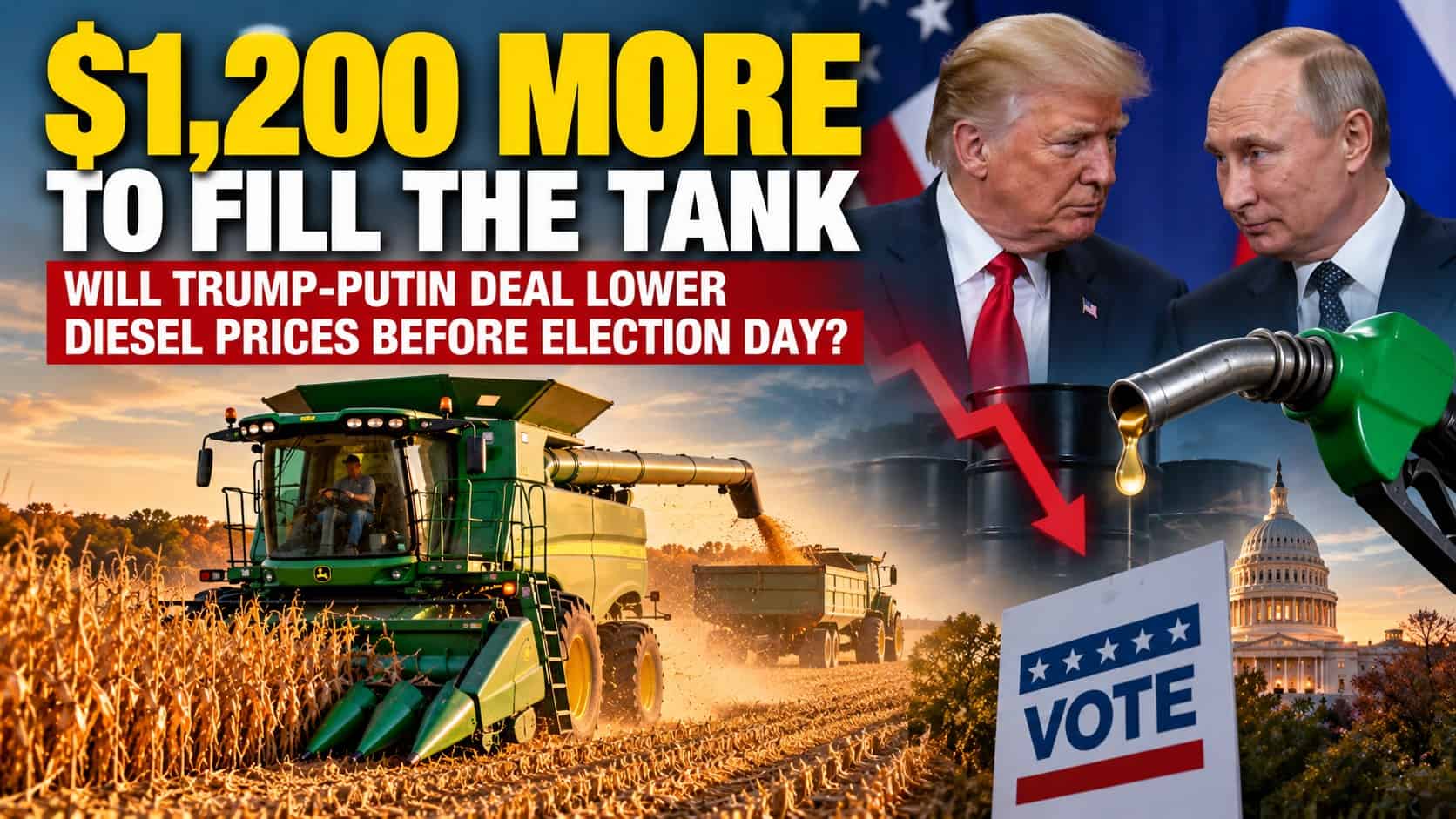
Part 2 of a series on how huge increases in gas prices are impacting Michigan’s economy and politics.
ANN ARBOR = As gasoline prices climb toward $5 per gallon across parts of Michigan, economists and political analysts are beginning to examine whether the growing global oil shock could eventually reshape the state’s 2026 midterm elections.
What initially appeared to be a distant geopolitical crisis centered around Iran and the Strait of Hormuz is increasingly becoming a kitchen-table economic issue for Michigan voters.
And because Michigan remains heavily dependent on automobiles, agriculture and long-distance commuting, analysts say the political fallout could become especially significant in a battleground state already expected to play a major national role in the midterms.
Economists warn the full economic impact of rising oil prices may not arrive until August through October as higher fuel costs gradually spread through food prices, transportation, tourism and consumer spending.
That timing overlaps directly with the heart of campaign season.
Part 1: Rising Oil Prices Threaten Michigan’s Three Economic Pillars As Iran Crisis Ripples Through Global Markets
Consumer Anxiety Already Rising
The University of Michigan’s widely watched consumer sentiment index recently fell to one of its weakest readings on record as Americans expressed growing concern over inflation, gasoline prices and household finances.
Joanne Hsu, director of the University of Michigan’s Surveys of Consumers, said inflation fears and financial uncertainty continue weighing heavily on consumers nationally.
“Consumers continue to express somber views about the economy,” Hsu said in the latest survey release.
AAA reported Michigan gasoline prices recently averaged roughly $4.72 per gallon statewide, with some areas approaching or exceeding $5. Diesel prices have climbed near $6 in parts of the state, raising concerns for trucking and agriculture.
Economists at Goldman Sachs recently warned higher fuel prices are increasingly reducing discretionary spending power for middle- and lower-income households.
Inflation Spike Adds New Political Pressure
New inflation numbers released Tuesday showed consumer prices rising 3.8 percent annually in April, the highest level in nearly three years as rising fuel costs tied to the Iran conflict spread deeper through the economy.
The Bureau of Labor Statistics reported gasoline prices jumped 28.4 percent year-over-year while overall energy costs surged 17.9 percent.
Economists warned the latest inflation report may only represent the early stages of broader price increases expected later this summer as higher fuel, transportation and fertilizer costs work their way through the economy.
Samuel Tombs, chief U.S. economist at Pantheon Macroeconomics, told Reuters that inflation pressures tied to energy prices remain a growing concern despite hopes some tariff-related pressures may eventually ease.
The inflation surge is creating growing political risks for Republicans nationally and in Michigan, particularly because many GOP candidates have strongly aligned themselves with President Donald Trump and his Iran policies.
Democrats Move To Tie Crisis To Trump Policies
Democrats are increasingly attempting to connect rising gasoline prices directly to Trump administration foreign policy decisions and the widening Iran conflict.
Several Democratic lawmakers have openly referred to the conflict as “Trump’s war,” arguing the administration underestimated the economic consequences of military escalation involving Iran and the Strait of Hormuz.
Reuters/Ipsos polling released in recent weeks found many voters increasingly blame Washington leadership for rising gasoline prices regardless of the broader geopolitical complexities.
The poll found 77 percent of registered voters believe Trump bears at least some responsibility for the gasoline spike tied to the Iran conflict.
Sen. Angus King, the Maine independent who caucuses with Democrats, sharply criticized the administration’s handling of the conflict in recent interviews.
“I wish the administration thought about this before they started this unnecessary war,” King said.
Political analysts say Democrats are likely to aggressively focus on:
- gasoline prices
- grocery inflation
- household budgets
- farming costs
- auto industry pressures
throughout the midterm campaign season.
Michigan Republicans Closely Linked To Trump
The political dynamics could create a difficult environment for Michigan Republicans, many of whom have strongly aligned themselves with President Donald Trump and his economic agenda.
Former Congressman Mike Rogers, now the leading Republican Senate candidate in Michigan, praised Trump after receiving the president’s endorsement last year, saying the backing gave him a “clear shot” at flipping Michigan’s Senate seat.
Michigan Senate Republican Leader Aric Nesbitt has also publicly aligned himself with Trump on major national issues, recently affirming Trump’s calls for federal oversight of Michigan elections.
Political analysts say that connection could become more complicated if voters increasingly associate:
- high gasoline prices
- food inflation
- economic anxiety
- rising household costs
with the current administration.
William Galston, senior fellow at the Brookings Institution, recently warned that sustained gasoline spikes historically create major political risks for incumbent parties.
“Energy prices have always had an outsized psychological impact on voters,” Galston said in Brookings analysis examining previous oil shocks and election cycles.
Republicans Argue Crisis Is Global, Not Domestic
Republicans and White House allies argue the crisis stems primarily from geopolitical instability and national security concerns rather than domestic economic policy.
Trump supporters maintain military action against Iran was necessary to protect global shipping routes and American strategic interests in the Middle East.
Republicans also argue energy prices could stabilize quickly if tensions ease in the Strait of Hormuz and global oil shipping resumes normally.
Trump has additionally floated suspending the federal gasoline tax temporarily as a way to provide consumer relief if gasoline prices continue climbing.
Political strategists say Republicans are expected to frame the crisis as:
- a national security challenge
- a temporary global energy disruption
- an unavoidable geopolitical conflict
rather than a policy failure originating in Washington.
Rural Michigan Could Become Politically Volatile
Some analysts believe Michigan’s rural farming communities may become one of the biggest political wild cards if fertilizer shortages and diesel prices continue climbing.
Agriculture contributes more than $100 billion annually to Michigan’s economy when food processing and related industries are included, according to the Michigan Farm Bureau.
Farmers depend heavily on:
- diesel fuel
- fertilizer
- transportation
- equipment financing
And all four areas are vulnerable to sustained oil disruptions.
Richard Czuba, founder of the Michigan-based Glengariff Group, recently warned that suburban and independent voters are already showing signs of economic frustration tied to inflation and household costs.
“The economy almost always overwhelms ideology when voters begin feeling financial stress personally,” Czuba said in recent election analysis.
Political strategists say inflation historically becomes especially dangerous politically when voters simultaneously feel pressure at:
- the gas pump
- grocery store
- utility bills
- credit card statements
That combination could create frustration even among traditionally loyal Republican voting blocs.
Auto Workers And Suburban Voters Could Shift
Michigan suburban voters may become another major pressure point.
Families across:
- Oakland County
- Macomb County
- Washtenaw County
- Kent County
already face:
- elevated mortgage rates
- expensive vehicle payments
- higher insurance costs
- lingering inflation fatigue
If gasoline prices remain elevated into August while food prices continue climbing, analysts say household frustration could intensify rapidly.
Michigan’s auto industry also remains politically sensitive.
Historically, economic uncertainty tied to:
- layoffs
- supplier slowdowns
- reduced overtime
- weaker dealership traffic
can quickly influence voter sentiment in manufacturing-heavy regions.
The Brookings Institution recently noted that consumer frustration tied to gasoline prices often outweighs broader economic indicators because fuel costs are highly visible and psychologically immediate for voters.
Echoes Of Previous Oil Crises
Some political historians are beginning to compare the current situation to earlier oil shocks that reshaped American politics during the 1970s and early 1980s.
Periods of:
- rising gasoline prices
- inflation
- economic uncertainty
have historically damaged public confidence in national leadership.
Michigan often becomes one of the clearest indicators of that frustration because the state sits at the intersection of:
- manufacturing
- transportation
- agriculture
- middle-class consumer spending
The current oil shock may ultimately test whether partisan loyalty remains stronger than economic anxiety among Michigan voters.
A Political Storm Still Developing
For now, much depends on whether tensions in the Strait of Hormuz stabilize in coming weeks or continue escalating through summer.
If energy prices ease, political fallout may remain limited.
But if gasoline prices remain elevated into August and food inflation accelerates heading into fall, Michigan’s midterm elections could increasingly become a referendum on household economic stress.
And in a state where many Republican candidates remain strongly aligned with Trump, the political consequences of the global oil crisis may eventually reach far beyond the gas pump.