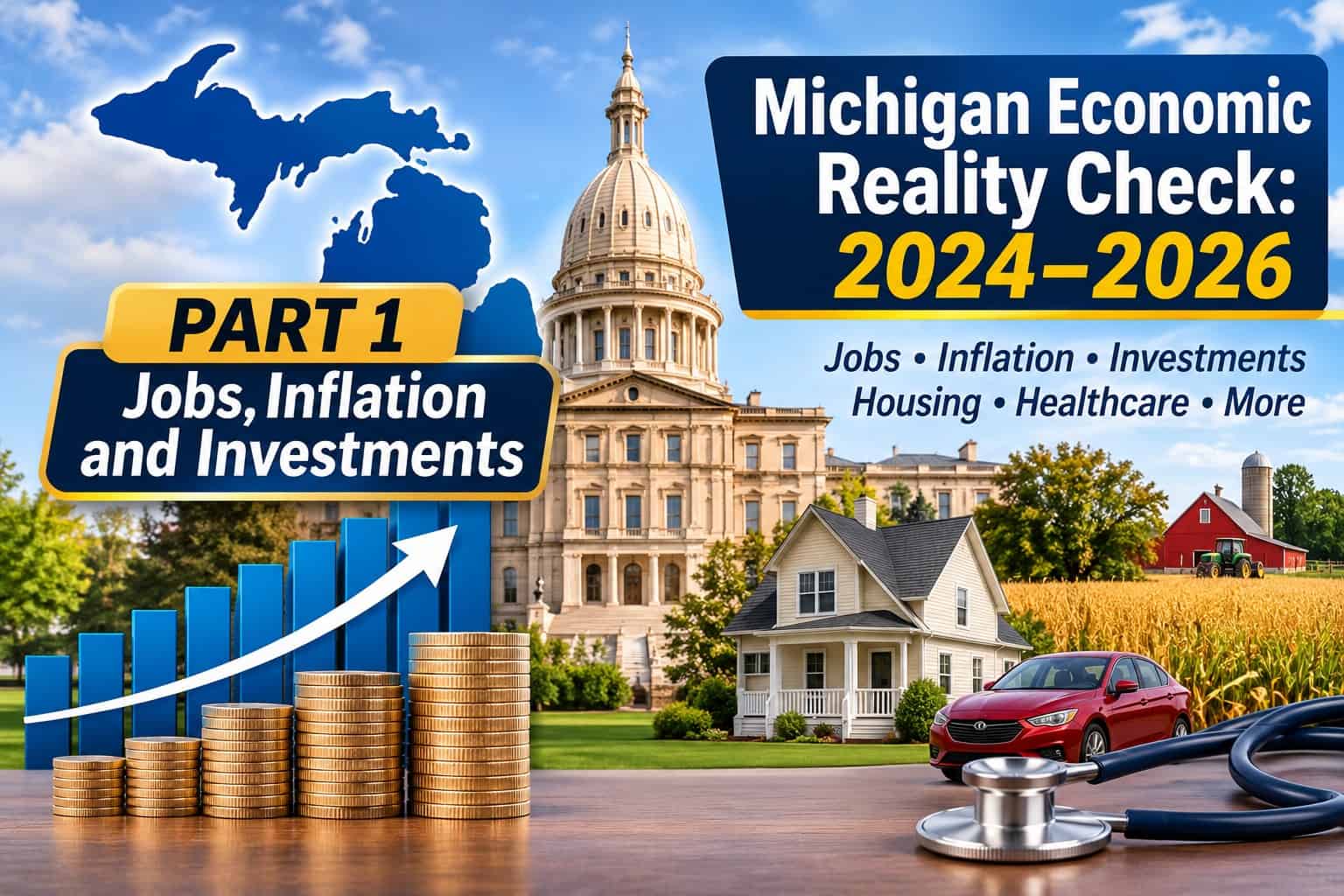
For Michigan, the consequences could spread across nearly every sector of the economy.
AAA reported Michigan’s average gasoline price reached roughly $4.72 per gallon this week, with Ann Arbor approaching $4.80 and some areas of the state nearing $5 per gallon. Diesel prices are already averaging nearly $6 statewide, raising concerns about additional pressure on farming, trucking and food transportation costs later this summer.
Analysts warn Michigan gasoline prices could remain between $4.75 and $5.50 per gallon through August if disruptions continue in the Middle East and global oil shipping lanes remain unstable.
Pillar No. 1: Michigan’s Auto Industry
Michigan’s economy remains deeply tied to the automotive sector, including:
- vehicle manufacturing
- suppliers
- dealerships
- logistics
- transportation companies
Historically, prolonged gasoline spikes often weaken demand for:
- large SUVs
- pickup trucks
- higher-priced vehicles
That creates growing concern for Detroit automakers:
- General Motors
- Ford Motor Company
- Stellantis
Industry analysts say Michigan suppliers often feel economic slowdowns before automakers publicly acknowledge them.
Potential warning signs could include:
- reduced overtime
- slower parts orders
- temporary production cuts
- weaker dealership traffic
- slowing auto financing activity
Michigan’s auto sector is already navigating:
- high interest rates
- EV transition costs
- increased Chinese EV competition
- weakening consumer confidence
Higher fuel prices could intensify those pressures significantly by late summer.
Pillar No. 2: Michigan Tourism
Michigan’s tourism industry is also highly vulnerable to sustained gasoline price increases.
According to Travel Michigan and Tourism Economics, Michigan’s tourism industry generated roughly $54.8 billion in economic impact in 2024 and supports more than 350,000 jobs statewide.
That includes:
- hotels
- restaurants
- campgrounds
- wineries
- breweries
- marinas
- festivals
- lake communities
- Mackinac tourism
- Traverse City tourism
- Upper Peninsula tourism
If gasoline prices move toward $5 per gallon nationally, economists warn many families could begin reducing discretionary travel spending.
Northern Michigan businesses are particularly exposed because so much of the region’s economy depends on:
- summer driving vacations
- boating
- weekend tourism
- recreational spending
By August, many families could also face:
- rising air conditioning costs
- back-to-school expenses
- higher grocery bills
- mounting credit card balances
Economists say that combination often causes consumers to sharply reduce discretionary spending later in the summer.
The University of Michigan’s closely watched consumer sentiment survey recently fell to one of the lowest levels in its history as Americans expressed rising concern over inflation and household finances.
Energy analysts also warn gasoline prices could remain elevated even if crude oil prices stabilize because refiners may prioritize producing more profitable jet fuel and diesel during the busy summer travel season. Strong airline demand and rising diesel margins could reduce gasoline supply at a time when Michigan drivers are already facing some of the highest fuel prices in years.
Pillar No. 3: Michigan Agriculture
Michigan agriculture may become one of the most vulnerable sectors if the global energy disruption continues.
Agriculture contributes more than $100 billion annually to Michigan’s economy when food processing and related industries are included, according to the Michigan Farm Bureau.
Michigan ranks among the nation’s most diverse agricultural states, producing:
- corn
- soybeans
- dairy
- apples
- cherries
- blueberries
- potatoes
- cucumbers
- asparagus
Modern fertilizer production depends heavily on:
- natural gas
- petroleum
- global chemical supply chains
As oil and natural gas prices rise:
- fertilizer prices increase
- shipping slows
- supplies tighten
- diesel costs climb
That creates major risks for farmers already operating under tight margins.
Farmers depend heavily on diesel fuel for:
- tractors
- combines
- irrigation systems
- transport trucks
If fertilizer shortages and diesel price spikes continue into harvest season, economists warn food inflation could rise sharply later this year.
Consumers Already Showing Signs Of Anxiety
Some Michigan consumers are already beginning to change spending behavior in anticipation of higher prices later this summer.
One Ann Arbor-area resident told MITechNews he plans to begin purchasing bulk food supplies now to avoid what he expects could be significantly higher grocery prices by August if oil prices continue climbing.
Economists closely monitor this type of consumer behavior because it often signals growing financial anxiety.
When households begin:
- stockpiling essentials
- delaying vacations
- postponing vehicle purchases
- reducing restaurant spending
the broader economy can begin slowing quickly.
Inflation Could Reignite
Energy prices affect nearly every part of the economy.
Higher oil prices increase costs for:
- trucking
- manufacturing
- refrigeration
- plastics
- food transportation
- retail shipping
That creates the risk of a second wave of inflation even after years of aggressive Federal Reserve interest rate policies designed to stabilize prices.
If inflation accelerates again, interest rates could remain elevated longer than businesses and consumers expected.
The Political Fallout May Only Be Beginning
Beyond the economic risks, analysts say prolonged gasoline and food price increases could eventually reshape Michigan’s political landscape heading into the 2026 midterm elections.
Historically, voters often blame whichever party controls the White House during periods of rising inflation and energy costs, regardless of the underlying geopolitical causes. In a state like Michigan — where automobiles, commuting, manufacturing and consumer spending remain central to daily life — sustained increases in fuel and grocery prices could quickly become a major political issue.
If the current oil disruption continues through late summer and into fall, economic anxiety tied to gasoline prices, household budgets, auto industry stability and food costs could increasingly influence voter sentiment across Michigan’s Senate race, congressional contests and key suburban swing districts.
For now, economists remain focused on whether tensions in the Strait of Hormuz ease in coming weeks or evolve into a prolonged global energy disruption.
But one thing is becoming increasingly clear:
The economic effects of the Iran oil crisis may only be starting to reach Michigan — and the political consequences could follow close behind.
MITechNews will examine the potential political impact on Michigan voters, candidates and the 2026 midterm elections in a follow-up report.