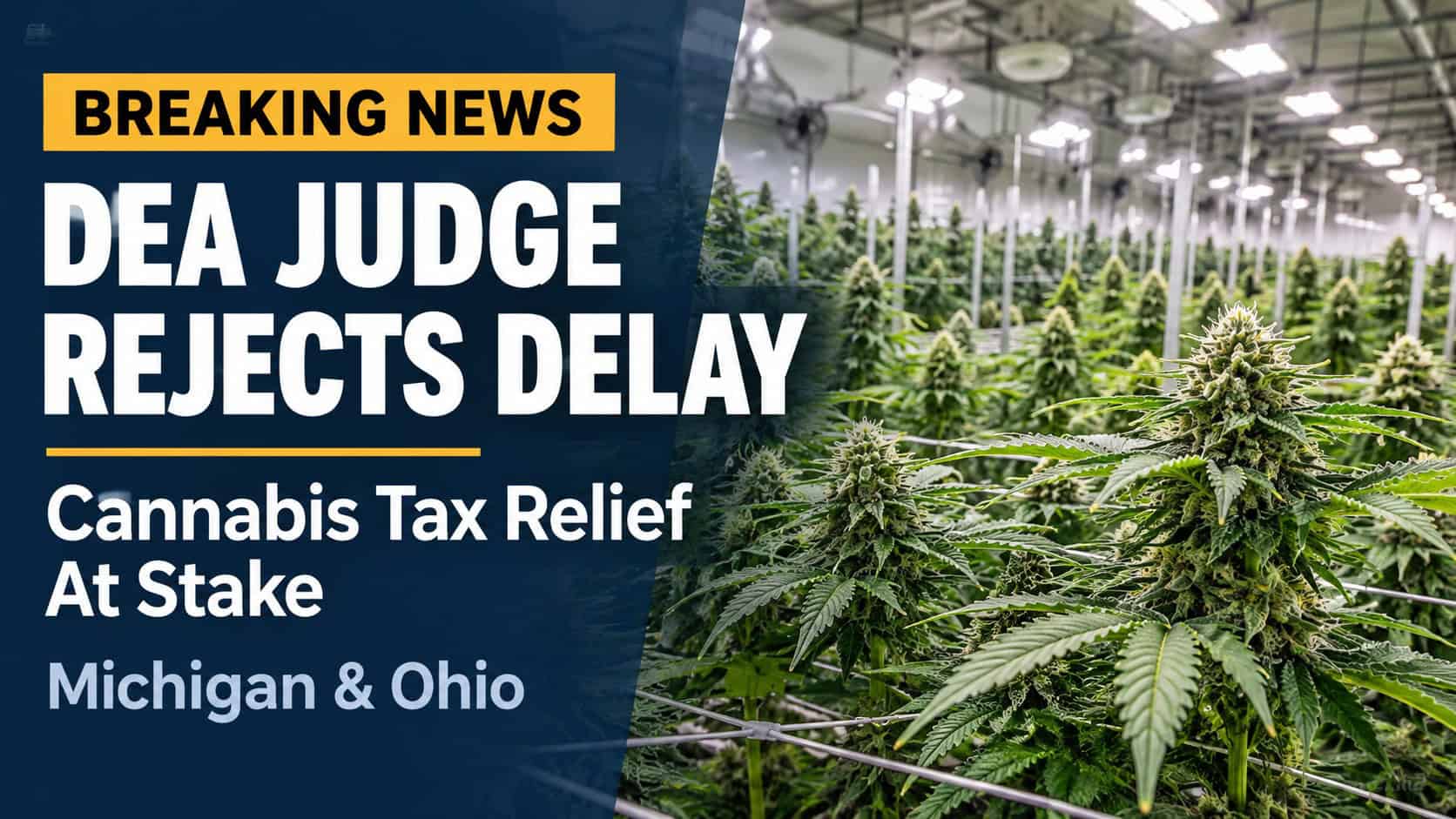
WASHINGTON DC – Michigan and Ohio cannabis operators are closely watching a new federal court ruling that could signal another step toward mainstream healthcare acceptance of hemp-derived cannabinoid products.
The federal government is beginning to treat cannabis-adjacent products less like prohibited substances and more like healthcare tools after a federal judge dismissed a lawsuit challenging a Medicare-related hemp coverage program.
The ruling allows the pilot-style reimbursement program to continue moving forward for now and is being viewed by parts of the cannabis industry as another sign that federal healthcare systems may slowly be opening the door to broader cannabinoid wellness participation.
For cannabis companies in Michigan and Ohio — two of the Midwest’s largest legal marijuana markets — the implications could eventually extend far beyond hemp-derived CBD products.
Industry operators say the case touches on one of the sector’s biggest long-term opportunities: integrating cannabinoid wellness products into mainstream insurance and healthcare reimbursement systems.
The lawsuit had been filed by anti-marijuana organization Smart Approaches to Marijuana and other plaintiffs seeking to block a program that reportedly allows eligible Medicare Advantage participants access to certain hemp-derived wellness products, including CBD products with limited THC content.
But the federal judge dismissed the case largely on procedural grounds, ruling the plaintiffs failed to demonstrate direct legal harm or standing necessary to continue the lawsuit.
For cannabis operators, hemp companies, investors and dispensary owners across the Midwest, the significance extends beyond one court battle.
The hemp reimbursement pilot is being viewed by portions of the cannabis industry as another sign federal healthcare agencies may slowly be moving toward broader institutional acceptance of cannabinoid wellness products.
Why The Case Matters
The healthcare reimbursement issue has long represented one of the cannabis industry’s biggest barriers to broader adoption.
Even in states with legal recreational or medical cannabis markets, marijuana products remain federally illegal, creating major obstacles involving:
- insurance reimbursement,
- physician prescribing,
- banking access,
- interstate commerce,
- and federal healthcare participation.
The hemp industry occupies a somewhat different legal category following passage of the 2018 Farm Bill, which legalized hemp containing less than 0.3% delta-9 THC.
That distinction opened the door for rapid expansion of CBD products nationwide, including wellness tinctures, gummies, creams and supplements now sold in pharmacies, grocery stores, wellness shops and cannabis dispensaries.
The Medicare-related hemp program now attracting national attention appears to push that normalization process even further by introducing federally connected healthcare reimbursement mechanisms into the cannabinoid market.
For many operators in the cannabis industry, the possibility of federally connected healthcare reimbursement represents a significant psychological turning point.
If federal healthcare systems continue experimenting with cannabinoid wellness reimbursement models, industry observers believe it could eventually reshape how hemp-derived wellness products are viewed by insurers, physicians, healthcare providers and older consumers.
Michigan And Ohio Could Have A Lot At Stake
Michigan remains one of the nation’s largest cannabis markets, with legal marijuana sales regularly exceeding $250 million per month.
Ohio’s adult-use recreational cannabis market is also expanding rapidly following voter approval of legalization, creating new opportunities for dispensaries, cultivators and cannabis-focused wellness brands across the region.
Both states also have large aging populations increasingly interested in alternative wellness products for:
- chronic pain,
- sleep disorders,
- inflammation,
- anxiety,
- and arthritis management.
That demographic overlap could become important if federally connected healthcare reimbursement programs involving hemp-derived products continue expanding.
Many older consumers who remain hesitant about recreational marijuana may feel more comfortable using cannabinoid wellness products if they become integrated into traditional healthcare systems.
Michigan and Ohio dispensaries are already seeing increased interest from older consumers, according to multiple industry operators.
If federal reimbursement systems eventually evolve to include broader cannabinoid wellness products, the long-term economic implications for Midwest cannabis markets could be substantial.
The cannabis sectors in both states already support:
- cultivation facilities,
- retail dispensaries,
- testing laboratories,
- logistics companies,
- marketing firms,
- security providers,
- software companies,
- and real estate development.
Expanded healthcare participation could eventually create entirely new verticals involving:
- medical wellness partnerships,
- physician-guided cannabinoid treatment programs,
- senior wellness markets,
- and insurance-related cannabis consulting services.
Cannabis Industry Sees Another Sign Of Federal Softening
The court decision also arrives during a period of broader federal evolution on cannabis policy.
While marijuana remains federally classified as a Schedule I controlled substance, pressure for reform continues growing from:
- veterans groups,
- healthcare advocates,
- state governments,
- investors,
- and portions of the medical community.
Federal regulators have also faced increasing pressure to provide clearer rules surrounding hemp-derived cannabinoids, particularly as CBD and low-dose THC products become more widely available nationwide.
Cannabis industry executives increasingly believe the federal government is moving slowly toward a framework where hemp cannabinoids become regulated similarly to wellness supplements or over-the-counter therapeutic products.
The Medicare-related reimbursement experiment could represent an early test case for how federal healthcare systems handle cannabinoid products in coming years.
That possibility concerns prohibition groups, which argue the programs could normalize cannabis use among seniors without sufficient medical oversight.
Supporters counter that hemp-derived cannabinoid products are already widely used across the United States and should be evaluated through evidence-based healthcare standards rather than decades-old political stigma.
Investors And Operators Watching Closely
The ruling is also drawing attention from cannabis investors searching for signs of long-term industry stabilization.
The legal cannabis industry has struggled nationally with:
- falling wholesale prices,
- heavy taxation,
- limited access to capital,
- oversupply problems,
- and continued federal restrictions.
Many public cannabis companies have seen valuations collapse from peak levels reached during earlier legalization optimism.
As a result, investors increasingly focus on signals showing cannabis and hemp products moving closer to mainstream institutional acceptance.
Healthcare reimbursement represents one of the largest potential growth catalysts because it could eventually open access to millions of older Americans who currently view cannabis products as outside the traditional healthcare system.
For Michigan and Ohio operators facing intense pricing pressure and growing competition, emerging wellness and healthcare-oriented business models may become increasingly attractive.
The federal court ruling does not immediately change marijuana legality or create nationwide Medicare cannabis coverage.
But industry observers say it may represent another small — yet symbolically important — step toward eventual integration of cannabinoid products into mainstream American healthcare.
And for an industry that has spent decades fighting for legitimacy, symbolism increasingly matters.