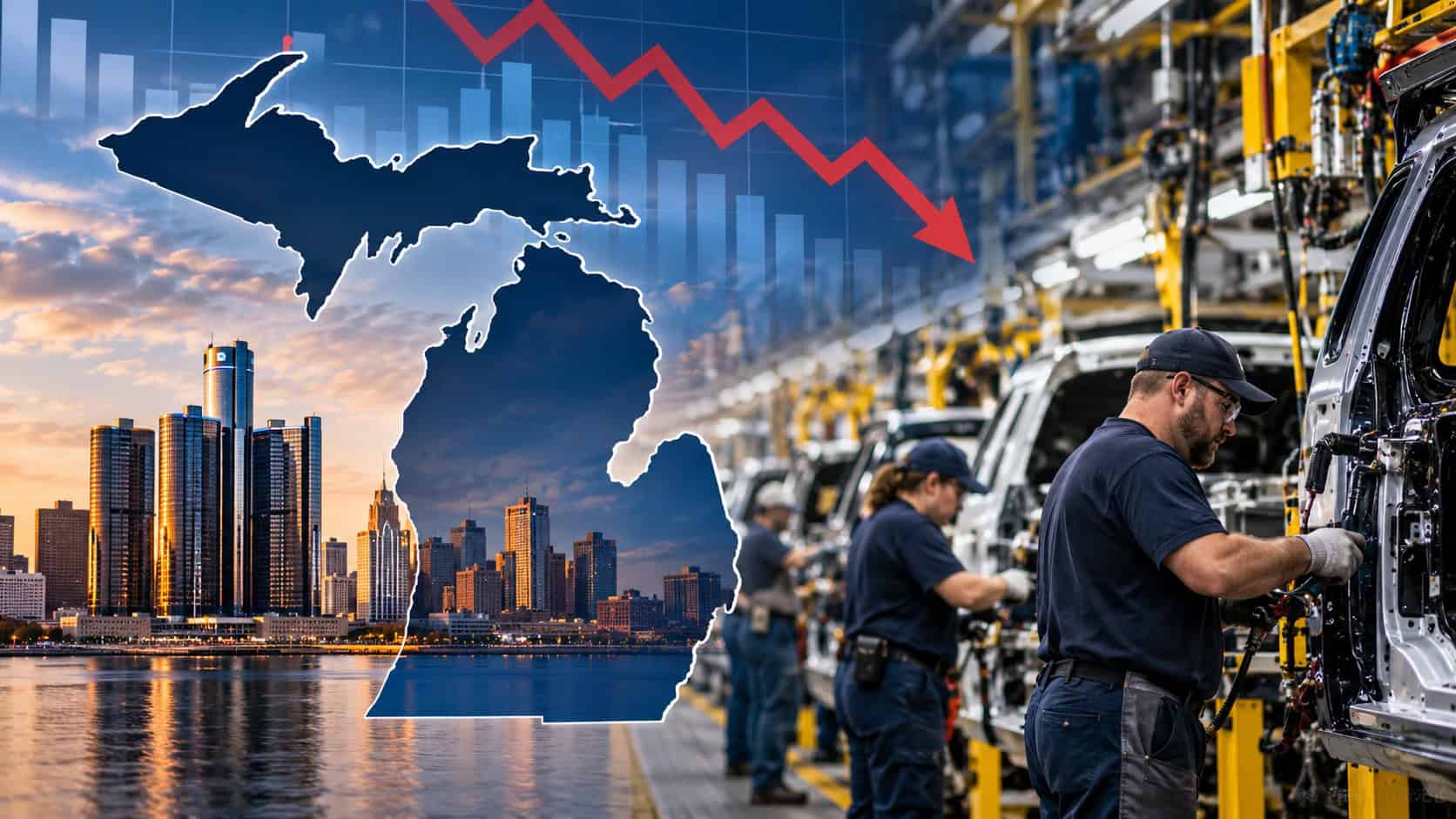
As tariffs raise prices on vehicles and consumer goods, the cost of President Trump’s trade policies is becoming an issue in Michigan’s Rogers-El-Sayed U.S. Senate race.
ANN ARBOR — President Donald Trump’s trade battles are increasingly moving from factory floors and international negotiating tables to someplace much closer to home: the family budget.
Current U.S. tariff policies are expected to cost the average American household about $1,100 a year, according to a new analysis from the nonpartisan Budget Lab at Yale.
The Budget Lab estimates tariffs now in effect will ultimately increase consumer prices by about 0.7 percent.
For Michigan consumers already confronting high prices for vehicles, food and other necessities, that raises a basic question:
Where does that additional $1,100 actually go?
It’s also becoming a political question as Republican Mike Rogers and Democrat Abdul El-Sayed compete for Michigan’s open U.S. Senate seat in a race that could help determine control of Congress.
$1,100 Isn’t Just From Canada
One distinction is important.
The $1,100 estimate is not the cost of Trump’s latest tariffs on Canada alone.
It represents Yale’s estimate of the household impact of the broader U.S. tariff policies now in effect, covering imports from countries around the world.
The latest Canadian tariffs account for only about $30 annually per household under their current structure, according to the Budget Lab.
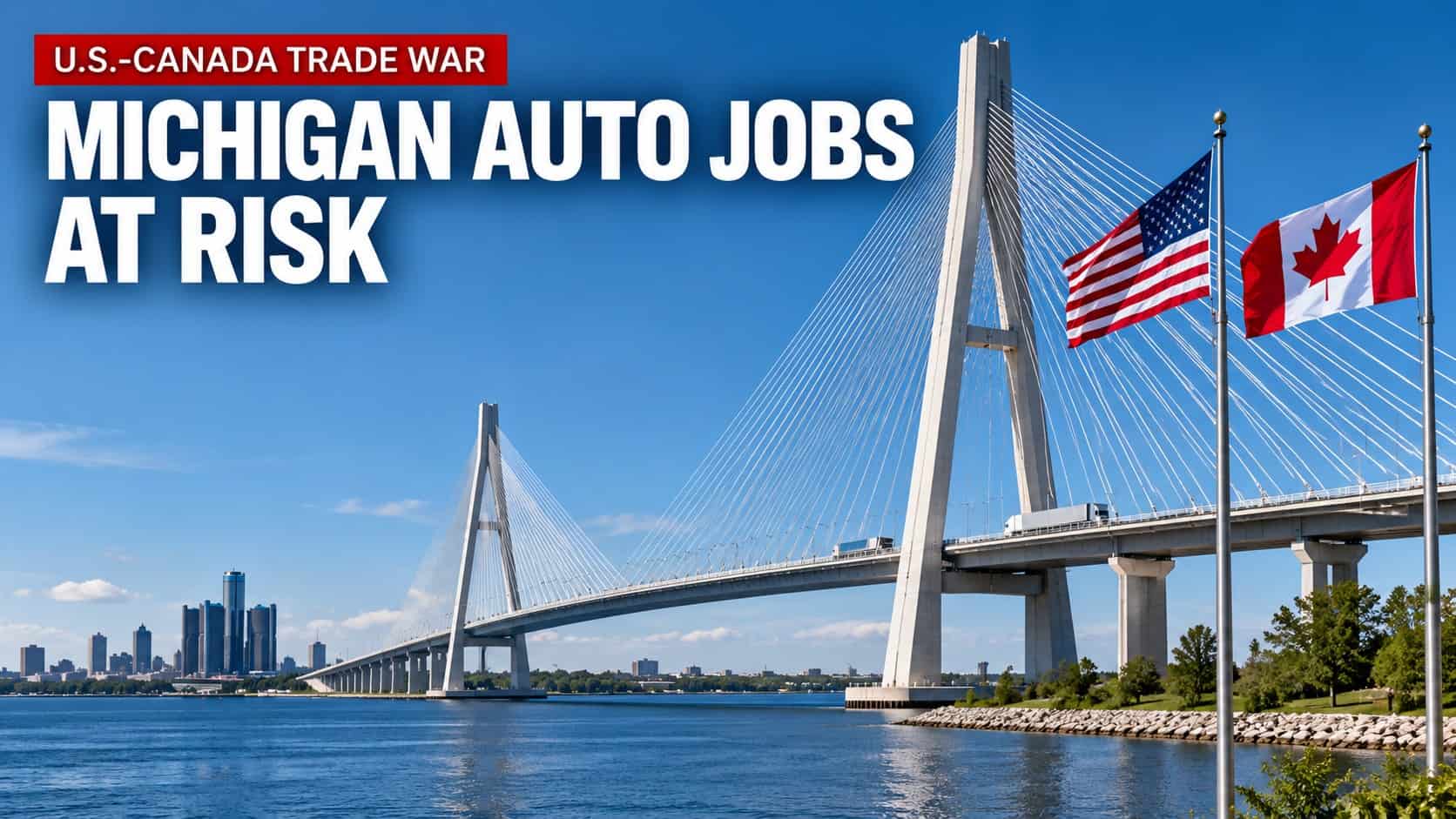
But Michigan has more at stake if the U.S.-Canada trade dispute escalates.
Trump has announced plans to double tariffs on Canadian cars, trucks and auto parts from 25 percent to 50 percent beginning in January.
That’s particularly significant for Michigan because the state’s auto industry is deeply integrated with Ontario. Parts and components can cross the U.S.-Canada border several times during production before a finished vehicle reaches a dealership.
How Tariffs Reach A Michigan Family
Tariffs are collected by the U.S. government from companies importing foreign goods.
But businesses don’t necessarily absorb the entire cost.
Some costs can be absorbed through lower profit margins or negotiated away through lower supplier prices. Others can be passed along to consumers through higher prices.
That’s how a tariff can eventually appear in the price of a car, appliance, piece of furniture, clothing or other consumer product.
Yale’s $1,100 estimate isn’t a tariff bill a family receives.
It’s the estimated accumulated additional cost of goods throughout the year because of tariffs.
For Michigan, automobiles and auto parts are especially important. Higher tariffs can affect families twice — through the price of vehicles they purchase and through their potential impact on the Michigan companies and workers producing those vehicles.
AT A GLANCE: How Tariffs Could Hit Michigan
$1,100 — Estimated annual cost of current U.S. tariff policies for the average American household, according to the Budget Lab at Yale.
0.7% — Estimated increase in U.S. consumer prices from tariffs now in effect.
$30 — Approximate portion of the annual household impact attributed to the latest Canadian tariffs under their current structure.
Cars & Auto Parts — Among the consumer categories particularly exposed to tariffs. Michigan’s risk is magnified by an automotive supply chain deeply integrated with Canada.
Michigan Manufacturers — Tariffs can raise the cost of imported components and materials, potentially squeezing profits or increasing prices.
Michigan Workers — Tariffs designed to protect American manufacturing could benefit some domestic producers, while retaliation, higher input costs and supply-chain disruptions could hurt others.
January 2027 — A major date to watch. The Trump administration has threatened 50 percent tariffs on Canadian cars, trucks and auto parts.
The Michigan Trade-Off
Tariffs present Michigan with an unusual economic dilemma:
They can protect Michigan manufacturers from foreign competition while simultaneously raising costs for Michigan manufacturers and consumers.
The central question is increasingly whether tariffs ultimately save Michigan families more than they cost them.
Tariffs Move Into Michigan Senate Race
That question is rapidly becoming political ammunition.
The U.S. Senate contest between Rogers and El-Sayed is expected to be among the country’s most closely watched races.
El-Sayed has attacked Trump’s tariffs as another cost imposed on Michigan households and businesses and has sought to tie Rogers directly to the president’s trade policies.
Rogers, meanwhile, has defended tariffs as an economic tool while arguing they should be used selectively.
“President Trump is right to put America First — and tariffs are necessary, but are not a one-size-fits-all solution,” Rogers said Saturday.
Rogers said that if elected he would work with Trump to negotiate a Canadian trade agreement benefiting Michigan farmers, autoworkers and manufacturers.
That gives Michigan voters two distinctly different arguments.
El-Sayed is positioning tariffs as part of a broader affordability problem: Consumers ultimately pay at least some of the cost through higher prices.
Rogers argues that strategically applied tariffs can protect American manufacturing and provide leverage to negotiate better trade agreements.
Michigan may be one of the best places in America to test those competing arguments.
Affordability Could Decide The Argument
Michigan’s economic relationship with Canada makes the issue particularly complicated.
The state depends heavily on manufacturing, exports and cross-border commerce — precisely the industries tariffs are intended to protect from unfair foreign competition.
But Michigan households also buy cars, clothing, appliances, electronics and thousands of other products whose prices can rise when tariffs increase the cost of imports.
And Michigan manufacturers themselves purchase imported components and materials.
That means the economic effects don’t fall neatly along political lines.
A tariff that helps one Michigan manufacturer compete with a foreign rival could increase costs for another Michigan company dependent on imported materials.
Likewise, a worker whose job benefits from greater protection against foreign competition is also a consumer paying higher prices.
That could make affordability one of the most important elements of the tariff debate heading toward November.
Supporters of tariffs argue the short-term costs can be justified if they protect American industries, encourage companies to manufacture more products in the United States and provide leverage against countries engaging in unfair trade practices.
Opponents counter that tariffs function as taxes on imports and ultimately leave American businesses and consumers paying at least part of the bill.
For Michigan voters, however, the debate may ultimately become much more personal.
They aren’t simply being asked whether tariffs are good or bad.
They may be deciding:
Are tariffs protecting their jobs — or making it harder to pay their bills?