LG Energy Solution Starts Production At Lansing Battery Plant As AI Power Demand Opens A Second Market For Michigan’s EV Investments
LANSING — Michigan spent billions of dollars and years of economic-development effort preparing for an electric-vehicle revolution.
Now the explosive growth of artificial intelligence may give some of those investments a second — and potentially enormous — market.
LG Energy Solution this week started production at its new Lansing battery plant, a more than $2 billion facility originally developed with General Motors primarily to supply batteries for electric vehicles.
But the plant is opening into a much different market.
U.S. EV growth has slowed, automakers have scaled back some electric-vehicle investments, and GM sold its stake in the Lansing operation to LG Energy Solution in early 2025.
Instead of abandoning the plant, LG has diversified it.
The 226-acre facility will manufacture batteries for both electric vehicles and stationary energy storage — a market increasingly driven by utilities and the enormous electricity requirements of AI data centers.
The plant currently employs about 900 workers and expects to reach approximately 1,700 at full production, creating a significant new manufacturing payroll for the Lansing region. Many of those jobs are accessible to workers without previous battery-manufacturing experience.
The plant eventually is expected to exceed 35 gigawatt-hours of annual battery-making capacity.
Put simply, that means batteries manufactured there in a year could collectively store more than 35 billion watt-hours of electricity. For perspective, that’s roughly equivalent to the battery capacity needed for about 500,000 electric vehicles equipped with 70-kilowatt-hour battery packs.
That raises a much bigger question for Michigan:
Could the state’s massive investment in EV batteries and electrification become the foundation for an entirely new AI energy industry?
What Do The New LG Battery Jobs Pay?
LG Energy Solution’s Lansing battery plant currently employs about 900 workers and expects employment to grow to approximately 1,700 at full production.
- Starting pay: Technical operators start at $23 an hour, equivalent to about $47,840 annually at 40 hours a week before overtime or shift premiums.
- Higher starting rate: Mixing operators start at $24 an hour, or roughly $49,920 annually before additional compensation.
- Shift premiums: Evening and night-shift workers can receive additional pay, with premiums of up to 10 percent.
- Experience: Previous battery-manufacturing experience is not necessarily required. LG describes technical operator positions as entry-level work and has hired workers without previous manufacturing experience.
- Education: Many production positions require a high-school diploma or GED. Engineering, technical and other specialized jobs can require additional education, certifications or experience.
- Training: New production workers are trained in LG’s battery-manufacturing processes and equipment. LG has documented employees advancing from entry-level operator positions into production, quality and management jobs.
- Benefits: LG says full-time employees receive 100% company-paid medical, dental and vision insurance premiums, along with a 401(k), childcare assistance and other benefits.
Bottom line: Michigan doesn’t need to find 1,700 experienced battery makers. Many production positions provide an entry point into battery manufacturing for workers who can be trained in the specialized processes.
The Grid May Not Be Able To Keep Up
The opportunity isn’t being driven simply by enthusiasm surrounding artificial intelligence.
Data centers have a fundamental problem: They need enormous amounts of reliable electricity, and the existing grid may not always be able to provide it.
PJM Interconnection, the nation’s largest regional grid operator, has proposed requiring data centers and other major power users to reduce or shift their electricity demand during grid emergencies before utilities resort to cutting power to homes and other traditional customers.
The issue isn’t theoretical.
During extreme heat this summer, federal energy officials authorized PJM, as a last resort before broader outages, to direct data centers and other large electricity users with backup generation to use that power.
PJM also came up about 6.8 gigawatts short of its reliability requirement in its latest capacity auction despite prices reaching their regulatory ceiling. Rapidly growing data-center electricity demand is among the factors putting pressure on supplies.
That creates a powerful economic incentive for data-center developers to secure electricity that doesn’t depend entirely on the grid.
And that’s where Michigan’s EV investment suddenly becomes relevant.
Battery storage can provide electricity when grid supplies are strained. On-site generation and microgrids can provide another layer of protection. LG Energy Solution is targeting the first opportunity. Michigan-based Bratic Energy is pursuing the second.
AI Creates A Second Battery Market
LG’s Lansing plant will manufacture lithium iron phosphate, or LFP, batteries for stationary energy storage as well as higher-energy-density nickel-manganese-cobalt batteries for electric vehicles.
The EV batteries will supply Toyota, including the 2027 Highlander EV.
But stationary energy storage is becoming an increasingly important part of LG’s business.
LG Energy Solution North America President Robert Lee told Reuters that five of the company’s eight North American factories are expected to produce energy-storage batteries by the end of 2026.
North American stationary battery demand is expected to reach about 125 gigawatt-hours by 2031, according to figures cited by Reuters.
And LG already has a huge customer for its Michigan-made storage batteries.
A $4.3 billion agreement with Tesla calls for LG to manufacture LFP cells in Lansing beginning in 2027 for Tesla’s Megapack 3 stationary energy-storage systems.
Michigan’s EV bet, in other words, suddenly has another customer: the electric grid and the digital economy.
Bratic Energy Saw The Power Problem Coming
LG isn’t the only Michigan company discovering that technology and expertise developed around EV electrification may have another application.
Earlier this month, MITechNews reported that Brighton-based Bratic Energy is developing on-site power systems designed to allow AI data centers to generate electricity where they consume it rather than waiting for utilities to build enough generation and transmission capacity.
Founder Stevan Bratic told MITechNews his approach could combine natural gas generation, solar, geothermal, battery storage and other technologies into an on-site microgrid.
“We could offset 100% of the energy used with on-site power generation,” Bratic said.
The concept grew partly out of a problem Bratic encountered in the EV charging business: sometimes the electricity isn’t available where the customer needs it.
Bratic offers mobile DC fast chargers that bring their own natural-gas generation rather than depending on a conventional grid connection.
Now AI data centers are confronting essentially the same problem — only on an enormous scale.
That puts companies such as Bratic Energy on the other side of the same opportunity LG is pursuing.
LG can provide batteries to store electricity. Bratic is developing systems to generate power where data centers actually need it.
Both businesses are finding potential new markets as AI transforms America’s electricity needs.
But Michigan Can’t Walk Away From EVs
There’s an important warning in all this.
Michigan should not mistake diversification for an excuse to abandon electric vehicles.
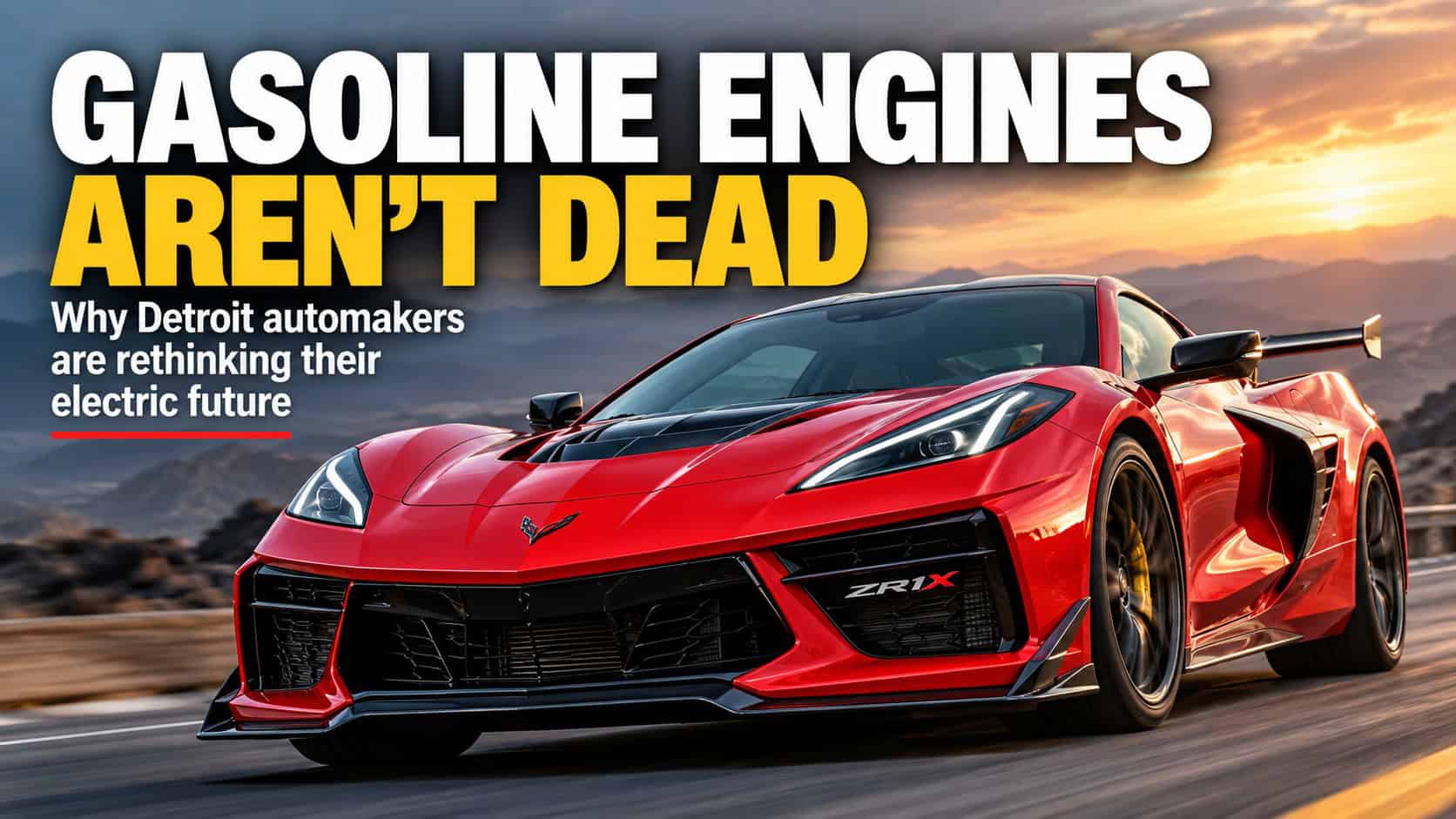
MITechNews reported earlier this week that Detroit’s retreat from some EV investments could carry long-term consequences as China continues aggressively developing electric vehicles, batteries and manufacturing capacity.
China isn’t retreating from electrification.
It already dominates production of LFP batteries — the same battery chemistry LG is now manufacturing in Michigan for energy storage.
LG had to expand its expertise in LFP technology after concentrating heavily on nickel-based EV batteries while Chinese manufacturers built a commanding position in LFP.
If Detroit retreats too far from electric vehicles while Chinese manufacturers continue reducing costs, improving battery technology and expanding production, Michigan could gain an AI energy industry while simultaneously losing ground in the automotive industry it has dominated for more than a century.
Michigan May Not Have To Choose
LG’s Lansing plant suggests another strategy:
Don’t choose between EVs and AI. Build for both.
The Lansing factory will manufacture LFP batteries for stationary energy storage while also producing NMC batteries for Toyota EVs. LG executives say they expect EV demand eventually to rebound.
The storage market is already reaching Michigan utilities as well.
DTE Energy plans to deploy LG batteries as part of its Michigan energy-storage strategy. Battery storage can charge when electricity is abundant and discharge when demand rises.
For scale, a battery system capable of storing 6 gigawatt-hours holds 6 billion watt-hours of electricity — theoretically enough to supply about 1 million homes for six hours if each were drawing an average of one kilowatt.
Gigawatts measure how much power can be delivered at a particular moment. Gigawatt-hours measure how much energy can be stored and delivered over time.
Michigan therefore has pieces of two potentially enormous industries developing simultaneously.
It has automotive manufacturing, battery factories and EV engineering expertise.
It also has a growing pipeline of AI data centers requiring extraordinary amounts of electricity, storage and energy infrastructure.
Battery manufacturers, electrical contractors, engineering companies, power-electronics firms and other businesses that invested in the EV transition may be able to sell that same expertise into the AI infrastructure market.
The EV transition hasn’t disappeared. It simply hasn’t developed as quickly or predictably as many companies and policymakers expected.
Meanwhile, AI has created an energy market few anticipated when Michigan began making its multibillion-dollar EV bet.
The smartest strategy may be to use the same industrial ecosystem to compete in both.
Michigan built for the EV boom.
AI may give that investment a much bigger second act.