GM is slowing parts of its electric-vehicle transition while protecting profitable gasoline vehicles and preserving enough EV capacity to respond if the market changes. But that strategy creates another risk: Could Detroit lose technological ground to China while Michigan auto workers wait to see where the next generation of jobs will be created?
DETROIT — General Motors is changing course again on electric vehicles, and Michigan auto workers are increasingly finding themselves on the front lines of an auto transition that looks considerably different than Detroit envisioned just a few years ago.
GM plans to temporarily lay off about 350 workers at Lansing Grand River Assembly/Stamping and Lansing Regional Stamping beginning Jan. 14, 2027, according to a Worker Adjustment and Retraining Notification filed with the state.
The layoffs are tied to retooling as GM prepares Lansing Grand River for future production, including the next-generation Cadillac CT5. GM previously announced a $1.25 billion investment in the Lansing operation.
But Lansing is only one piece of a much larger strategic reset underway across GM’s North American manufacturing network.
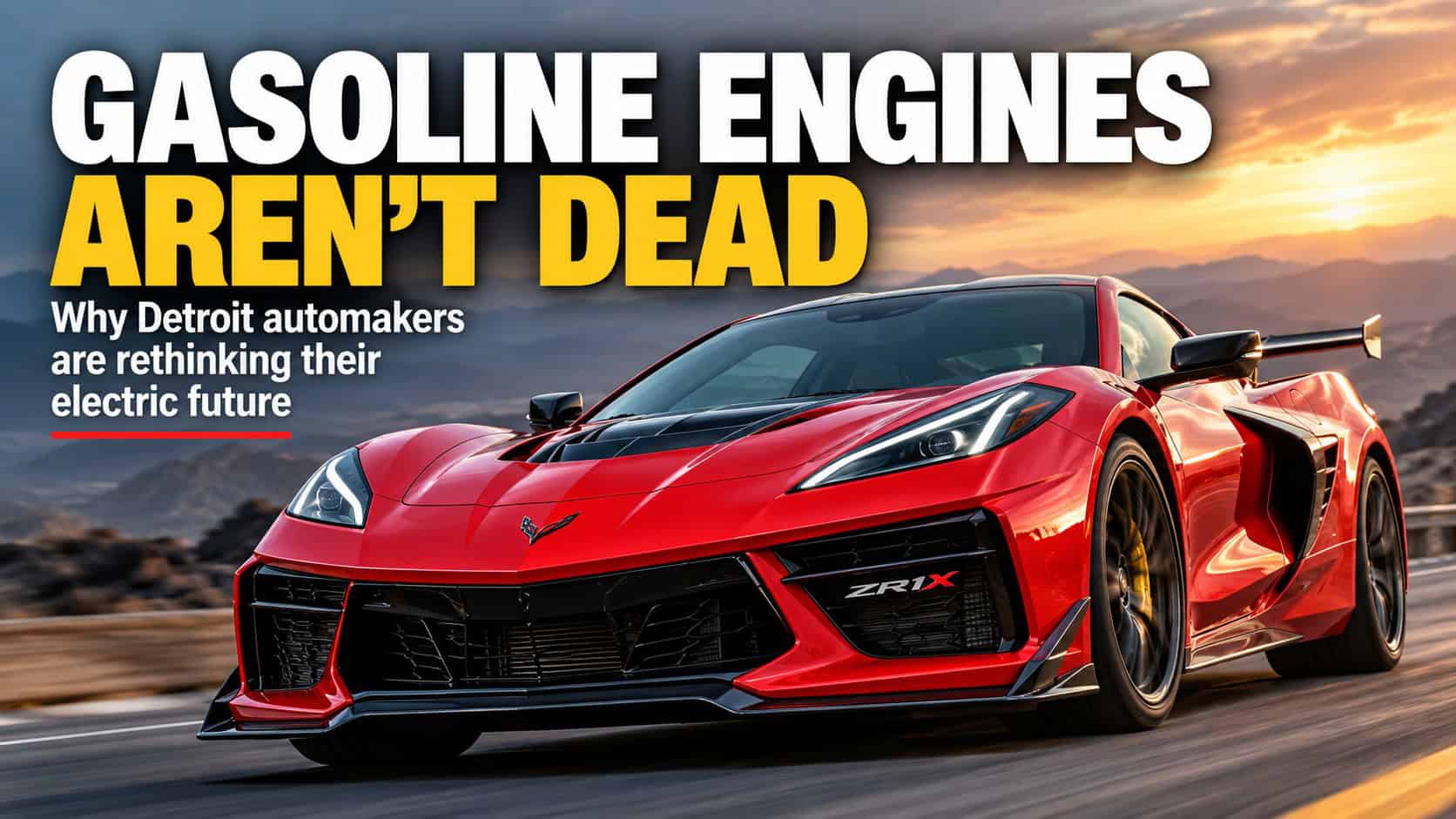
GM has scaled back some EV investments, reduced electric-vehicle production, shifted factories toward profitable gasoline-powered trucks and SUVs and reworked parts of its battery strategy.
At the same time, it isn’t abandoning electric vehicles.
Instead, GM increasingly appears to be building a manufacturing strategy that allows it to follow consumers — whether they choose gasoline vehicles, hybrids or EVs.
That presents the automaker with two very different risks.
Move too quickly toward EVs and GM could continue losing billions of dollars building vehicles American consumers aren’t ready to buy in sufficient numbers. Move too slowly and Detroit could surrender critical advantages in batteries, software and electric-vehicle manufacturing to Chinese competitors.
For Michigan, where the auto industry remains one of the state’s most important sources of high-paying manufacturing jobs, the outcome of that bet could shape the economy for decades.
Orion Shows How Much GM’s EV Strategy Has Changed
Perhaps the clearest example is Orion Assembly north of Detroit.
GM once planned to transform Orion into a major production center for electric Chevrolet Silverado EV and GMC Sierra EV pickups.
Instead, GM changed direction.
The company is preparing Orion to produce gasoline-powered full-size pickups and SUVs, vehicles that remain among GM’s most profitable products.
Electric pickup production remains centered at Factory ZERO in Detroit-Hamtramck.
The Orion decision illustrates how dramatically expectations surrounding America’s EV transition have changed.
Only several years ago, automakers, policymakers and economic developers were preparing for battery-electric vehicles to replace internal-combustion vehicles relatively rapidly.
Electrification is still advancing.
But the transition isn’t happening in a straight line.
Factory ZERO Feels The Other Side Of The EV Slowdown
Factory ZERO illustrates the other side of GM’s strategy.
The Detroit-Hamtramck operation was positioned as the centerpiece of GM’s electric future, producing vehicles including the Chevrolet Silverado EV, GMC Sierra EV and GMC Hummer EV.
But slower-than-anticipated EV demand has forced GM to adjust production and employment.
That doesn’t mean Factory ZERO has lost its strategic importance.
Concentrating electric-truck production there gives GM an existing manufacturing base capable of expanding production if EV demand accelerates again.
And there are plenty of reasons why that could happen.
Battery prices could continue declining. Charging infrastructure could improve. New lower-priced EVs could attract consumers who have so far remained on the sidelines.
Gasoline prices could also change the equation almost overnight.
Gas Trucks And SUVs Still Pay The Bills
For now, however, GM has an enormous financial incentive to keep producing the vehicles Americans are buying.
GM raised its 2026 adjusted profit outlook to $14 billion to $16 billion after second-quarter core earnings rose about 30%.
Much of that financial strength comes from highly profitable trucks and SUVs.
At the same time, GM reported that it has recorded approximately $10.9 billion in EV-related charges since the second half of 2025.
That contrast helps explain the company’s strategy.
GM cannot indefinitely pour billions into electric vehicles that don’t generate acceptable returns while simultaneously turning away consumers who still want gasoline-powered trucks and SUVs.
But neither can it simply abandon the technology that could eventually replace them.
Hybrids May Be The Missing Middle
There’s another complication that wasn’t as apparent when Detroit began making its enormous EV investments.
Many consumers interested in reducing gasoline consumption aren’t necessarily buying battery-electric vehicles.
They’re buying hybrids.
Traditional hybrids and plug-in hybrids provide consumers with improved fuel economy while reducing or eliminating concerns about charging availability and driving range.
That creates something Detroit didn’t fully anticipate when it initially laid out aggressive EV timelines: the transition from gasoline to electricity may have a very large middle step.
For automakers, that makes manufacturing flexibility increasingly important.
Rather than betting an entire factory on one propulsion technology, manufacturers may need plants capable of responding as consumer preferences shift among gasoline vehicles, hybrids, plug-in hybrids and EVs.
GM Isn’t Walking Away From Batteries
GM’s latest battery decisions reinforce that interpretation.
The automaker is selling its nearly 50% stake in a planned $3.5 billion Samsung SDI battery plant in Indiana, allowing Samsung to take control of the facility.
That certainly looks like an EV retreat.
But almost simultaneously, GM’s Ultium Cells joint venture with LG Energy Solution is preparing to restart battery-cell production at its northeast Ohio plant after a roughly seven-month shutdown caused by weaker EV demand.
Most furloughed employees are expected to return, bringing employment at the facility to roughly 1,400 workers.
Those decisions taken together suggest GM isn’t abandoning batteries.
It is resizing its exposure while preserving manufacturing capacity.
But What If Detroit Is Retreating At The Wrong Time?
That strategy makes considerable financial sense today.
The bigger question is whether it will still look smart five or 10 years from now.
EV industry publication EVinfo recently raised a much more troubling possibility, arguing that Detroit’s EV retreat could ultimately threaten America’s leadership in the automobile industry.
The concern isn’t simply Tesla or another American competitor.
It’s China.
Chinese automakers have spent years aggressively developing electric vehicles, batteries, electric motors, manufacturing processes and increasingly sophisticated vehicle software.
They have also driven down costs.
Chinese manufacturers are now formidable competitors across Europe, Asia, Latin America and other international markets.
Tariffs and regulatory restrictions currently make it extremely difficult for Chinese-built electric vehicles to enter the United States.
But Detroit cannot assume those barriers will protect it forever.
Ford’s Farley Is Already Warning About China
Ford CEO Jim Farley recently told employees that Chinese automakers could enter the U.S. market within the next five to 10 years, despite today’s trade barriers.
Ford is preparing accordingly, including developing lower-cost electric vehicles designed to compete more effectively on price and manufacturing efficiency.
That warning should resonate particularly loudly in Michigan.
Detroit has faced this situation before.
Japanese automakers entered the American market decades ago with smaller, fuel-efficient vehicles that Detroit initially underestimated. Toyota, Honda and other foreign manufacturers ultimately captured enormous portions of the U.S. market.
China potentially represents an even larger competitive challenge because Chinese companies aren’t merely competing on vehicle design.
They have built extensive supply chains around batteries and other technologies central to electric transportation.
GM Is Betting On EVs In China While Slowing At Home
Perhaps the most revealing part of GM’s strategy is what the company itself is doing in China.
GM recently renewed its joint venture with Chinese automaker SAIC for another 20 years, extending the partnership through 2047.
The companies plan to introduce at least 30 new-energy vehicles by 2030, a category that includes battery-electric vehicles and hybrids.
In other words, GM isn’t betting against electrification everywhere.
It is operating in two markets moving at dramatically different speeds.
In the United States, GM is slowing portions of its EV expansion while continuing to capitalize on consumer demand for gasoline-powered trucks and SUVs.
In China, it is competing in a market where electrification has moved much faster and domestic Chinese automakers have become extraordinarily formidable competitors.
That creates an uncomfortable contradiction for Detroit.
GM needs the profits generated by America’s traditional auto market today while simultaneously developing the technology necessary to compete in tomorrow’s global auto market.
Michigan Jobs Are Riding On The Bet
That brings the story back to those 350 workers in Lansing.
Their layoffs are expected to be temporary. GM is investing heavily in the plant, and future vehicle production should bring workers back.
But Michigan’s larger employment question stretches far beyond one plant or one layoff announcement.
The state has spent years positioning itself for an electric automotive future, attracting battery plants, EV factories and suppliers while protecting its enormous traditional automotive manufacturing base.
Now the transition is becoming much more complicated.
Michigan may need to support gasoline-powered vehicles that generate jobs and profits today, hybrids that could dominate the transition period, and EV and battery technologies necessary to compete tomorrow.
GM is essentially betting that it can do all three.
It can harvest profits from gasoline trucks and SUVs, follow consumers toward hybrids if that’s where demand moves, and maintain enough EV expertise and manufacturing capacity to accelerate when the market changes.
That strategy could prove remarkably smart.
Or Detroit could discover several years from now that while it was protecting today’s profits, Chinese competitors were establishing the technology, manufacturing scale and cost advantages that determine who leads the next generation of the global automobile industry.
For Michigan workers, that’s the much bigger issue.
The question isn’t simply how many EVs Americans buy in 2026.
It’s whether Michigan remains the center of the American automobile industry in 2030, 2040 and beyond.