ANN ARBOR – New Buffalo and Monroe generated nearly $125 million in estimated cannabis sales during the first quarter of 2026 as Michigan’s low prices reshaped the Midwest marijuana market.
New Buffalo has about 1,700 permanent residents and nearly 30 marijuana dispensaries.
That works out to roughly one dispensary for every 57 city residents—a concentration that would make little economic sense if the stores depended on local customers.
They do not.
Located across the Indiana border and about 70 miles from downtown Chicago, the New Buffalo market generated an estimated $72.4 million in cannabis sales during the first quarter of 2026, according to cannabis analytics company BDSA.
On Michigan’s southeastern border, Monroe’s 21 dispensaries generated another $52.4 million, aided by customers traveling north from Ohio.
Together, the two border markets recorded approximately $124.8 million in estimated cannabis sales during the first three months of 2026.
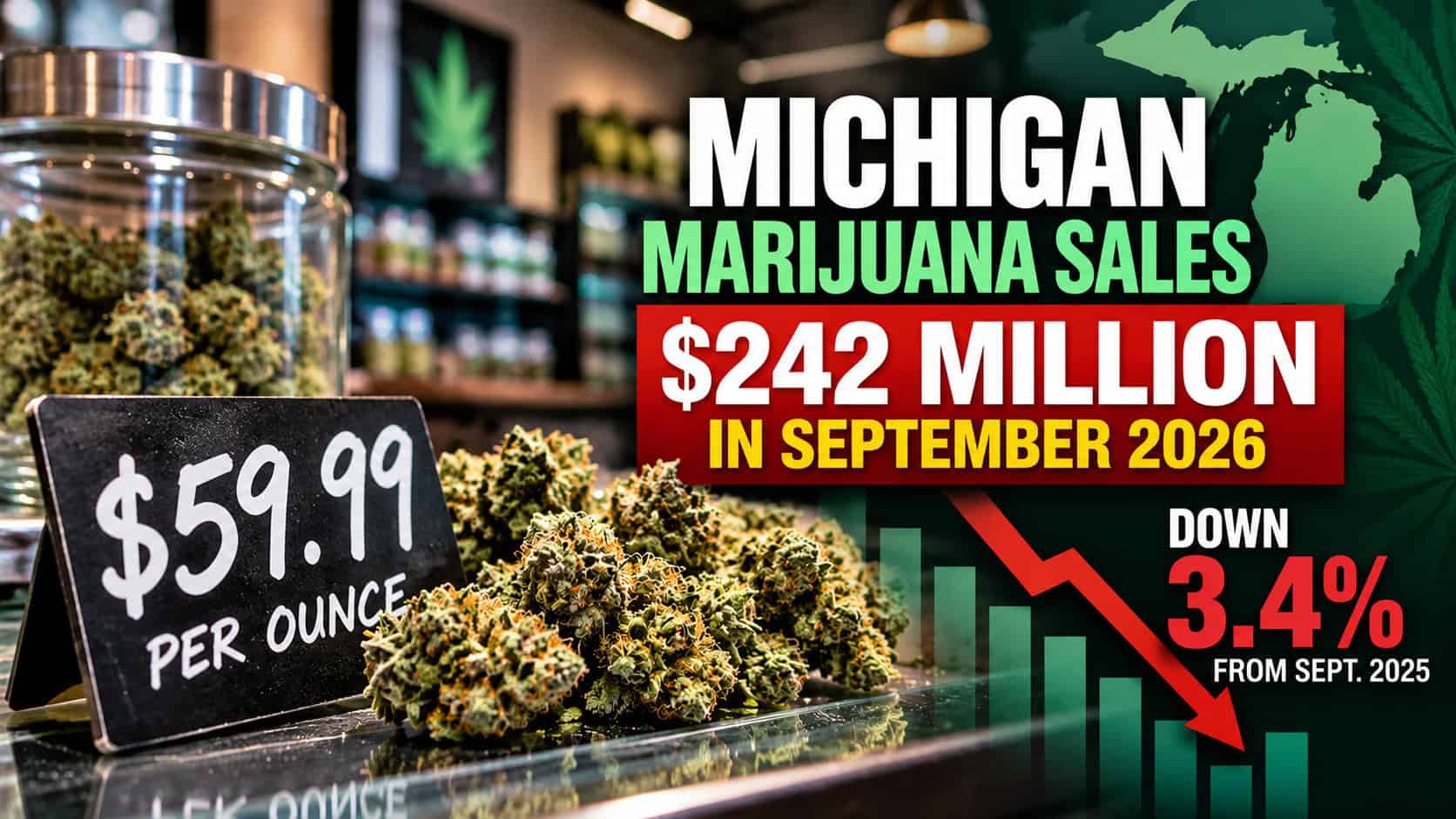
The attraction is easy to understand. Michigan’s Cannabis Regulatory Agency reported that the average retail price for an ounce of adult-use flower fell to $60.33 in August. Some dispensaries advertise promotional ounces for less than $40.
Comparable ounces in Ohio commonly sell for approximately $150 to $220. Illinois products can cost twice as much as comparable marijuana in New Buffalo. Indiana offers no legal medical or recreational marijuana sales.
Michigan’s marijuana oversupply has created severe financial problems for growers and retailers, but it has also turned the state into the Midwest’s bargain cannabis destination.
New Buffalo Outsold Detroit
New Buffalo’s cannabis market is larger than its population suggests—and even larger than some of Michigan’s biggest cities.
BDSA estimated that the New Buffalo market generated $230.9 million in sales during 2025, compared with $236.1 million in Monroe and $189.6 million in Detroit.
New Buffalo therefore sold more marijuana than Detroit despite Detroit having more than 600,000 residents and the City of New Buffalo having only 1,708 residents in the 2020 Census.
The comparison requires a qualification. BDSA’s New Buffalo market includes stores in the immediate area, including retailers outside the city’s precise municipal boundaries. The population figure applies specifically to the city.
Nevertheless, the enormous difference between the population and sales demonstrates that visitors sustain the market.
New Buffalo had more stores during the first quarter, while the average Monroe dispensary performed slightly better. BDSA estimated Monroe retailers generated approximately $30,000 per store per day, compared with about $27,800 in New Buffalo.
Indiana Has No Legal Market—But Plenty Of Consumers
Indiana remains one of the few states permitting neither medical nor recreational marijuana sales.
That has not stopped Hoosiers from consuming cannabis.
Research commissioned by the Richard M. Fairbanks Foundation and conducted with RAND estimated that Indiana residents spend between $1.2 billion and $2.6 billion annually on cannabis products.
The research found that 44% of Indiana residents live within 50 miles of a licensed dispensary in another state. Nearly all Hoosiers live within 100 miles of one.
New Buffalo is positioned to capture part of that spending because it sits just north of the state line and is connected to northern Indiana and Chicago by Interstate 94 and U.S. 12.
The analysis estimated that a legal Indiana recreational market could eventually produce approximately $180 million in annual tax revenue. Exactly how much Indiana consumer spending flows into Michigan is not publicly known.
Illinois Buyers Can Pay Twice As Much
Illinois permits adult-use sales, but higher prices and taxes make Michigan attractive to Chicago-area consumers.
Axios compared similar products at New Buffalo and Chicago dispensaries earlier this year. A 3.5-gram package of Cresco LA Kush Cake flower was listed for $14.25 in New Buffalo, compared with $28.80 at a Chicago dispensary.
A package of WYLD gummies delivering 200 milligrams of cannabinoids was listed for $15 in New Buffalo. A Chicago retailer listed the same brand with only 100 milligrams for $20.
Illinois also applies marijuana taxes based partly on product potency, in addition to state and potentially local taxes. Michigan consumers pay a 10% marijuana excise tax and 6% sales tax at retail.
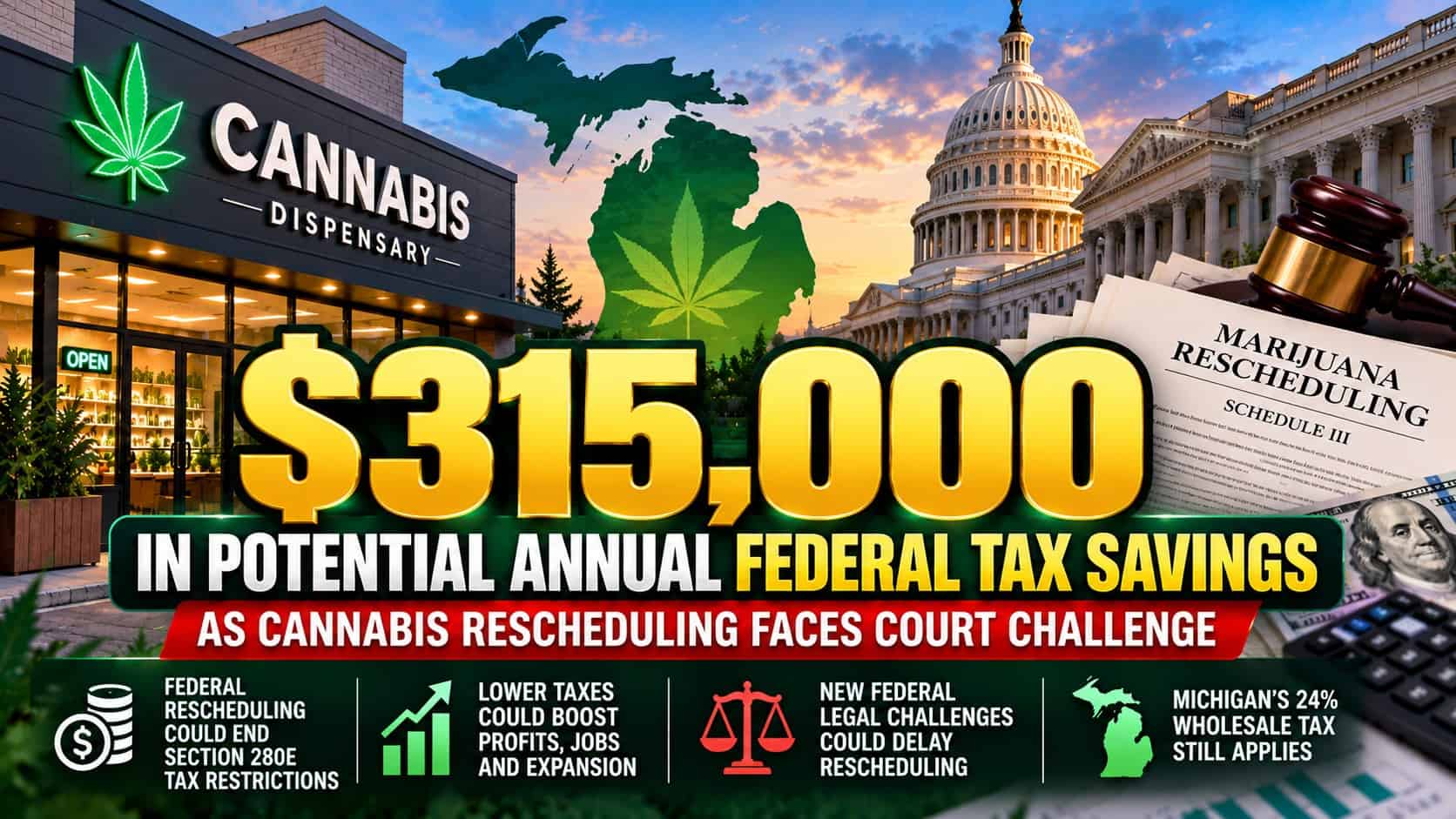
Michigan imposed an additional 24% wholesale marijuana tax beginning Jan. 1, 2026. Cannabis businesses warned that it would force retail prices higher and eliminate Michigan’s advantage over neighboring states.
That has not happened yet. Michigan’s average ounce remains close to $60, although it is unclear how long businesses can absorb the added wholesale cost.
Ohio’s Growing Market Still Costs More
Ohio has built one of the Midwest’s fastest-growing marijuana markets since adult-use sales began in August 2024.
Adult-use sales exceeded $700 million during their first 12 months, yet Ohio consumers still pay substantially more than Michigan customers.
The difference largely reflects supply.
Ohio launched adult-use sales through businesses already participating in its medical program and has maintained a relatively limited cultivator base while gradually expanding retail licenses.
Michigan does not impose a statewide numerical cap on most marijuana business licenses. Hundreds of growers and retailers compete for customers, producing more marijuana than Michigan residents alone consume.
Monroe is ideally situated to capitalize. Located about 20 miles north of Toledo, the city had approximately 20,500 residents in the 2020 Census. Its marijuana market generated an estimated $236.1 million in 2025—slightly more than New Buffalo and considerably more than Detroit.
Michigan’s Advantage Comes With A Cost
Low prices benefit consumers and border dispensaries, but they are not necessarily evidence of a healthy industry.
Michigan’s adult-use marijuana market generated more than $3.1 billion in sales during 2025. Despite that size, growers, processors and retailers have struggled with falling wholesale prices, shrinking profit margins and intense discounting.
Some companies have closed, entered receivership or sold assets at distressed prices.
Flash sales, loyalty rewards and deeply discounted ounces attract customers from surrounding states, but they make it difficult for businesses to cover cultivation, labor, testing, compliance and financing expenses.
Michigan has created abundant supply, fierce competition and some of America’s lowest cannabis prices. That brings outside money into border communities while deepening an industry price war that many businesses may not survive.
Crossing State Lines Remains Illegal
Adults 21 and older may legally purchase marijuana in Michigan, including visitors from other states.
Transporting it across a state line remains illegal under federal law—even when marijuana possession is legal in the destination state. Federal medical marijuana rescheduling did not legalize interstate transportation of recreational cannabis.
The scale of New Buffalo and Monroe sales does not prove what individual customers do after leaving a dispensary. But it shows that Michigan’s border marijuana markets depend heavily on regional visitors.
For Ohio, Indiana and Illinois, Michigan’s low prices represent lost customers and potentially lost tax revenue.
For Michigan, they are both a competitive advantage and a warning sign: The state is winning the Midwest cannabis price war, but many of the Michigan businesses fighting it are struggling to survive.