
Michigan regulators raised concerns in 2024 about implementing federal marijuana rescheduling without clear rules. California’s top cannabis regulator now says the DEA isn’t providing sufficient guidance, raising questions for Michigan’s $3 billion cannabis industry.
LANSING, Mich. — Michigan cannabis regulators warned federal officials in 2024 that changing marijuana’s federal classification without clear guidance could create problems for the state’s multibillion-dollar cannabis industry.
Now, California’s top cannabis regulator says the U.S. Drug Enforcement Administration has failed to provide the information states need to help marijuana businesses prepare for federal rescheduling.
The dispute raises questions for Michigan cannabis operators already dealing with falling marijuana prices, declining sales revenue, industry consolidation and the state’s controversial 24% wholesale marijuana tax.
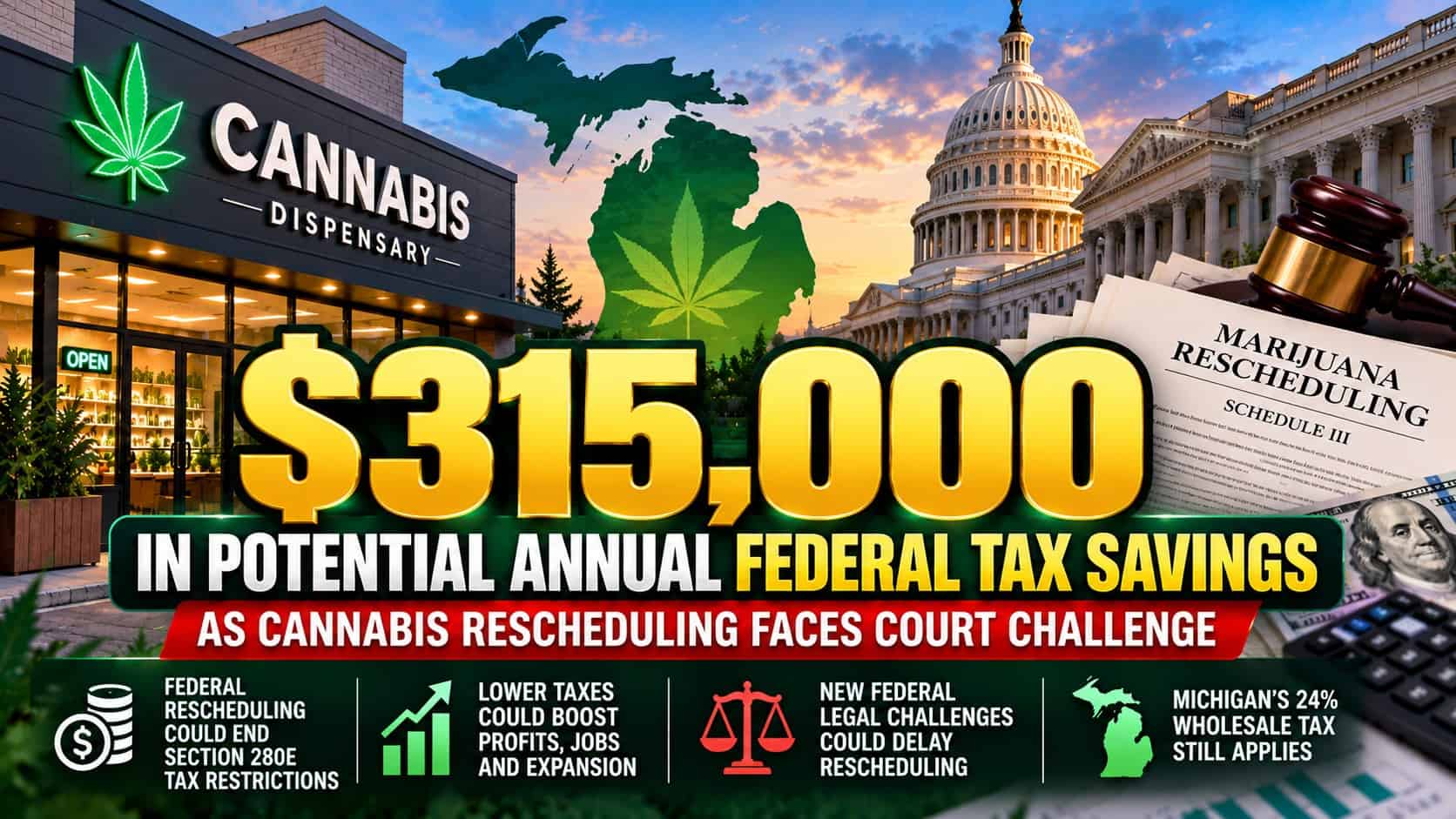
It also comes as the Internal Revenue Service prepares guidance that could clarify significant tax benefits for qualifying medical marijuana businesses while recreational operators remain subject to longstanding federal tax restrictions.
The central question is whether federal agencies can establish consistent rules that allow cannabis businesses to benefit from rescheduling without creating additional regulatory and financial burdens.
Michigan Warned Federal Officials In 2024
Michigan’s Cannabis Regulatory Agency (CRA) raised these concerns in formal comments submitted to the DEA on July 22, 2024.
The agency identified several areas requiring federal clarification, including banking, taxation, licensing, packaging, product safety, interstate commerce and enforcement.
CRA Executive Director Brian Hanna cautioned that rescheduling would accomplish little without comprehensive federal guidance about how the changes would work.
Michigan regulators wanted to know how federal Schedule III requirements would interact with existing state licensing and oversight.
Those questions have become more urgent following the Trump administration’s April 2026 decision to move qualifying medical marijuana into Schedule III while leaving recreational cannabis in Schedule I.
California Regulator Says DEA Has Not Provided Needed Guidance
California Department of Cannabis Control Director Clint Kellum told the state’s Cannabis Advisory Committee in September that federal regulators had not provided the implementation guidance his agency requested.
According to a September 21 Marijuana Moment report, Kellum said California officials had attempted to communicate with DEA headquarters about federal expectations for cannabis businesses.
He reported receiving no formal implementation updates despite those efforts.
Kellum also described attempts by cannabis regulators from several states to obtain answers from federal officials, with limited success.
California has developed emergency licensing regulations intended to help medical marijuana businesses pursue federal registration.
However, Kellum said state officials were reluctant to make additional sweeping regulatory changes without understanding what federal agencies ultimately intend to require.
He also described apparent differences in how DEA officials were conducting inspections and requesting information from cannabis businesses in different states.
Such inconsistencies could create additional difficulties for companies operating in multiple jurisdictions.
California’s account does not establish that Michigan has experienced identical communication problems. However, it illustrates the type of uncertainty Michigan regulators warned about two years earlier.
Michigan Cannabis Sales Decline As Federal Uncertainty Continues
The regulatory uncertainty comes as Michigan marijuana businesses face declining sales revenue, falling prices and additional tax pressures.
According to the Michigan Cannabis Regulatory Agency’s September 2026 monthly report, adult-use marijuana sales totaled $242.26 million in September, down approximately 3.4% from $250.91 million in September 2025.
Medical marijuana sales totaled $264,549, compared with $403,124 a year earlier, a decline of approximately 34.4%.
The average retail price of an ounce of recreational marijuana fell to $59.99, compared with $63.16 in September 2025.
The figures illustrate the financial pressures facing Michigan cannabis businesses, even as the state remains one of the nation’s largest legal marijuana markets.
The state’s new 24% wholesale marijuana tax, which took effect January 1, 2026, has added another financial consideration for recreational marijuana operators. The tax remains the subject of litigation.
However, the CRA sales figures do not establish how much, if any, of September’s revenue decline resulted from the new tax.
Michigan recreational marijuana sales declined 6.4% between August and September 2026, compared with an 11.3% decline during the same period in 2025, before the wholesale tax took effect.
That comparison, documented in MITechNews’ October 15 sales analysis, demonstrates why the latest revenue decline cannot automatically be attributed to the new tax.
Meanwhile, the contraction of Michigan’s medical marijuana market raises questions about how much the state’s cannabis businesses could benefit from federal medical marijuana rescheduling.
Although qualifying medical marijuana operations may become eligible for federal tax deductions previously unavailable under Section 280E, Michigan’s recreational market accounts for virtually all reported legal cannabis retail sales.
That means the potential tax benefits of medical marijuana rescheduling may have limited immediate value for operators whose revenues come overwhelmingly from recreational customers.
Federal Rescheduling Creates Different Rules For Medical And Recreational Marijuana
In April, the Trump administration moved qualifying state-regulated medical marijuana and FDA-approved marijuana products from Schedule I to Schedule III of the federal Controlled Substances Act.
Recreational marijuana remains classified as Schedule I.
The distinction creates different federal regulatory and tax considerations for businesses participating in the two markets.
Qualifying medical marijuana operators may pursue DEA registration under the new federal framework. However, federal registration requirements, inspections, recordkeeping and other compliance obligations could create additional administrative work.
Federal rescheduling does not automatically legalize recreational marijuana nationwide or eliminate state cannabis licensing requirements.
Michigan businesses must continue following state regulations while determining whether federal registration and tax changes apply to their operations.
In an April 23 statement, Michigan’s CRA said it was reviewing the federal order and evaluating its potential effects on state operations and compliance obligations.
The agency said existing state requirements would remain in effect during that review.
IRS Places Marijuana Tax Guidance On Its Priority List
One of the most important developments for Michigan cannabis businesses occurred September 29, when the Treasury Department and Internal Revenue Service released their 2026–2027 Priority Guidance Plan.
The plan includes guidance concerning Section 280E of the Internal Revenue Code, a provision that has imposed substantial financial burdens on marijuana businesses.
Section 280E generally prevents businesses trafficking in Schedule I or II controlled substances from deducting ordinary business expenses, including rent, payroll and administrative costs.
Because qualifying medical marijuana activities have moved into Schedule III, eligible businesses may receive federal tax treatment previously unavailable to them.
However, recreational marijuana remains in Schedule I, meaning adult-use operators continue facing Section 280E restrictions.
The distinction could become especially important for Michigan companies operating both medical and recreational marijuana businesses.
Such businesses may need to determine which expenses are attributable to qualifying medical operations and which remain associated with recreational activities.
The IRS priority plan does not specify which questions its forthcoming Section 280E guidance will address or when that guidance will be issued.
The plan covers the federal fiscal year ending September 30, 2027, but establishes no deadlines for individual guidance projects.
Could Medical Marijuana Become More Attractive In Michigan?
Federal tax relief could create incentives for some Michigan cannabis businesses to reconsider the financial value of medical marijuana operations.
However, Michigan’s September sales figures demonstrate the challenge.
With adult-use sales exceeding $242 million and medical sales totaling approximately $265,000, recreational marijuana accounted for nearly 99.9% of the state’s combined reported retail cannabis sales.
That imbalance means the potential federal tax benefits of medical marijuana rescheduling may have limited immediate value for operators whose revenues come overwhelmingly from recreational customers.
Businesses considering expanding medical operations would still need to evaluate patient demand, DEA registration requirements, compliance costs and the rules governing which activities qualify for favorable federal treatment.
The tax savings could be substantial for some qualifying operators, but they are not automatic.
For businesses with significant medical operations, federal tax relief could improve profitability. For companies focused almost exclusively on recreational sales, the immediate benefits may be considerably smaller.
Federal Government Has Taken Steps Toward Implementation
Although state regulators have criticized the DEA’s communications, federal agencies have taken steps to implement medical marijuana rescheduling.
The April federal order established a registration pathway for qualifying medical marijuana businesses.
It also provides mechanisms for recognizing certain existing state regulatory requirements rather than requiring operators to duplicate every compliance procedure.
The DEA has begun accepting registration applications. California regulator Kellum also reported that federal officials have conducted inspections and requested information from some cannabis businesses.
However, Kellum said the agency had not adequately explained how federal requirements would be applied across different state regulatory systems.
The disagreement therefore concerns the clarity and consistency of implementation guidance, rather than a complete absence of federal action.
Other States Join Calls For Federal Guidance
California is not alone in expressing frustration.
In an October 7 report by Marijuana Moment, cannabis regulators in Georgia and Vermont also described difficulties obtaining guidance from the DEA.
Georgia Access to Medical Cannabis Commission Executive Director Andrew Turnage said his agency had sought clarification about federal medical marijuana labeling requirements while updating state regulations.
Turnage said DEA officials were unable to comment on the proposed state language, leaving regulators uncertain about how to avoid potentially duplicative labeling requirements.
In Vermont, Cannabis Control Board Chair James Pepper said state regulators had submitted questions to the DEA through a national cannabis regulators association without receiving adequate answers.
The complaints suggest that concerns about federal coordination extend beyond California, although the experiences of individual states differ.
They also reinforce the importance of the issues Michigan identified in its 2024 comments.
Broader Marijuana Rescheduling Faces Another Delay
Meanwhile, the separate federal proceeding that could move marijuana more broadly from Schedule I to Schedule III has encountered another procedural delay.
On October 14, DEA Chief Administrative Law Judge Derek Julius ordered the agency to respond by October 21 to opponents seeking additional testimony and document discovery.
The dispute involves a September Government Accountability Office report identifying gaps in federal drug-scheduling procedures.
Opponents argue the report raises questions requiring further examination. The DEA disputes that the findings undermine the rescheduling process and has opposed additional briefing.
The judge has not yet decided whether to reopen testimony.
The procedural dispute does not reverse the April medical marijuana rescheduling order, but it adds uncertainty about when broader federal changes might occur.
What Happens Next For Michigan?
Several developments could determine how federal rescheduling affects Michigan cannabis businesses over the coming months.
They include additional DEA implementation instructions, IRS guidance on Section 280E, the outcome of broader marijuana rescheduling proceedings and litigation challenging the federal order.
Michigan’s Cannabis Regulatory Agency has previously emphasized the importance of maintaining a stable regulated market while federal officials determine how rescheduling will work.
However, publicly available statements reviewed for this article do not establish whether the DEA has subsequently provided Michigan with the detailed guidance it requested in 2024.
California’s complaints, now echoed by regulators in Georgia and Vermont, provide evidence that several states are having difficulty obtaining answers. They do not establish that Michigan has experienced identical problems.
For Michigan’s cannabis businesses, the outcome could affect federal taxes, accounting procedures, licensing expenses and future investment decisions.
With September marijuana sales showing continued revenue pressure, those questions carry additional financial importance.
The central issue is whether Washington can provide the regulatory certainty necessary for marijuana rescheduling to deliver meaningful benefits without creating additional costs for an industry already struggling with declining prices and pressure on profit margins.