Michigan Lawmakers Push To Repeal New Wholesale Tax As Businesses Close And Ohio’s Young Recreational Market Expands
LANSING — Michigan and Ohio’s marijuana markets are suddenly moving in opposite directions.
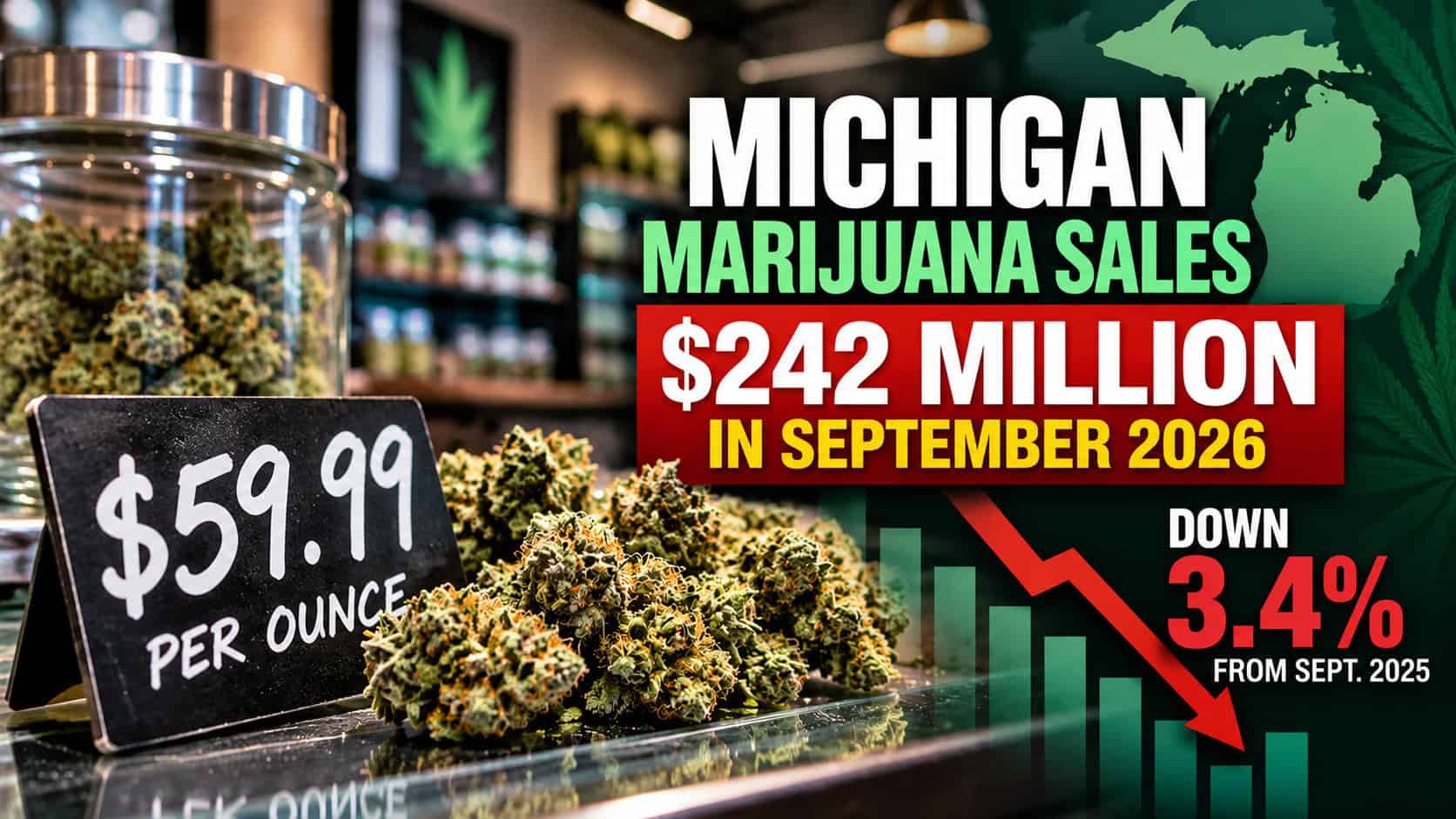
Michigan cannabis sales fell 5.1% year over year in July, even as neighboring Ohio’s much younger recreational market surged 22%, raising new questions about whether Michigan’s controversial 24% wholesale marijuana tax is adding to the financial pressure already squeezing one of the nation’s largest cannabis industries.
Michigan still dwarfs Ohio in total cannabis sales. Michigan retailers sold about $260.6 million in July, compared with roughly $111.4 million in Ohio.
But the trajectories are strikingly different.
Michigan has become one of America’s cheapest marijuana markets, with an average item price of just $8.65 in July. Years of oversupply and intense competition have been terrific for consumers but brutal for many growers and retailers trying to make money.
Now another warning sign has emerged.
Upper Peninsula-based Higher Love Cannabis Co. has suspended operations at five of its nine Michigan dispensaries, saying the state’s new 24% wholesale tax added another substantial cost to a market already struggling with oversupply, falling prices and shrinking margins.
The closures come as Michigan lawmakers launch another effort to repeal the tax.
State Rep. James DeSana, R-Carleton, has introduced legislation to eliminate the wholesale levy, arguing that it is hurting Michigan cannabis businesses while failing to produce the revenue Lansing expected.
That turns what might appear to be another Lansing tax fight into a much larger economic question:
Could Michigan’s tax policy weaken its enormous cannabis industry just as Ohio is building a powerful new competitor across the state line?
Michigan’s 24% Tax Comes On Top Of Existing Taxes
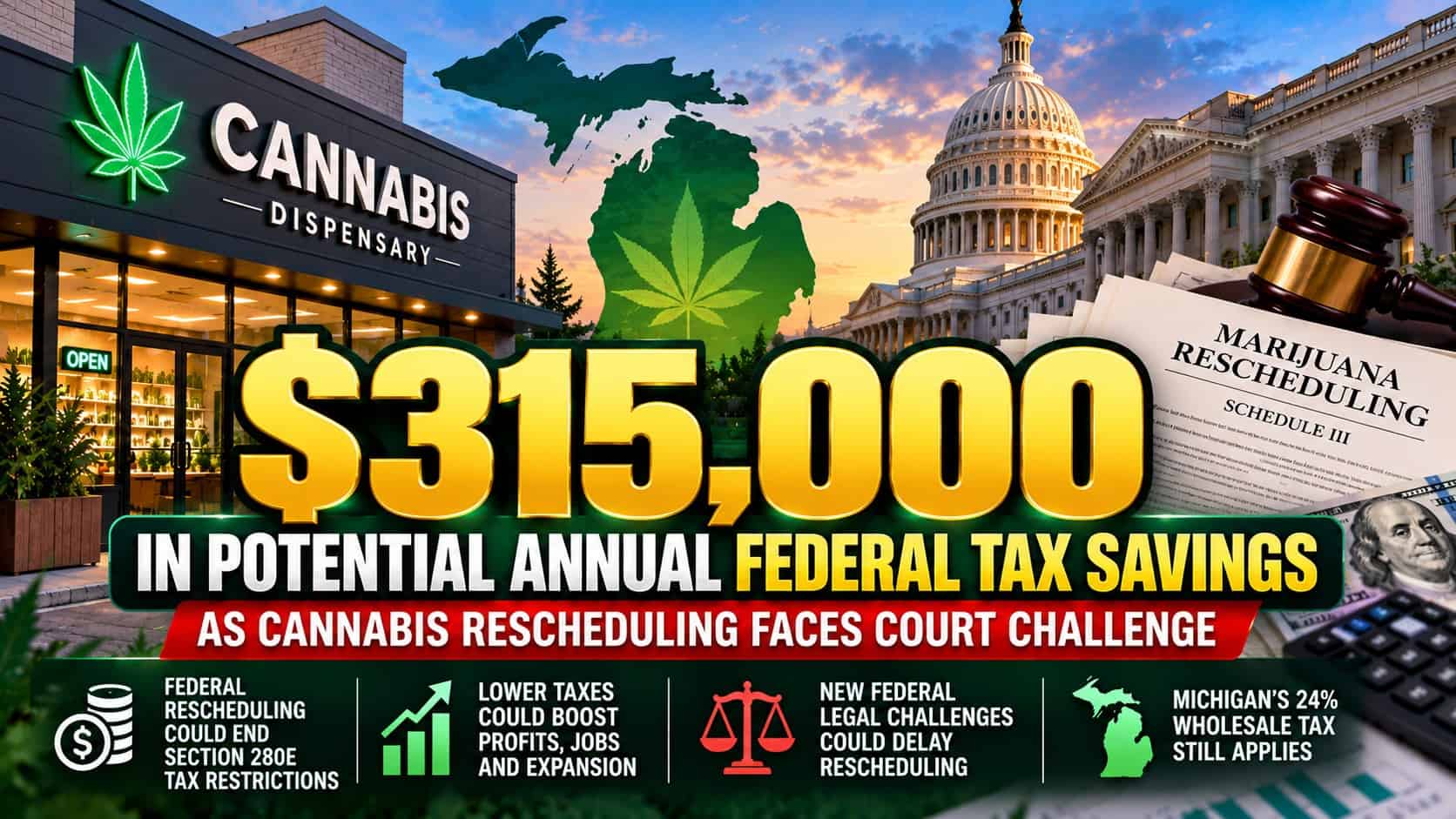
Michigan’s new tax imposes 24% on the wholesale price of certain sales or transfers of recreational marijuana. It took effect Jan. 1.
The wholesale levy is separate from the taxes consumers already pay at retail, including Michigan’s 10% marijuana excise tax and 6% sales tax.
State officials projected the wholesale tax would generate about $420 million annually, with the revenue going into a neighborhood road fund for infrastructure improvements.
DeSana contends those projections aren’t materializing.
He said the tax generated roughly $70 million less than projected during the first four months of the fiscal year and could eventually produce a roughly $210 million annual shortfall compared with expectations.
“It’s time to repeal this failed tax and stop forcing taxpayers and businesses to pay for a policy that simply isn’t working,” DeSana said in announcing the effort.
His House Bill 6224 is remarkably simple. The legislation consists of a single sentence repealing the Comprehensive Road Funding Tax Act that created the wholesale marijuana tax.
The bill has been referred to the House Appropriations Committee.
The tax also continues to face legal challenges from Michigan’s cannabis industry.
Five Michigan Dispensaries Close
The political pressure comes as the industry’s financial problems become increasingly visible.
Higher Love announced Aug. 10 that it had suspended operations at dispensaries in Crystal Falls, Escanaba, Houghton, Munising and Ontonagon.
The Marquette-based company will continue operating stores in Ironwood, Marquette, Menominee and Norway.
Higher Love specifically cited Michigan’s mounting tax burden.
The company said the new wholesale tax introduced another substantial expense into a market already confronting oversupply, price compression and declining revenue.
Higher Love also said those pressures have forced cannabis businesses across Michigan to consolidate operations, suspend facilities and eliminate jobs.
The company’s problems illustrate an unusual contradiction developing in Michigan’s marijuana economy.
Michigan consumers are still buying enormous amounts of cannabis.
But businesses aren’t necessarily making money selling it.
Michigan Consumers Are Still Buying Lots Of Marijuana
Despite declining dollar sales, consumer demand remains strong.
Michigan dispensaries remain on pace to sell more than 1.3 million pounds of cannabis flower in 2026, roughly the same quantity sold last year, according to Cannabis Regulatory Agency data cited by Cannabis Business Times.
That distinction is important.
Michigan’s cannabis problem isn’t simply that people have stopped buying marijuana.
They’re buying enormous quantities at extraordinarily low prices.
Headset reports Michigan generated $260.6 million in cannabis sales during July, down 5.1% from a year earlier.
But consumers purchased more than 30 million individual cannabis products during the month.
Michigan’s average item price was just $8.65 — the lowest among the major U.S. cannabis markets tracked by Headset.
That means Michigan businesses can sell more product without necessarily generating more revenue.
Add a new wholesale tax to already compressed margins and the economics become even more difficult.
Ohio Cannabis Sales Surge 22%
Just across Michigan’s southern border, a very different marijuana market is developing.
Ohio launched recreational cannabis sales in August 2024.
Its market remains much smaller than Michigan’s, but it is growing rapidly.
Ohio generated approximately $111.4 million in cannabis sales during July, up about 22% from a year earlier, according to Headset market data.
Ohio marijuana also remains considerably more expensive.
The average cannabis item sold in Ohio costs roughly $30, more than three times Michigan’s $8.65 average.
For consumers, Michigan still wins the price war by an enormous margin.
For cannabis businesses, however, Ohio’s higher prices provide considerably more revenue per product sold.
That produces two dramatically different cannabis economies separated by a state line.
Michigan: Huge sales volume, enormous supply, extremely low prices, declining dollar sales and increasing pressure on business margins.
Ohio: Smaller and younger recreational market, substantially higher prices and rapidly growing sales.
Michigan’s Biggest Advantage Has Been Price
For years, Michigan’s low marijuana prices created a powerful competitive advantage over Ohio.
Ohio consumers could cross the state line and find marijuana at prices often substantially below those available at home.
That price difference helped make Michigan border communities important cannabis retail markets.
Michigan’s advantage hasn’t disappeared.
Ohio cannabis remains far more expensive.
But Michigan’s new wholesale tax raises an important question:
How much of Michigan’s price advantage can survive if taxes and business failures continue increasing the cost of operating here?
Michigan’s cannabis industry has been shaped by abundant cultivation capacity and fierce retail competition.
As of June 30, Michigan had 836 active adult-use dispensary licenses and 939 active cultivation licenses, according to CRA data.
A year earlier, Michigan had 845 active retail licenses and 1,016 active cultivation licenses.
That suggests some contraction is already occurring, particularly among growers.
For consumers, intense competition has produced bargain prices, aggressive promotions, loyalty programs and deeply discounted marijuana.
For operators, those same forces have created some of the thinnest margins in the industry.
Could Michigan And Ohio Markets Begin To Converge?
Ohio remains almost the mirror image.
Its recreational industry is younger, its prices are substantially higher and sales are growing as the legal market develops.
Over time, however, economic forces could push the two markets closer together.
Michigan taxes, consolidation and business failures could reduce supply and eventually put upward pressure on prices.
Ohio’s expanding cultivation capacity and retail competition could push its prices downward.
The enormous price gap between the states could begin narrowing.
And that could change the competitive dynamics of the Midwest marijuana market.
Michigan has another advantage: scale.
At $260.6 million in July sales, Michigan remains one of America’s largest cannabis markets. Headset ranks it third among the major markets it tracks, behind only California and Massachusetts.
But size doesn’t necessarily translate into profitability.
Michigan consumers can continue buying huge amounts of marijuana while cannabis companies struggle if prices fall faster than costs.
The $420 Million Question
Michigan lawmakers therefore face a larger decision than whether to keep another marijuana tax.
The state wants hundreds of millions of dollars from cannabis to help repair Michigan roads.
But that revenue ultimately depends on having a healthy legal cannabis industry capable of generating taxable sales.
Michigan has already demonstrated that consumers will buy enormous quantities of marijuana when legal products are inexpensive and widely available.
The question now is whether Lansing has pushed that model too far.
If businesses continue closing, jobs disappear and sales revenue declines, Michigan could collect considerably less marijuana tax revenue than lawmakers anticipated.
Meanwhile, Ohio’s expanding cannabis industry is creating a new competitive force immediately across the state line.
For years, Michigan’s cannabis industry largely competed against itself.
Increasingly, it may also have to compete with Ohio.
And that makes the fight over Michigan’s 24% marijuana tax more than another Lansing budget battle.
It could help determine which state ultimately builds the stronger and more sustainable cannabis economy.