WASHINGTON – A controversial election bill that supporters say would strengthen voter integrity and critics call voter suppression is back at the center of the national political debate after House Republicans voted Tuesday to attach the legislation to the annual National Defense Authorization Act (NDAA), one of Congress’ must-pass bills.
The House approved a procedural rule on a narrow 214-211 vote that clears the way for debate and final votes this week on a package of Republican priorities before lawmakers leave Washington for the August recess. Along with the defense authorization bill, the package includes a continuing resolution to keep the federal government funded through Dec. 4, a budget framework for another reconciliation package, legislation banning members of Congress from trading individual stocks, and the Safeguard American Voter Eligibility (SAVE) Act.
Rather than sending the SAVE Act to the Senate as a standalone bill, House Republicans plan to merge it with the NDAA before final House passage in a legislative maneuver known as “MIRVing.” The strategy is designed to increase pressure on the Senate by attaching the election measure to legislation Congress has traditionally approved every year.
For Michigan voters, the renewed debate raises an important question:
If the SAVE Act eventually became law, would you have the documents needed to register to vote in a federal election?
Supporters Say It Protects Elections
Supporters argue the legislation simply requires states to verify that only U.S. citizens register to vote in federal elections.
Current federal law already limits voting in federal elections to U.S. citizens. Republicans contend the SAVE Act would strengthen enforcement by requiring documentary proof of citizenship during voter registration and requiring voters to present identification when casting ballots under the updated SAVE America Act proposal.
President Donald Trump has made the legislation one of his top legislative priorities, urging House Republicans to advance it before leaving Washington this week.
Critics Call It Voter Suppression
Voting-rights organizations and Democratic lawmakers argue the proposal would create unnecessary barriers for eligible voters while addressing a problem they say is already illegal under existing law.
One of the biggest concerns involves proving citizenship rather than simply proving identity.
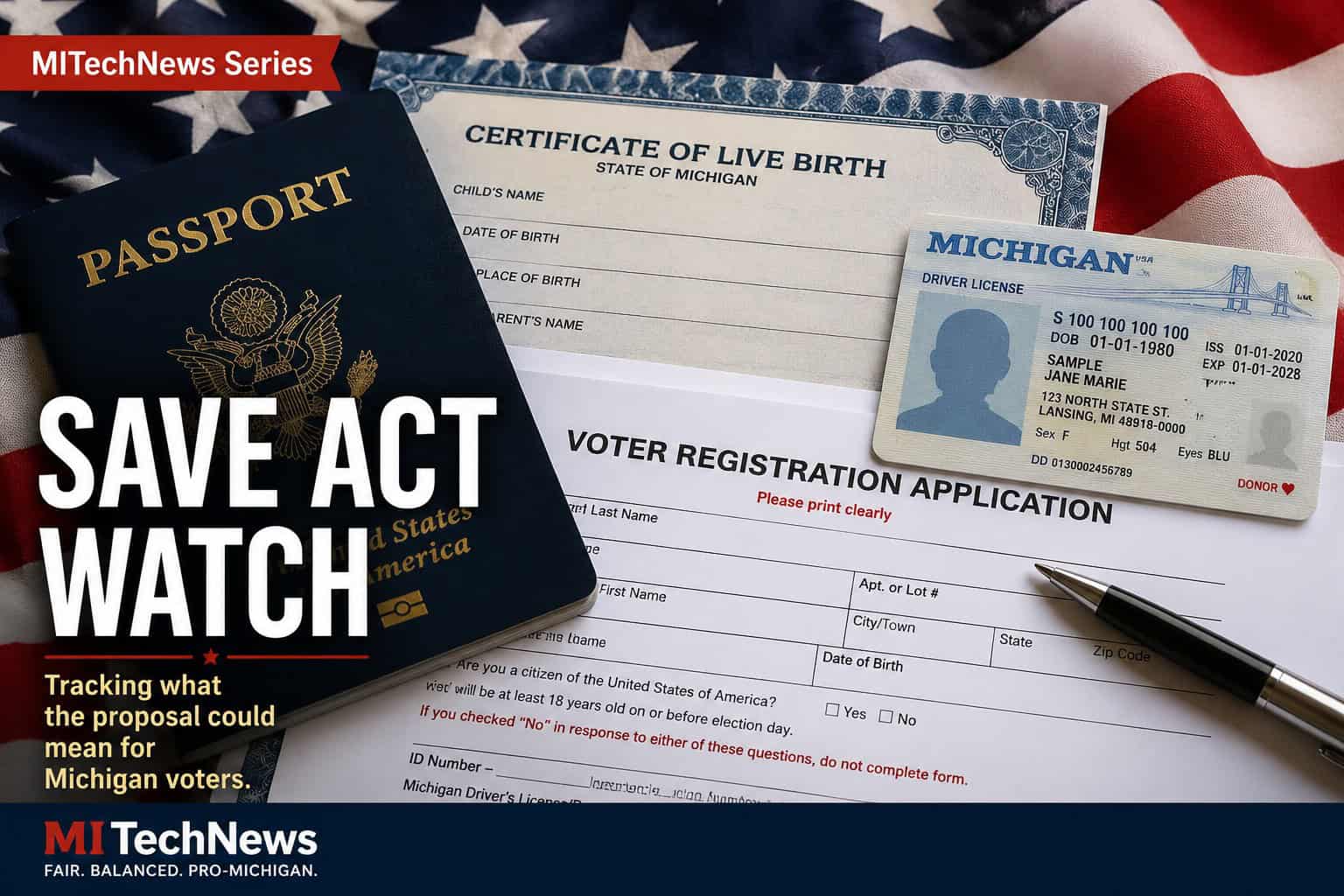
A standard Michigan driver’s license establishes identity, but by itself does not necessarily establish U.S. citizenship. Depending on how the legislation is ultimately implemented, many voters could need additional documents, such as a birth certificate, U.S. passport, Certificate of Naturalization, or other qualifying records specified by federal law.
Critics also say married women who changed their last names after marriage could face additional paperwork because the surname on a birth certificate may not match the name on a driver’s license or other current identification. They argue voters in similar situations could need marriage certificates or other legal documents linking their birth name to their current legal name.
Why Attach It To The Defense Bill?
House conservatives have repeatedly demanded Senate action on the SAVE Act, even though Senate leaders have indicated the legislation lacks sufficient support to overcome the chamber’s 60-vote filibuster threshold.