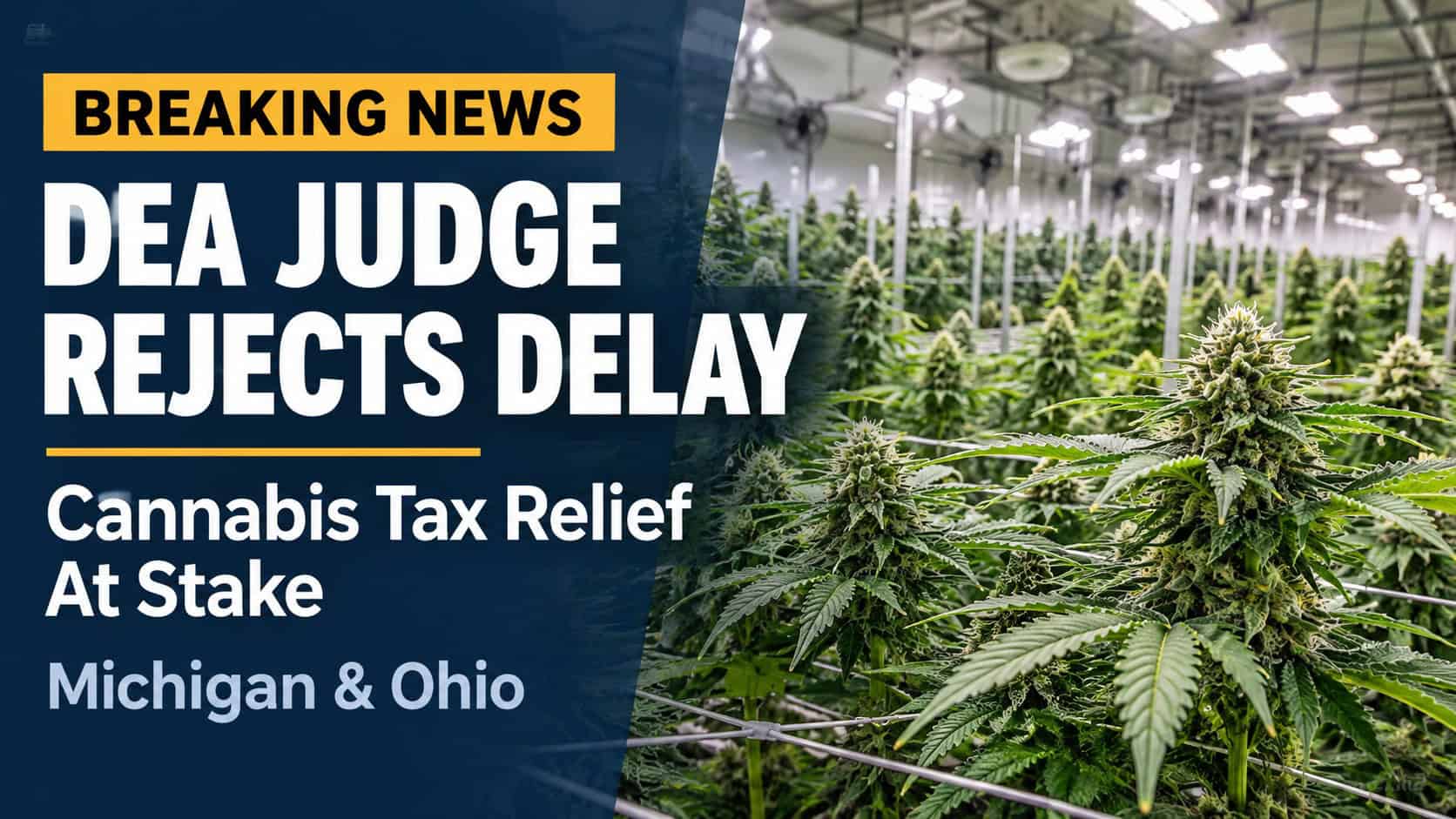
WASHINGTON DC – The Drug Enforcement Administration has invited only opponents of marijuana reform to participate in a June 29 hearing that could influence the future of federal cannabis policy, a decision that is drawing criticism from legalization advocates, consumer groups and state-licensed marijuana businesses that were excluded from the proceedings.
The hearing, scheduled to begin June 29 in Arlington, Virginia, will examine issues related to federal marijuana rescheduling and could help shape future cannabis policy affecting taxation, banking access and business operations nationwide.
According to participant lists and procedural orders released by the DEA, all seven approved participants have publicly expressed concerns about marijuana legalization or broader cannabis reform. No organizations representing cannabis consumers, state-licensed marijuana businesses, legalization advocates or patients were granted participation status.
For Michigan, one of the nation’s largest cannabis markets, the outcome could have significant implications. Michigan cannabis sales exceeded $3 billion in 2025, making the state one of the largest legal marijuana markets in the United States.
“Rescheduling, and all of the possible implications from it — and the future of hemp — are likely the most significant topics to address this year,” said Brian Hanna, executive director of Michigan’s Cannabis Regulatory Agency and recently elected president of the Cannabis Regulators Association (CANNRA) said in the press release.
Who Got Invited — And Who Didn’t
The seven participants approved by the DEA include the National Drug & Alcohol Screening Association, Smart Approaches to Marijuana (SAM), DUID Victim Voices, the Tennessee Bureau of Investigation, representatives from the states of Nebraska, Idaho, Indiana and Louisiana, physician Dr. Kenneth Finn and pharmacist Dr. Phillip Drum.
Critics note that all have expressed opposition to marijuana legalization or concerns regarding expanded cannabis access.
Organizations seeking broader marijuana reform, including the National Organization for the Reform of Marijuana Laws (NORML), were denied participation requests.
In a statement issued May 26 after seeking a role in the proceedings, NORML Deputy Director Paul Armentano argued that cannabis consumers should have a voice in the process.
“Millions of Americans consume cannabis responsibly and safely, and they deserve representation in any administrative process determining marijuana’s federal status,” Armentano said.
According to Marijuana Moment, the DEA rejected participation requests from several reform organizations after determining they would not be “adversely affected or aggrieved” by moving marijuana to Schedule III under federal law.
Why The Hearing Matters
The hearing comes as federal cannabis policy remains in flux.
Earlier this year, the Trump Administration moved state-licensed medical marijuana and certain FDA-approved cannabis products to Schedule III under the federal Controlled Substances Act. However, broader questions involving adult-use marijuana, federal taxation, banking access and future regulatory treatment remain unresolved.
For cannabis businesses, the stakes extend beyond symbolism.
Industry operators continue to face restrictions affecting access to traditional banking services, institutional investment and favorable tax treatment. Many cannabis executives have argued that further federal reforms are necessary to place state-licensed marijuana businesses on a more equal footing with other industries.
The June 29 hearing is not expected to produce immediate policy changes. Instead, it will create an administrative record that could influence future federal decisions involving marijuana scheduling and regulation.
Questions About Fairness
Supporters of reform argue that any hearing intended to shape future marijuana policy should include perspectives from consumers, patients, state regulators and licensed cannabis businesses.
Opponents maintain that public-health concerns, impaired driving, addiction risks and youth access issues deserve greater scrutiny before additional reforms are considered.
The hearing is expected to continue into July.
For Michigan’s cannabis industry, the larger issue may not be the hearing itself, but whether all sides of the debate are represented when federal officials consider the future of marijuana policy.
With billions of dollars in annual sales and thousands of jobs tied to Michigan’s cannabis sector, industry observers will be watching closely to see whether the process is viewed as balanced and credible before testimony even begins.
Sources: DEA hearing participant lists and procedural orders; Marijuana Moment reporting on hearing participants and exclusions; NORML statement issued May 26, 2026; comments from Michigan CRA Executive Director Brian Hanna provided to MITechNews.