Wood Mackenzie Says Oil Shocks Could Accelerate Global EV Adoption As Detroit Confronts A Very Different American Transition
MICHIGAN’S NEXT ECONOMY
DETROIT — Michigan has roughly $28 billion in announced electric vehicle and battery investments riding on the future of transportation.
Right now, American consumers aren’t following the script.
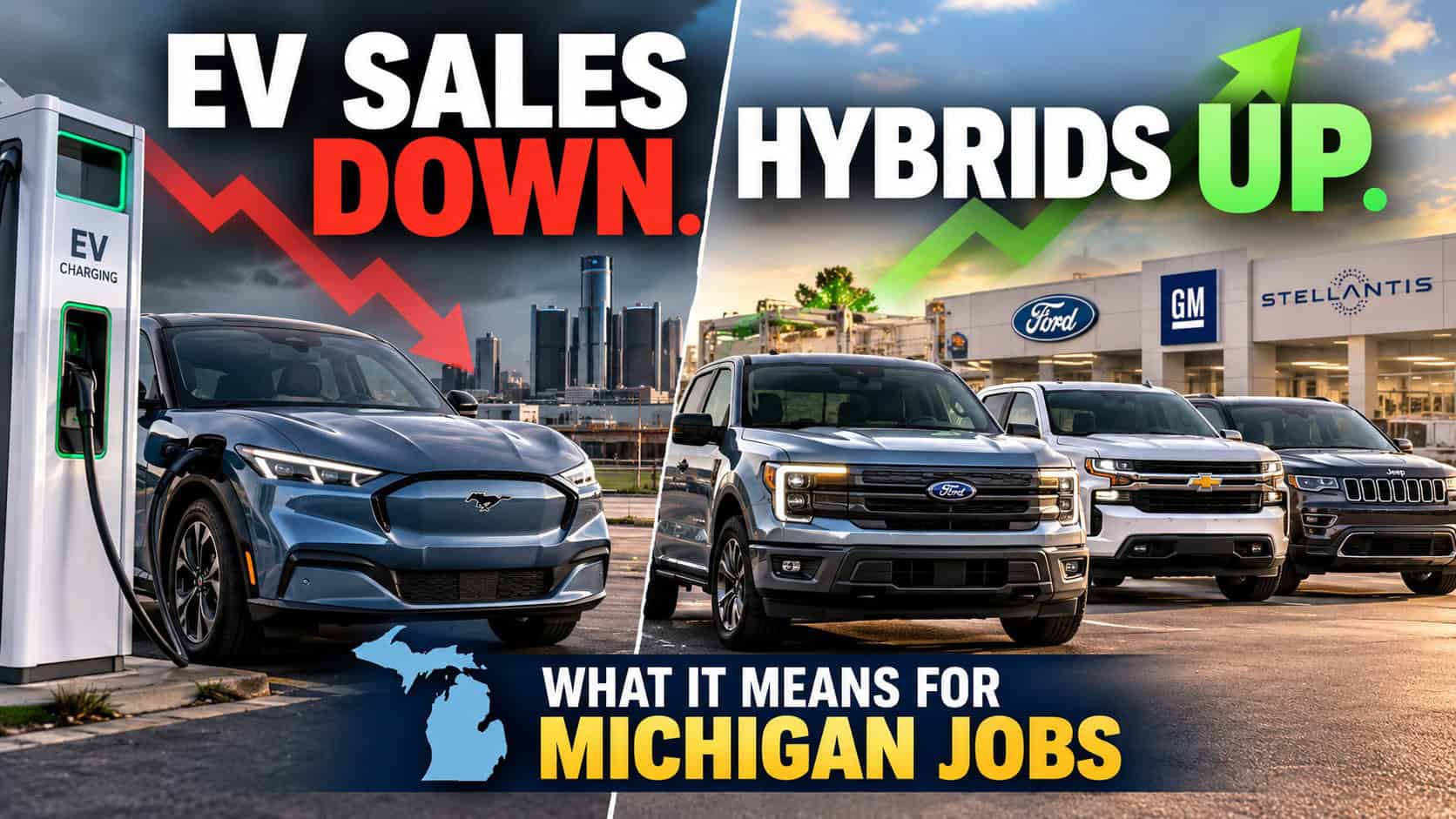
Battery-electric vehicles accounted for only about 4% of General Motors’ U.S. sales during the second quarter, less than 2% at Ford and less than 1% at Stellantis.
But that doesn’t mean Americans are simply sticking with conventional gasoline vehicles. Increasingly, buyers looking for better fuel economy appear to be choosing a third option: hybrids.
Now a new analysis from energy research firm Wood Mackenzie raises another possibility. Continued oil-market volatility and high gasoline prices could eventually accelerate the global transition toward battery-electric vehicles — potentially leaving Detroit automakers trying to serve two very different markets.
Oil Shocks Could Change The EV Equation
Wood Mackenzie’s new “Electric Shock” scenario examines what could happen if three forces converge: governments invest more heavily in EV supply chains, high gasoline prices encourage consumers to move away from conventional gasoline vehicles and battery technology advances faster than expected.
The firm’s base case already projects EVs increasing from about 4% of the global vehicle fleet today to 25% by 2040.
Under its more aggressive scenario, global EV adoption could rise roughly 50% above the base case by 2040. The U.S. EV fleet could be 51% larger than currently projected.
The consequences would extend far beyond automakers.
Wood Mackenzie estimates global oil demand could fall to 99 million barrels per day by 2040, about 5 million barrels per day below its base forecast, potentially forcing the early closure of approximately 40 refineries worldwide.
For Michigan, however, the immediate question is what happens to its most important manufacturing industry.
Michigan’s $28 Billion EV Bet
Michigan automakers and suppliers announced approximately $28 billion in electrification investments between 2020 and 2025, according to MichAuto’s latest State of Automobility report.
That puts Michigan second nationally in announced electrification investment and represents about 12% of the $227 billion announced nationwide.
The investments include EV assembly operations, battery factories and suppliers intended to position Michigan for an electric future.
But some projects have since been delayed, reduced or redirected as U.S. EV demand failed to grow as quickly as automakers anticipated.
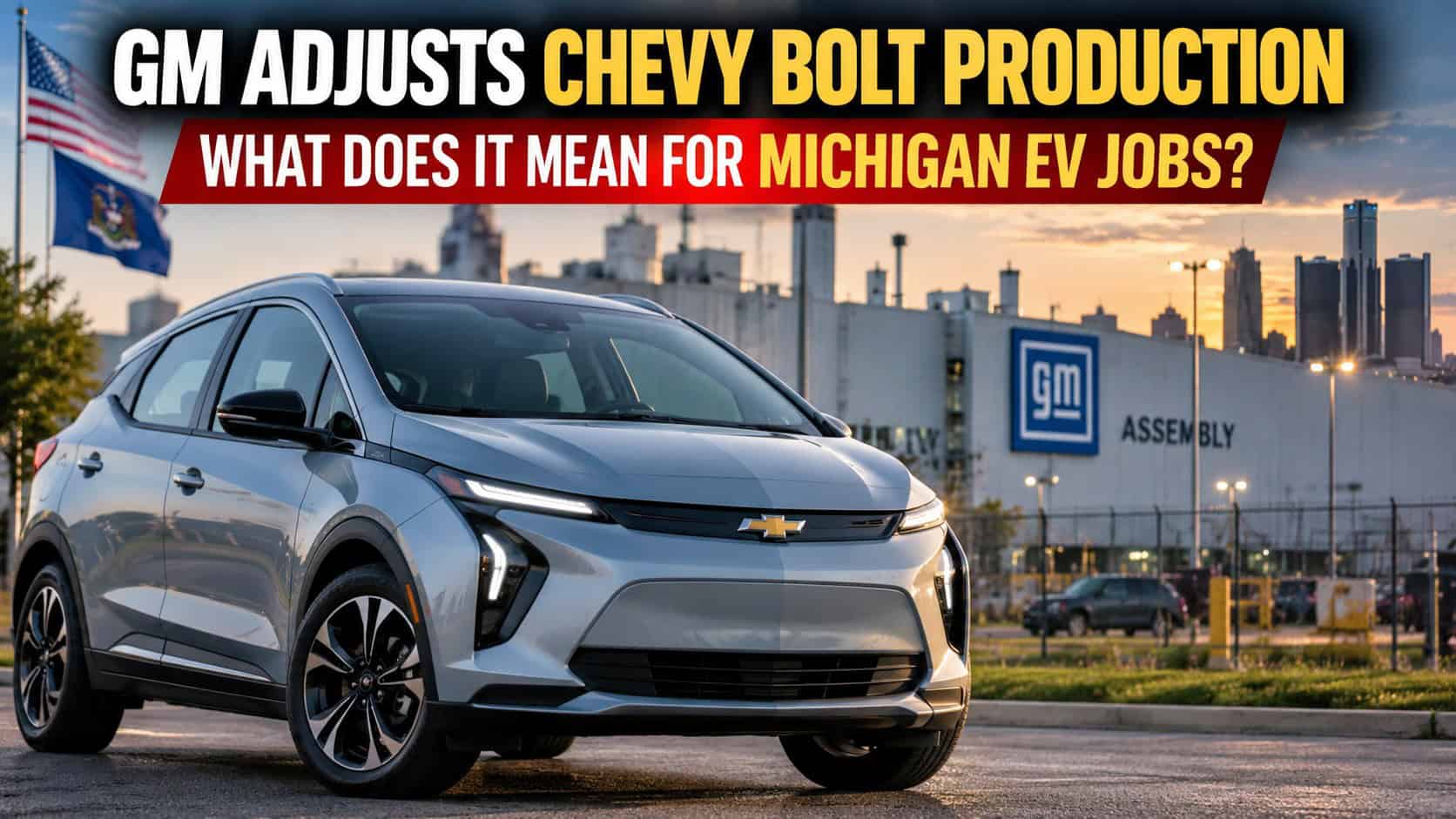
General Motors, for instance, abandoned plans to convert Orion Assembly exclusively to electric pickup production and now plans to build gasoline-powered pickups and SUVs there beginning in 2027.
Meanwhile, battery manufacturing is increasingly finding another market beyond automobiles: large-scale electricity storage.
Detroit Three EV Sales Remain Small
The gap between Michigan’s EV investment and current consumer demand is striking.
During the second quarter of 2026, battery-electric vehicles represented approximately 4.3% of GM’s U.S. vehicle sales.
At Ford, EVs represented only about 1.8%.
At Stellantis, the percentage was less than 1%.
Compare that with China.
Wood Mackenzie says EVs accounted for 42% of Chinese vehicle sales during the second quarter of 2026. Chinese manufacturers also enjoy significant battery and manufacturing cost advantages and are expanding aggressively into overseas markets.
That creates a long-term strategic question for Detroit:
Can American automakers remain globally competitive if their home market moves toward electrification much more slowly than China and other major markets?
American Buyers Are Finding A Middle Ground
Higher gasoline prices don’t necessarily mean American consumers will jump directly from gasoline-powered vehicles to battery electrics.
Increasingly, many appear to be choosing hybrids.
U.S. hybrid sales increased nearly 20% in July from a year earlier, according to the Financial Times, even as GM EV sales declined 33% and Ford EV sales fell sharply.
The appeal isn’t difficult to understand.
Hybrids can substantially reduce gasoline consumption without requiring buyers to install a home charger, locate public charging stations or change how they refuel during long trips.
That creates a complication for Wood Mackenzie’s accelerated-EV scenario. An oil-price shock may push consumers away from conventional gasoline vehicles, but that doesn’t necessarily mean they will move directly into battery electrics.
They may buy hybrids instead.
Detroit has noticed.
Ford has expanded hybrid offerings across some of its most important vehicles, including the F-150 and Maverick. Stellantis has relied heavily on plug-in hybrids such as the Jeep Wrangler 4xe. GM, after concentrating heavily on battery-electric vehicles, has also moved toward adding plug-in hybrids to its U.S. lineup.
That suggests the American transition could look very different from China’s.
Instead of moving rapidly from gasoline vehicles to battery electrics, American consumers may use hybrids as a bridge — potentially extending the transition for another generation of vehicles.
For Michigan, that could be both good and bad news.
Hybrids could preserve demand for Michigan engine, transmission and supplier operations while automakers gradually expand battery production.
But if hybrids slow U.S. adoption of full EVs while China and other global markets continue electrifying rapidly, Detroit could find itself trying to support two expensive technology strategies simultaneously.
Michigan’s Battery Bet May Have A Second Life
Michigan may have another hedge against slower EV adoption.
Batteries aren’t just for cars anymore.
The explosion of artificial intelligence and data centers is increasing electricity demand while utilities are adding renewable generation and searching for ways to stabilize the electric grid.
That is creating another potentially enormous market for battery storage.
DTE Energy recently announced a $1.6 billion agreement with LG Energy Solution Vertech for Michigan-made battery storage systems supporting eight projects totaling 1.5 gigawatts of capacity.
DTE estimates the projects will generate approximately $2.3 billion in Michigan economic activity.
That means some battery manufacturing infrastructure developed around expectations of an EV boom could benefit from another technology boom even if American EV sales remain weak.
Michigan Faces Two Very Different Futures
Wood Mackenzie’s Electric Shock analysis isn’t a prediction. It is a scenario examining what could happen if geopolitics, government policy, consumer behavior and technology all push EV adoption in the same direction.
But it highlights the unusual position Michigan now occupies.
The state has committed billions of dollars and thousands of jobs to an electric future while its largest automakers continue making most of their money selling gasoline-powered vehicles — and American consumers increasingly embrace hybrids as an alternative.
Meanwhile, China is moving rapidly toward battery-electric transportation.
If U.S. EV demand remains weak, some Michigan investments could struggle.
If hybrids dominate the American transition, Michigan’s existing auto manufacturing base could get a longer lease on life.
But if oil shocks, cheaper batteries and technological advances suddenly accelerate EV adoption around the world, Detroit faces an entirely different danger:
The global auto industry could move electric faster than Michigan’s automakers — and their customers — are prepared to follow.