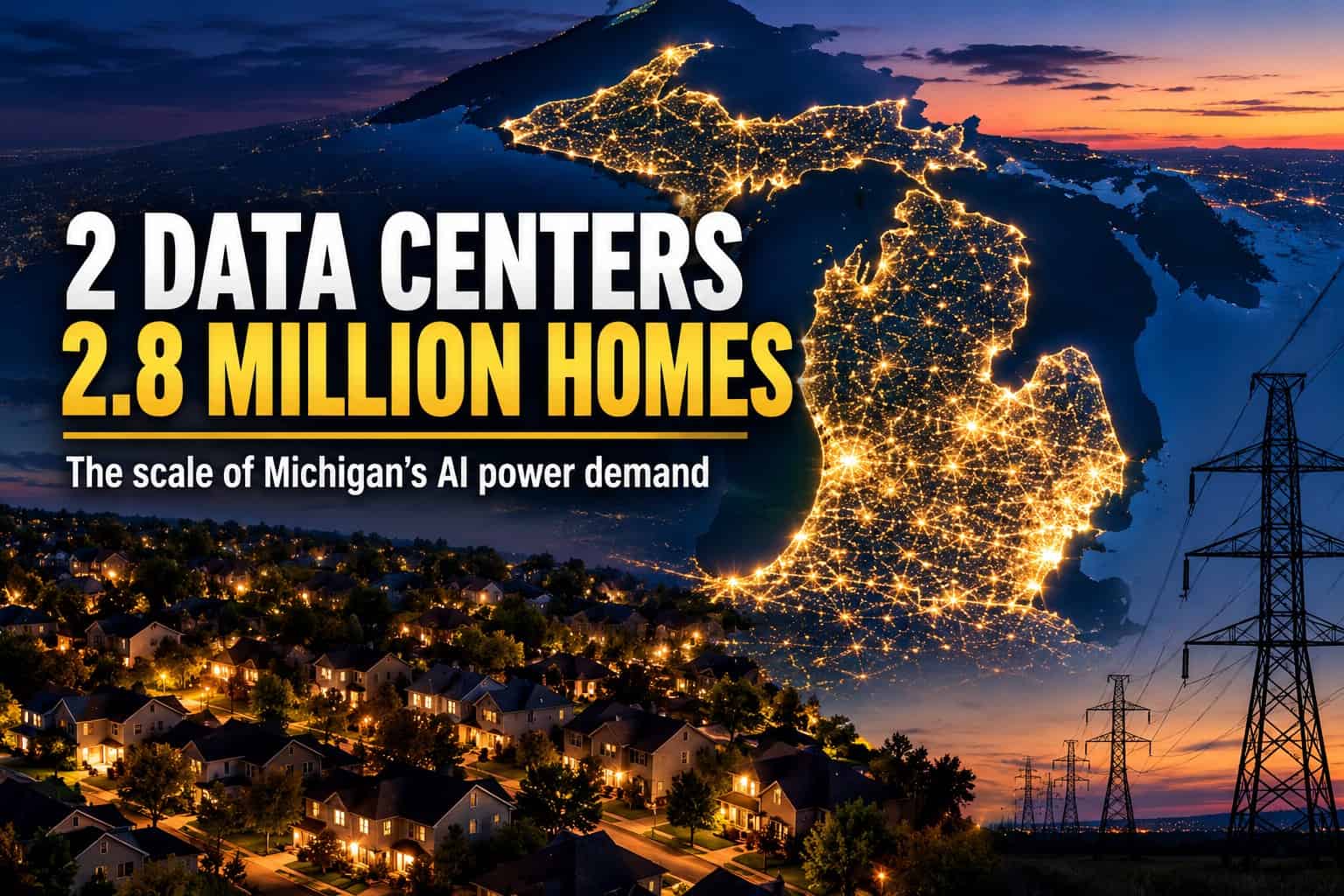
State Tax Commission will decide whether to approve 12-year property tax incentive for project expected to anchor Michigan’s AI ambitions
SALINE TWP. — Oracle has formally applied for a 12-year property tax exemption for its proposed artificial intelligence data center in Saline Township, moving one of Michigan’s largest-ever technology investments into the next phase of state review. The Oracle Saline data center is quickly becoming one of the state’s most closely watched technology projects.
The application asks the Michigan State Tax Commission to approve an Industrial Facilities Tax (IFT) exemption covering eligible improvements to the massive data center campus. If approved, the incentive would reduce property taxes on qualifying real and personal property for 12 years under Michigan’s industrial development law.
The request comes as the project’s estimated value has grown substantially. Documents submitted as part of the tax incentive application place the total investment at approximately $43.1 billion, including nearly $9.9 billion in buildings and infrastructure and more than $33.2 billion in computer servers, AI processors and other equipment that will power advanced artificial intelligence computing.
If completed as proposed, the campus would rank among the largest AI data center investments in the United States and further cement Michigan’s effort to attract next-generation computing infrastructure.
Oracle Saline Data Center: Township Delays Vote
The Saline Township Board recently postponed action on the tax abatement request after residents raised questions during a public meeting about the project and the proposed tax incentive.
Among the issues discussed were the project’s impact on local tax revenue, electricity demand, water use and overall community benefits.
The township must approve the local portion of the request before the application can receive final consideration by the Michigan State Tax Commission.
Oracle Saline Data Center: Part of Michigan’s AI Strategy
The proposed campus has become one of the centerpiece projects in Gov. Gretchen Whitmer’s effort to position Michigan as a national leader in artificial intelligence infrastructure.
Oracle and development partners have said the project will create thousands of construction jobs while supporting Michigan’s growing technology economy. Once operational, the facility would provide the computing power needed to train and operate advanced AI models used by businesses, researchers and government agencies.
The company also has indicated the project would generate significant long-term tax revenue for local governments after incentive periods expire.
Additional Incentives Available
In addition to the Industrial Facilities Tax exemption, the project may also qualify for Michigan’s Enterprise Data Center Sales and Use Tax Exemption, a separate state program designed to encourage construction of large-scale data centers by exempting qualifying equipment purchases from the state’s 6% sales and use tax.
State officials have not disclosed whether Oracle has applied for that incentive or the estimated value of any potential tax savings.
Oracle Saline Data Center: State Review Ahead
The Industrial Facilities Tax exemption must ultimately be approved by the Michigan State Tax Commission before it can take effect.
State officials have not announced when the application will be considered.
MITechNews has requested additional information from Oracle, the Michigan Economic Development Corporation, and the Michigan State Tax Commission regarding the project’s current valuation, expected timeline, and the economic impact of the proposed incentives.
What Is an Industrial Facilities Tax Exemption?
Michigan’s Industrial Facilities Tax program is designed to encourage business investment by reducing property taxes on qualifying industrial improvements for up to 12 years.
Supporters say the incentives help Michigan compete with other states for major projects. Critics argue they should be used only when they are necessary to influence a company’s decision to invest.
The State Tax Commission makes the final decision on applications after local governments complete their review.