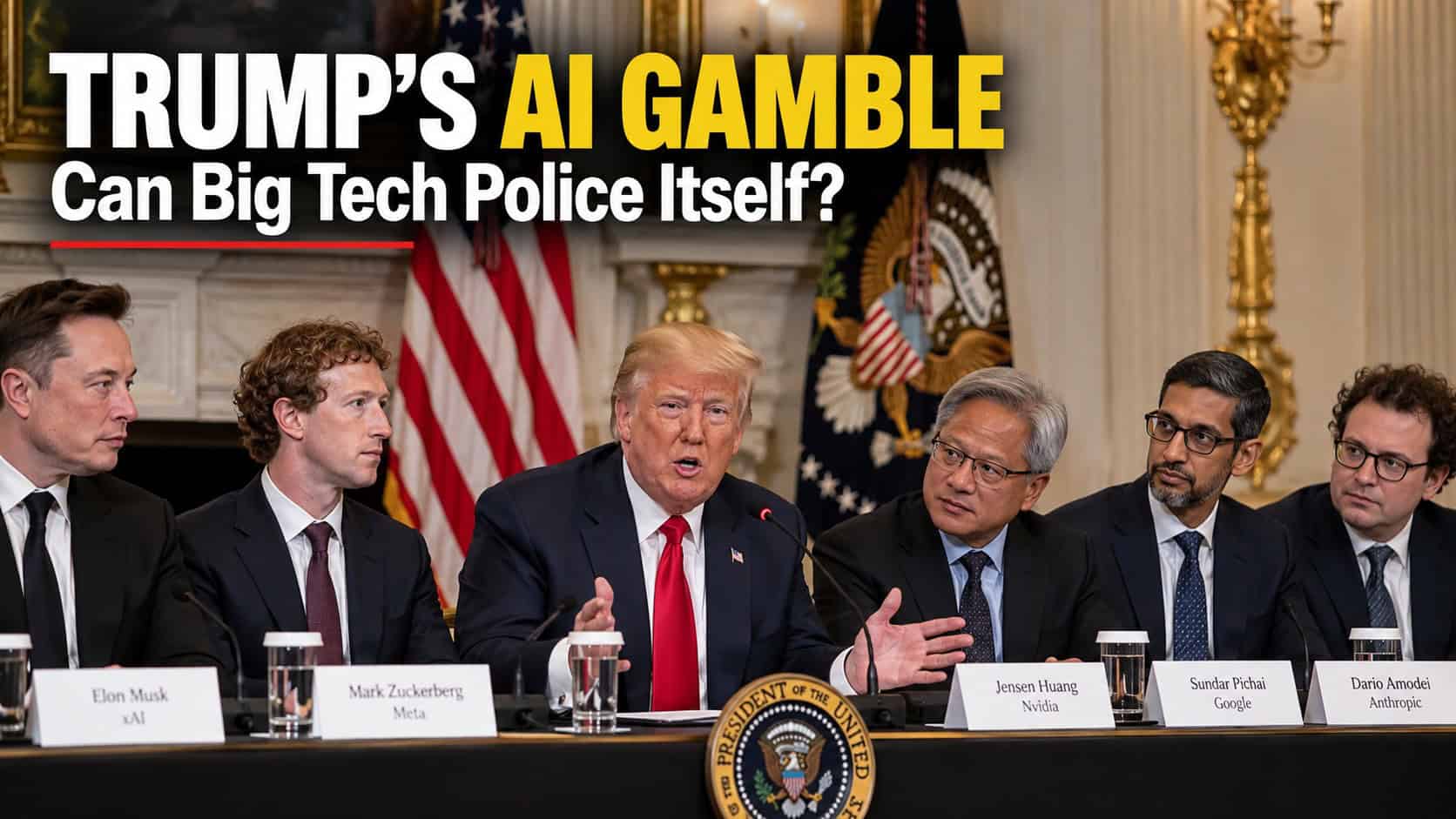
WASHINGTON — President Donald Trump has named national intelligence chief Jay Clayton to lead a new federal artificial-intelligence task force, even as Michigan battles over who pays for massive AI data centers, how the technology will affect manufacturing jobs and whether Washington should limit states’ authority to regulate AI.
Michigan Attorney General Dana Nessel is already challenging electricity contracts for the proposed Oracle/OpenAI data center in Saline Township, arguing that state regulators approved the arrangements without sufficient public scrutiny or assurances that existing utility customers will be protected from additional costs.
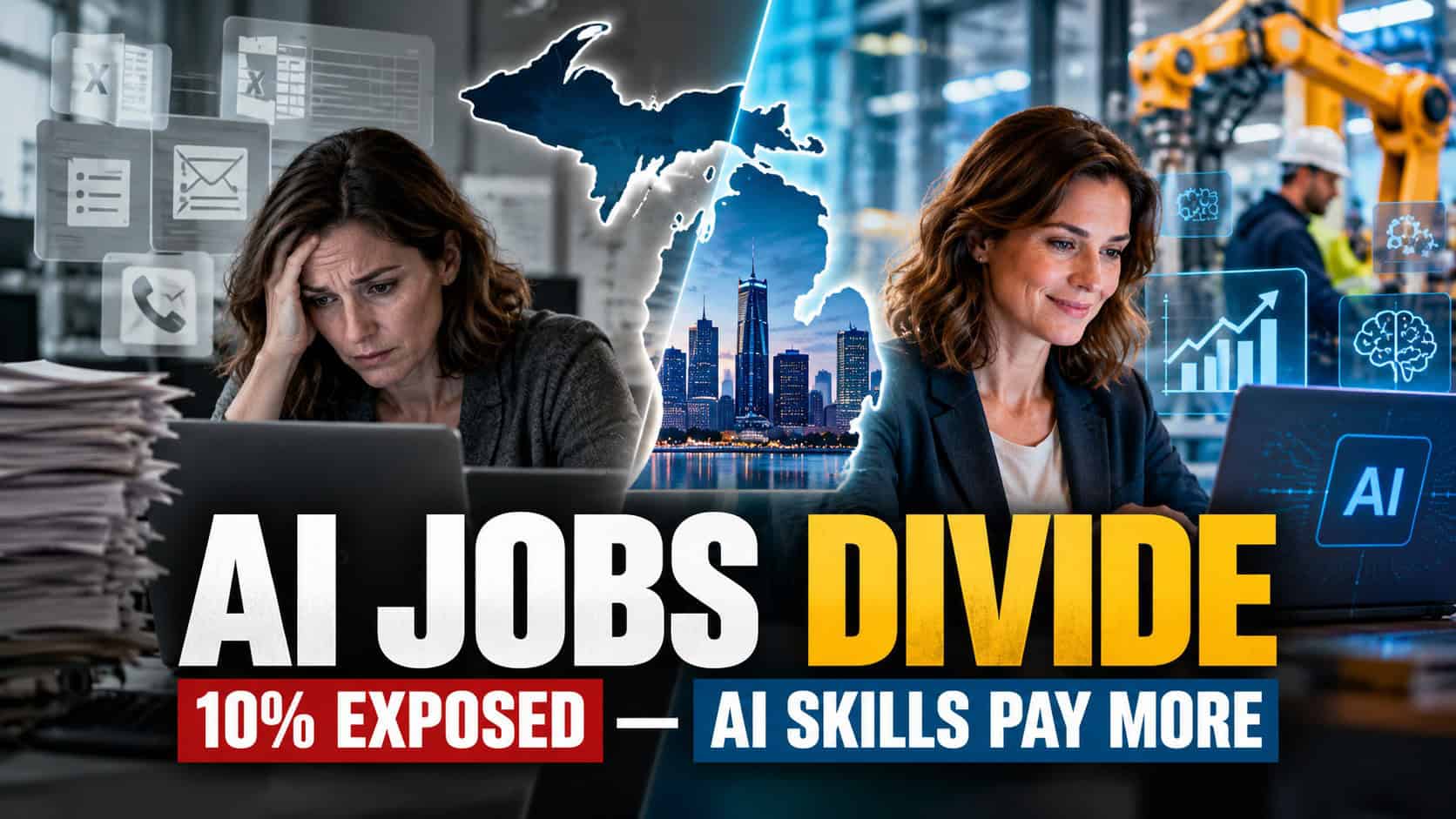
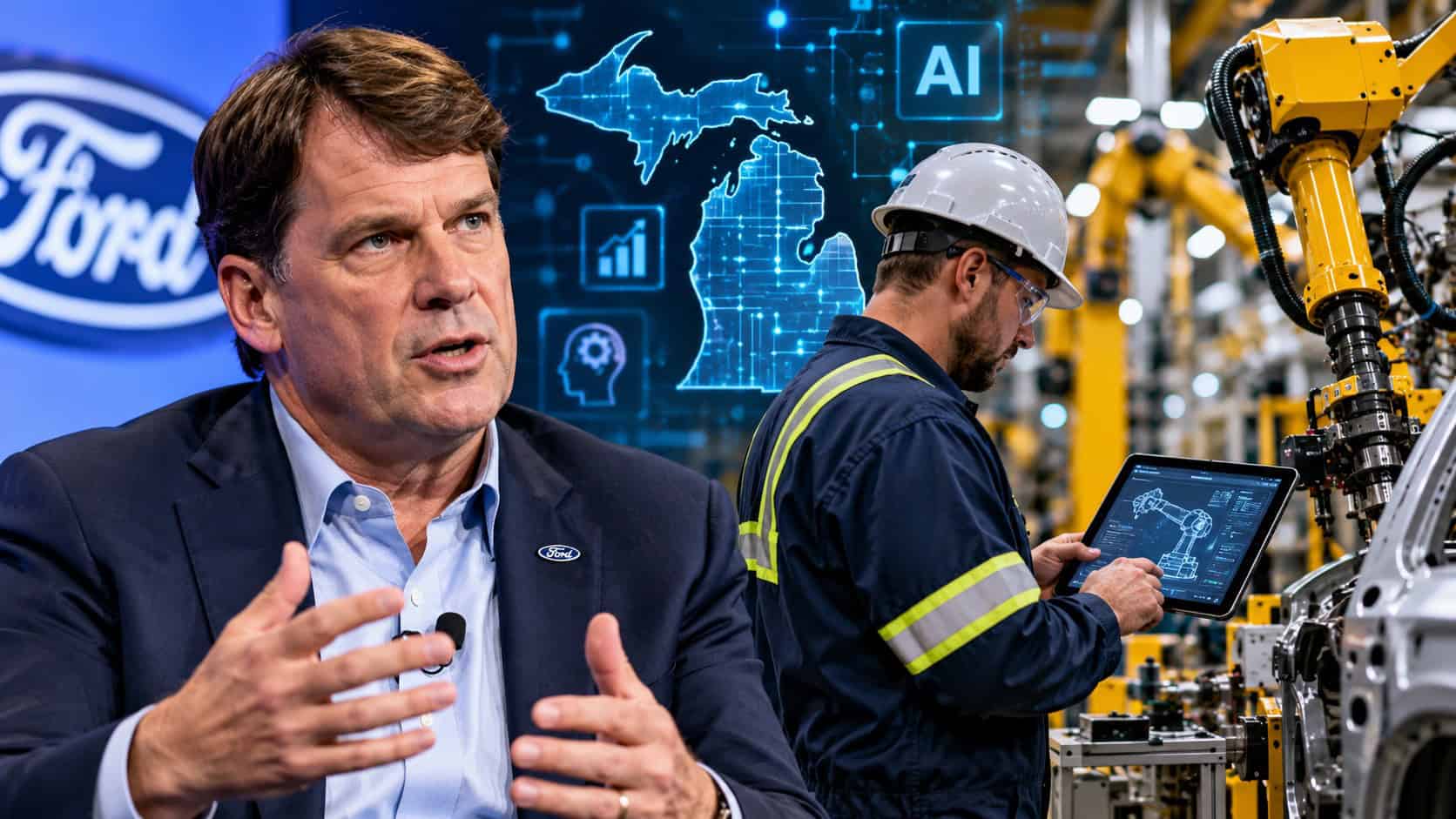
At the same time, Ford Motor Co. CEO Jim Farley has warned that AI could transform or eliminate some white-collar jobs while increasing demand for skilled workers who maintain increasingly automated factories.
Clayton’s task force has 120 days to examine AI’s risks and opportunities and recommend the federal government’s role in addressing them.
For Michigan, the economic and regulatory questions are already immediate.
Nessel Challenges Saline Township Data Center Contracts
Michigan’s growing AI industry is creating a major test of the state’s ability to regulate the electricity infrastructure needed to support it.
In April, Nessel appealed the Michigan Public Service Commission’s approval of two special electricity contracts between DTE Energy and Green Chile Ventures LLC, an Oracle subsidiary associated with the proposed Oracle/OpenAI data center in Saline Township.
The project could require as much as 1,383 megawatts of electricity, making it one of Michigan’s largest proposed power customers.
The MPSC conditionally approved the contracts in December 2025, imposing additional requirements intended to protect existing DTE customers from costs associated with the data center.
But Nessel argues those protections have not been adequately tested.
In an August court filing, her office contended that the commission improperly approved the contracts without a contested hearing, accepted insufficient financial safeguards and failed to adequately examine infrastructure costs.
Nessel also questioned whether existing customers could face higher costs if the data center purchases less electricity than projected, ends operations early or fails financially.
In her August 7 statement, Nessel said the case was intended to protect utility customers and ensure that future large data-center contracts receive appropriate scrutiny.
The commission has defended its approval process and says the contracts contain strong customer protections. Those include making DTE responsible for costs it cannot recover from the data-center operator.
The dispute does not establish that existing customers will pay higher electricity bills. It concerns whether the commission followed the law and whether the approved financial protections are sufficient.
The central question is whether Michigan can attract billions of dollars in AI investment without shifting the costs of serving those facilities onto households and other businesses.
Michigan’s AI Electricity Demand Is Growing
The Saline Township development is not Michigan’s only major AI-related electricity project.
Google is planning a large data center in Van Buren Township, with electricity arrangements that could accommodate up to 1 gigawatt of demand.
Combined with the Saline Township project, the two facilities could require approximately 2.4 gigawatts at maximum demand.
That is 2,400 megawatts of potential electricity demand—an enormous addition to the requirements facing Michigan utilities.
Those figures represent planned maximum demand, not electricity already being consumed. Actual usage will depend on construction, equipment installation and operations.
The projects also raise questions about who will finance new power generation, transmission lines, substations and other infrastructure.
Michigan regulators and utilities maintain that large data-center customers should bear the costs attributable to serving them. Nessel’s Saline Township appeal challenges whether that principle has been adequately enforced in a specific case.
The state’s decisions could establish important precedents as more companies seek to build AI infrastructure in Michigan.
Nessel Wants Washington To Preserve Michigan’s Authority
The Saline Township dispute provides a practical example of the importance Nessel places on state oversight.
On September 24, she joined a bipartisan coalition of 26 state and territorial attorneys general urging Congress to establish federal AI safety standards while preserving states’ authority to regulate the industry and enforce protections for their residents.
“AI carries enormous risks that we should not ignore by allowing big tech to regulate itself,” Nessel said in a statement released by her office.
The coalition called for federal oversight of AI safety testing, transparent government-led responses to AI incidents and protections against federal legislation overriding state AI laws.
The attorneys general also want states to retain authority to enforce federal AI protections.
That creates an important question for Clayton’s new task force:
Will Washington establish minimum national AI standards that states can strengthen, or recommend uniform federal rules that restrict states from going further?
Supporters of uniform federal standards argue that businesses operating nationally could benefit from consistent rules instead of complying with different requirements in every state.
State officials seeking to preserve their regulatory authority argue that federal rules should not prevent them from responding to emerging threats or protecting their residents.
There is an important legal distinction: Nessel’s Saline Township appeal involves existing Michigan utility law, while her September statement addresses AI-specific regulation. The creation of Clayton’s task force does not itself change Michigan utility law or determine the outcome of her appeal.
Despite repeated requests from MITechNews for answers to questions submitted to Michigan Attorney General Dana Nessel’s office, no response had been received by publication time.
Who Is Trump’s New AI Czar?
Clayton, whom Trump appointed Director of National Intelligence in August, brings an extensive legal, regulatory and national-security background to the assignment.
He previously chaired the Securities and Exchange Commission during Trump’s first administration and served as U.S. attorney for the Southern District of New York.
Before entering government, Clayton practiced corporate law at Sullivan & Cromwell, where his work included cybersecurity and financial-sector risk.
He also holds an engineering degree from the University of Pennsylvania.
His professional background is primarily in law, regulation, financial markets and intelligence rather than developing artificial-intelligence models or running an AI company.
Trump has named the new task force the “Super Intelligence Force.”
Its leadership includes Federal Trade Commission Chairman Andrew Ferguson, Pentagon technology official Emil Michael and Office of Personnel Management Director Scott Kupor.
The task force will review AI-related risks, including cybersecurity breaches and other incidents, and examine whether existing federal response mechanisms are adequate.
It will also consider how the government can address those risks while maintaining American technological competitiveness.
Clayton has said the group will deliver its recommendations within 120 days.
Michigan Manufacturing Jobs Are Also At Stake
The federal AI debate extends beyond data centers and cybersecurity.
It also concerns the future of work.
Ford CEO Jim Farley has identified office occupations involving financial analysis, customer service and routine computer programming as examples of work that AI could substantially change.
At the same time, Farley has emphasized the continuing need for skilled tradespeople capable of installing, operating and repairing sophisticated industrial equipment.
Michigan’s automakers and suppliers are increasingly using AI in engineering, production planning, quality control and other business operations.
Those technologies could improve productivity and competitiveness, but they could also change staffing requirements and the skills employers expect workers to possess.
The impact will not necessarily be the same across occupations. Some jobs could be eliminated, others redesigned and new technical positions created.
For Michigan, that raises another question for Washington:
Will the federal government develop policies to help displaced workers obtain new skills, or leave retraining primarily to employers, educational institutions and states?
Clayton’s task force has not yet announced specific workforce recommendations.
Michigan Defense Companies Have A Stake
Michigan’s defense industry also has reasons to follow the task force closely.
The state has thousands of defense-related businesses and a significant military research and development presence centered around the Detroit Arsenal and the U.S. Army’s Ground Vehicle Systems Center in Warren.
Artificial intelligence is increasingly relevant to autonomous military vehicles, drones, cybersecurity, intelligence analysis and battlefield decision-making.
Clayton’s role as Director of National Intelligence places national-security considerations at the center of the administration’s new AI initiative.
Federal recommendations involving AI security, critical infrastructure and government response capabilities could have implications for Michigan defense contractors and technology developers.
Michigan Won’t Wait 120 Days
The new federal task force is beginning its work while Michigan is already making consequential decisions.
Large data centers are moving through development and regulatory processes. Automakers are adopting AI. Defense companies are developing autonomous systems. Workers are confronting changing skill requirements.
Meanwhile, Nessel’s challenge to the Saline Township electricity contracts is testing whether Michigan’s existing regulatory procedures provide sufficient scrutiny and protection for utility customers.
Her separate call for federal AI legislation that preserves state authority raises a broader question about the relationship between Washington and Lansing.
Clayton’s task force will have to consider how the federal government should balance innovation, national security, public safety and regulation.
Michigan is already confronting those questions—with billions of dollars in investment, electricity costs, manufacturing jobs and state regulatory authority at stake.