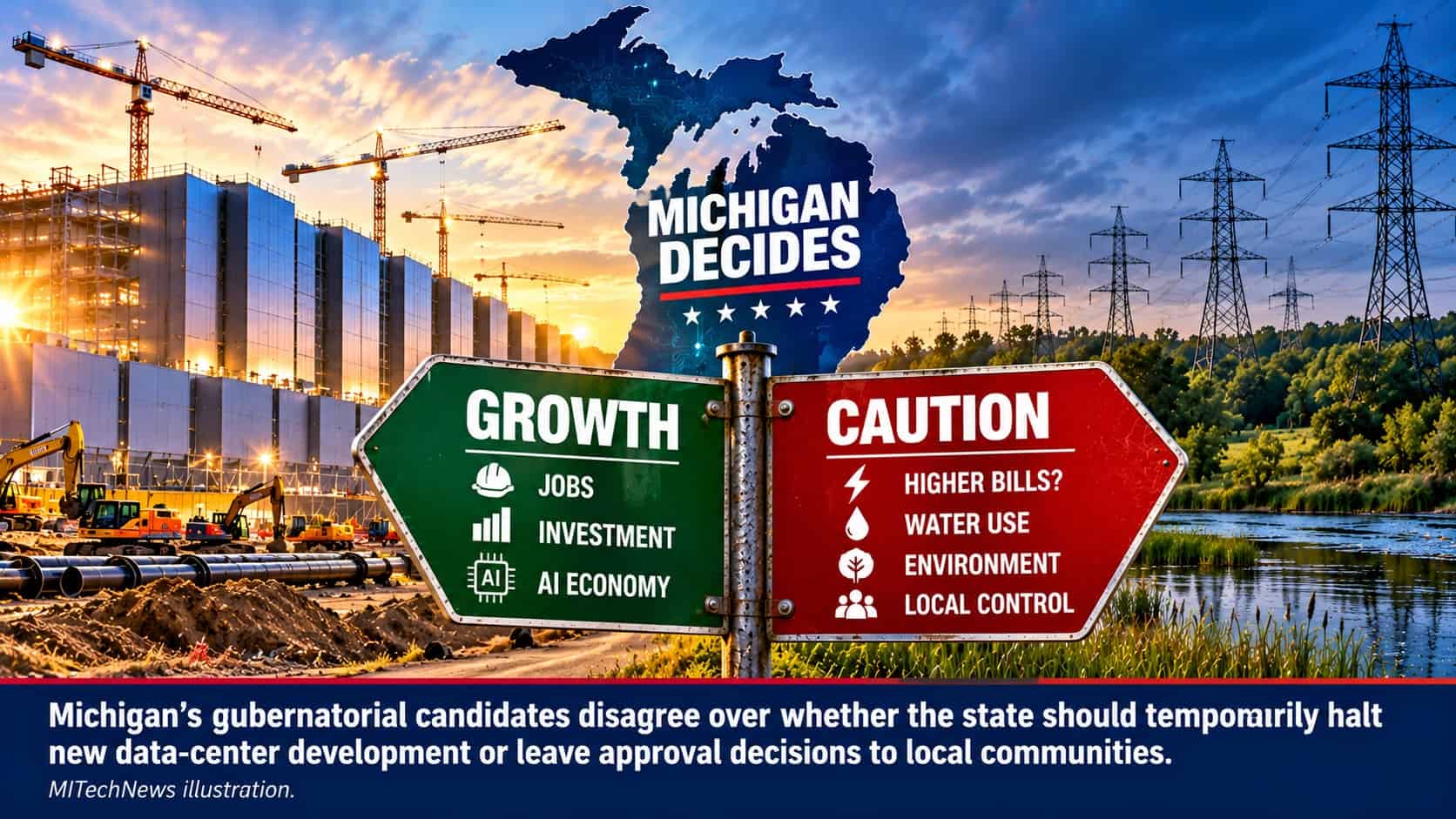
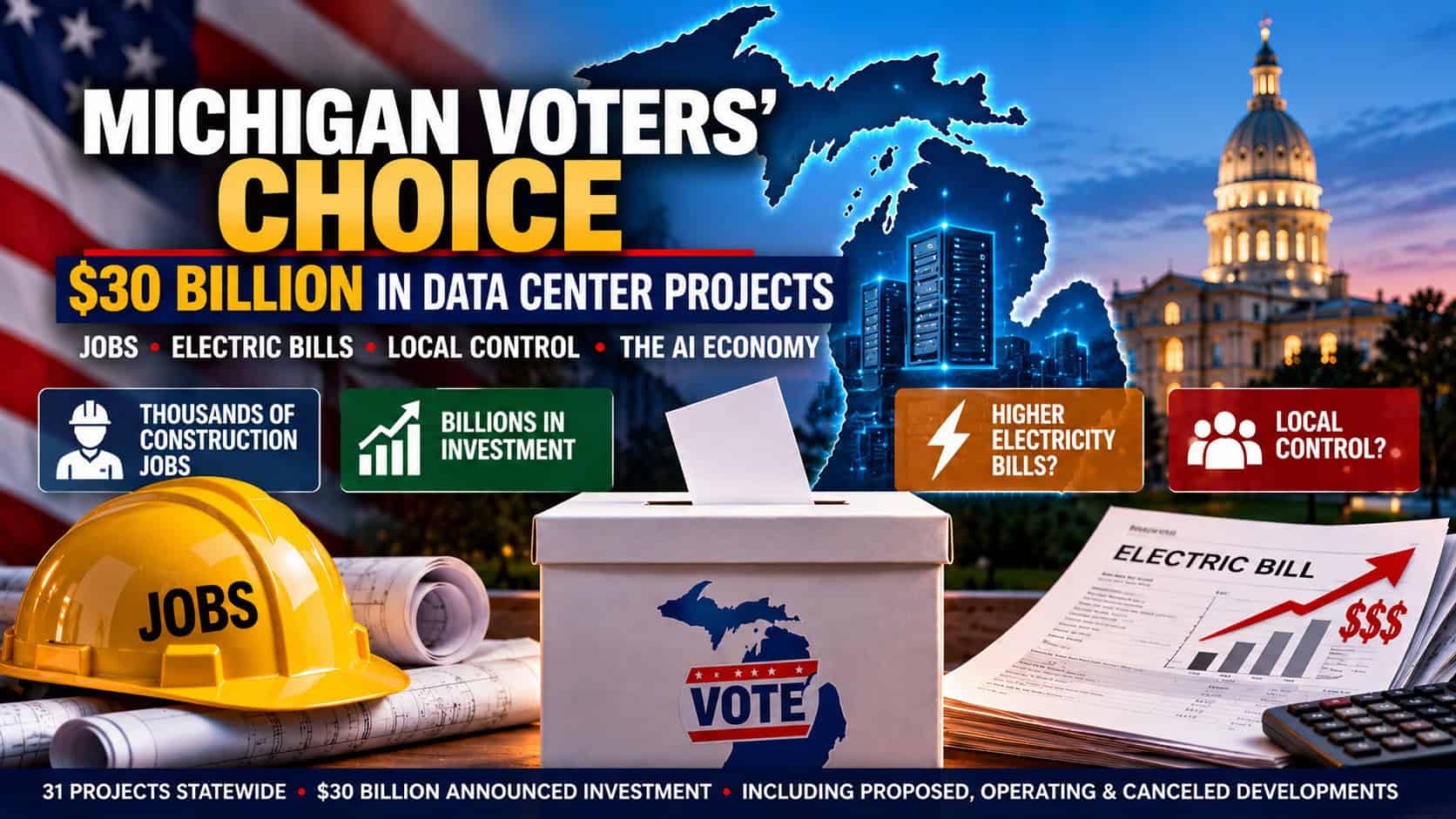
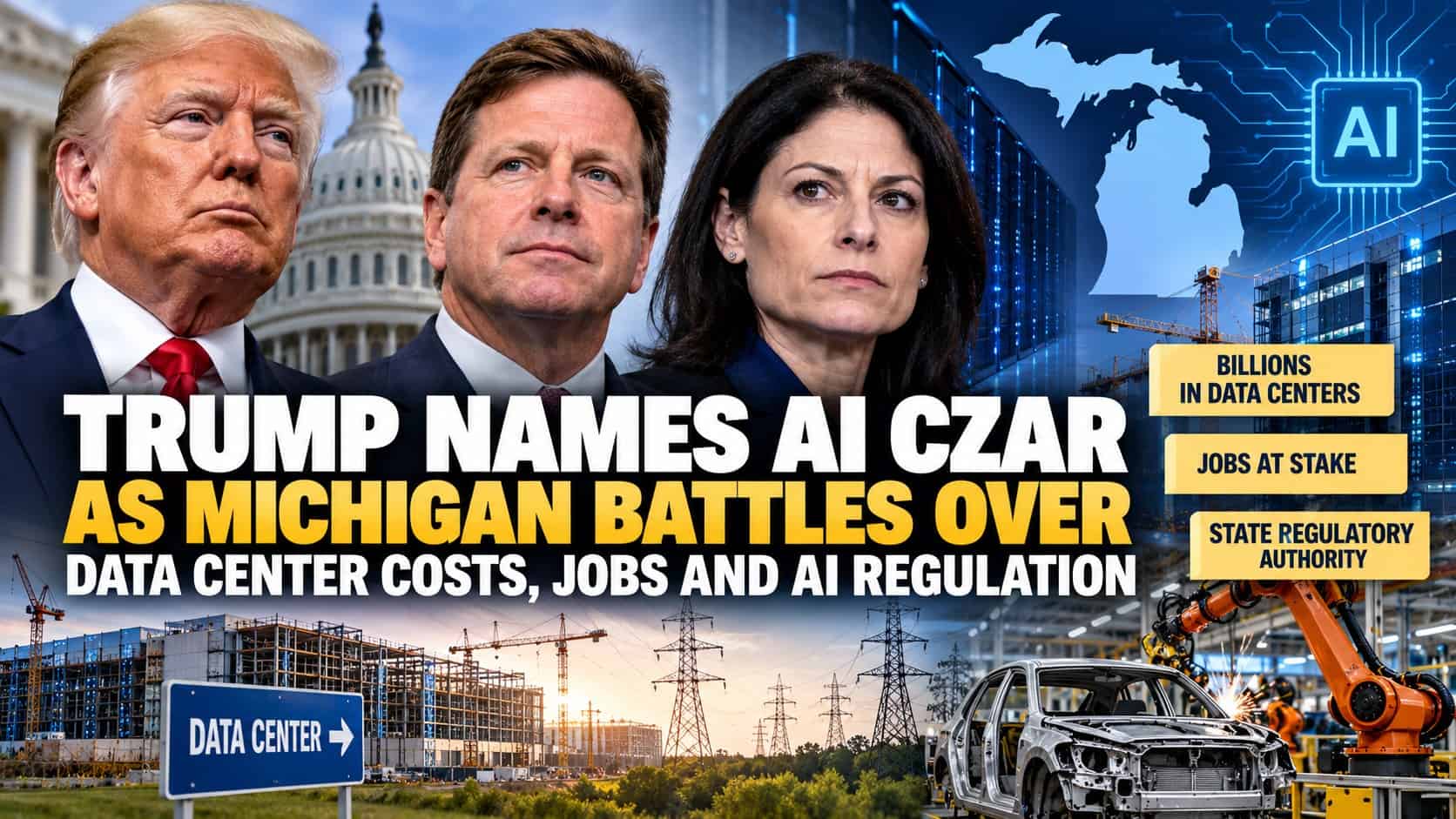
SALINE – Construction is moving forward on one of Michigan’s most controversial technology projects even as lawmakers in Lansing push for a temporary halt on future data center development.
The contrast highlights a growing debate over how Michigan should balance the economic promise of artificial intelligence with concerns about electricity demand, water consumption and the impact on local communities.
This week, work advanced on the massive AI-focused data center project in Saline Township, a development viewed by supporters as a major step toward positioning Michigan as a hub for next-generation computing infrastructure.
At the same time, state lawmakers are considering legislation that would place a temporary moratorium on additional large-scale data centers while regulators and policymakers study their long-term impacts.
The competing developments underscore a larger question facing Michigan:
How much AI infrastructure should the state encourage, and at what cost?
By The Numbers
- Billions of dollars are expected to be invested nationally in AI infrastructure over the next decade.
- Modern AI data centers can consume as much electricity as a small city.
- Utilities across Michigan are forecasting significant growth in power demand driven by AI, electric vehicles and advanced manufacturing.
- Data centers can require substantial water resources for cooling.
- Many large facilities employ relatively few permanent workers once construction is complete.
For supporters, those figures illustrate why Michigan must move quickly to compete for AI investment.
For critics, they raise questions about whether the benefits justify the long-term costs.
Saline Project Moves Ahead
The Saline Township project has become the focal point of Michigan’s data center debate.
Supporters argue the facility will help attract technology investment, strengthen Michigan’s AI ecosystem and demonstrate the state’s ability to compete for major infrastructure projects.
Opponents have raised concerns about energy consumption, water usage, land use and the potential impact on utility customers.
The controversy has drawn attention from residents, environmental advocates, state regulators and Attorney General Dana Nessel, turning what began as a local development proposal into a statewide discussion about the future of AI infrastructure.
Despite those concerns, construction activity now signals that the project is moving from planning to reality.
That reality may soon be repeated elsewhere in Michigan.
Lawmakers Call For A Pause
Even as the Saline facility advances, some lawmakers are advocating for a temporary moratorium on future large-scale data centers.
Supporters of the proposal argue Michigan needs time to fully understand the impact these facilities could have on the electric grid, water resources and local communities before approving additional projects.
The concern is not theoretical.
Across the country, utilities are scrambling to accommodate soaring electricity demand from AI computing centers. In some regions, grid operators have warned that data center growth is becoming one of the largest drivers of future power consumption.
Michigan is experiencing similar pressures.
The state is simultaneously expanding electric vehicle manufacturing, pursuing aggressive electrification goals and attracting energy-intensive industrial projects.
Adding AI infrastructure to that mix could significantly increase future electricity demand.
The Jobs Question
Perhaps the most contentious issue involves employment.
Data center developers often emphasize construction jobs, local tax revenue and infrastructure investment.
Critics point out that many large facilities require relatively few permanent workers after construction is complete.
A billion-dollar manufacturing plant may employ hundreds or thousands of workers.
A billion-dollar data center may employ only a fraction of that number once operations begin.
That disparity has led some policymakers to question whether taxpayer incentives, utility investments and public resources are generating enough economic return.
Industry advocates argue the calculation is far broader than direct employment.
They note that data centers support construction firms, engineering companies, electricians, network providers, security contractors and countless businesses that rely on cloud computing and artificial intelligence.
Could Michigan Have A Hidden AI Advantage?
The debate over data centers has largely focused on costs.
But some observers believe Michigan may possess a unique advantage that could become increasingly valuable as AI expands.
Unlike many fast-growing technology states in the Southwest, Michigan has abundant freshwater resources and a relatively cool climate.
Both are attractive characteristics for facilities that must continuously remove enormous amounts of heat generated by AI processors.
Cooling has become one of the largest operating expenses for modern data centers.
As artificial intelligence drives demand for larger and more powerful facilities, access to affordable cooling may become as important as access to electricity.
That reality is prompting a broader conversation about whether the Great Lakes could eventually become a strategic economic asset in the AI era.
Michigan’s AI Crossroads
The debate surrounding the Saline project may ultimately be only the beginning.
Developers continue exploring new locations. Utilities are planning for rising demand. Universities are investing heavily in artificial intelligence research. Businesses across nearly every industry are racing to adopt AI technologies.
Michigan leaders generally agree the state cannot afford to ignore the AI revolution.
The disagreement centers on how quickly development should proceed and what safeguards should be in place before the next generation of projects receives approval.
As bulldozers begin work in Saline Township and lawmakers debate the future in Lansing, Michigan finds itself confronting a question that could shape its economy for decades:
Will the state become a major center for AI infrastructure, or will concerns over energy, water and local impacts slow that growth before it fully takes hold?