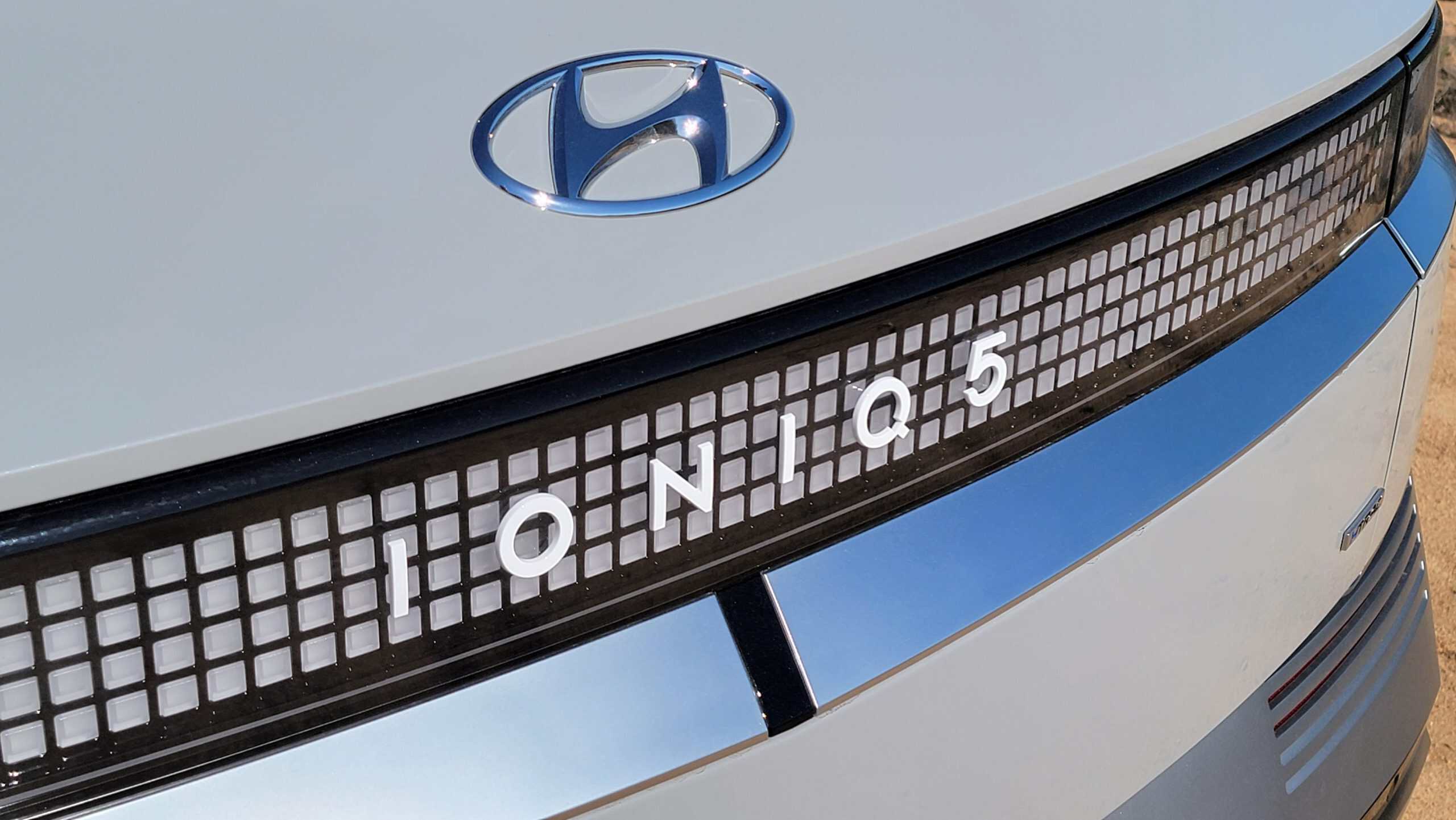
ANN ARBOR — No, your next Hyundai probably won’t look like a miniature wind farm. But the newly discovered patent illustrates just how creative automakers have become in the search for every additional mile of EV range.
Hyundai and Kia engineers have patented one of the more unusual ideas yet—a vehicle-mounted wind turbine system designed to generate electricity while the vehicle is moving.
The concept sounds almost too good to be true. Tiny turbines hidden within the vehicle would capture airflow created as the car travels down the road, spinning generators that send electricity back to the battery. According to patent drawings first highlighted by CarBuzz, the system could potentially recover energy that would otherwise be lost as air moves through and around the vehicle.
Whether the idea ever reaches a production vehicle is another matter.
Automakers file thousands of patents every year, many of which never become commercial products. But the filing offers a revealing look into just how aggressively engineers are searching for every possible gain in efficiency as competition in the electric vehicle market intensifies.
For Michigan, where much of the nation’s automotive engineering and supplier network remains concentrated, ideas like this illustrate the next phase of the EV race. As battery technology matures, engineers increasingly are looking beyond larger battery packs and toward dozens of small innovations that collectively can extend driving range.
Can It Really Work?
The obvious question is whether a wind turbine mounted on a moving vehicle actually produces “free” electricity.
The answer is more complicated.
A vehicle creates airflow because energy from its battery or gasoline engine is already pushing it through the air. Any turbine placed in that airflow creates additional aerodynamic drag, which requires additional energy to overcome.
That means a wind turbine cannot magically create energy from nothing. The laws of physics still apply.
Instead, engineers appear to be investigating whether small turbines can recover energy from airflow that might otherwise be wasted—such as air already moving through cooling ducts or other channels inside the vehicle—with only a minimal increase in drag. The patent does not suggest the turbines would replace plug-in charging or dramatically extend range. Rather, the concept appears aimed at harvesting small amounts of otherwise unused energy.
Every Mile Counts
The patent comes as automakers worldwide continue searching for creative ways to improve EV efficiency.
Recent advances have included:
- heat pumps that reduce winter energy consumption;
- improved regenerative braking systems;
- lower rolling-resistance tires;
- lighter materials;
- more aerodynamic body designs; and
- smarter battery management software.
Each improvement may add only a few miles of range, but together they can significantly improve real-world driving performance.
Hyundai has become one of the industry’s more aggressive innovators, filing patents covering everything from advanced battery packaging to integrated off-road recovery systems and other unconventional engineering concepts.
Why Michigan Should Care
While Hyundai manufactures vehicles in Alabama and is investing billions in a new electric vehicle complex in Georgia, many engineering firms, automotive suppliers and research organizations involved in next-generation vehicle technology remain concentrated in Michigan.
Companies throughout the state’s automotive supply chain routinely develop components that eventually appear in vehicles assembled across North America.
Even if this particular wind turbine concept never reaches production, it reflects where the industry is headed: extracting every bit of efficiency possible from electric vehicles through innovative engineering rather than relying solely on larger batteries.
For Michigan engineers, suppliers and researchers, those kinds of incremental innovations are increasingly becoming the competitive battleground of the global auto industry.
Will your next Hyundai or Kia have tiny wind turbines hiding behind its grille?
Probably not.
But the patent demonstrates that even as EV technology matures, automakers continue to explore unconventional ideas that could someday deliver a few extra miles of range. In an industry where a 2% or 3% efficiency improvement can influence buying decisions, no engineering idea appears too unusual to investigate.
Editor’s Note: Automakers routinely file patents for experimental technologies that never reach production. Hyundai and Kia have not announced plans to commercialize this system.