COLUMBUS – Ohio’s ban on THC beverages is hitting breweries hard—and raising new concerns for Michigan’s cannabis industry.
What took effect in March wasn’t just a regulatory tweak. It was a decisive move to eliminate a fast-growing product category and force all THC-related sales into a tightly controlled system.
Now, Michigan operators—from dispensaries to beverage companies—are watching closely to see whether similar pressure could emerge here—and whether Ohio’s losses could become Michigan’s gain.
Breweries Take the First Hit
The most immediate impact in Ohio has landed on craft brewers.
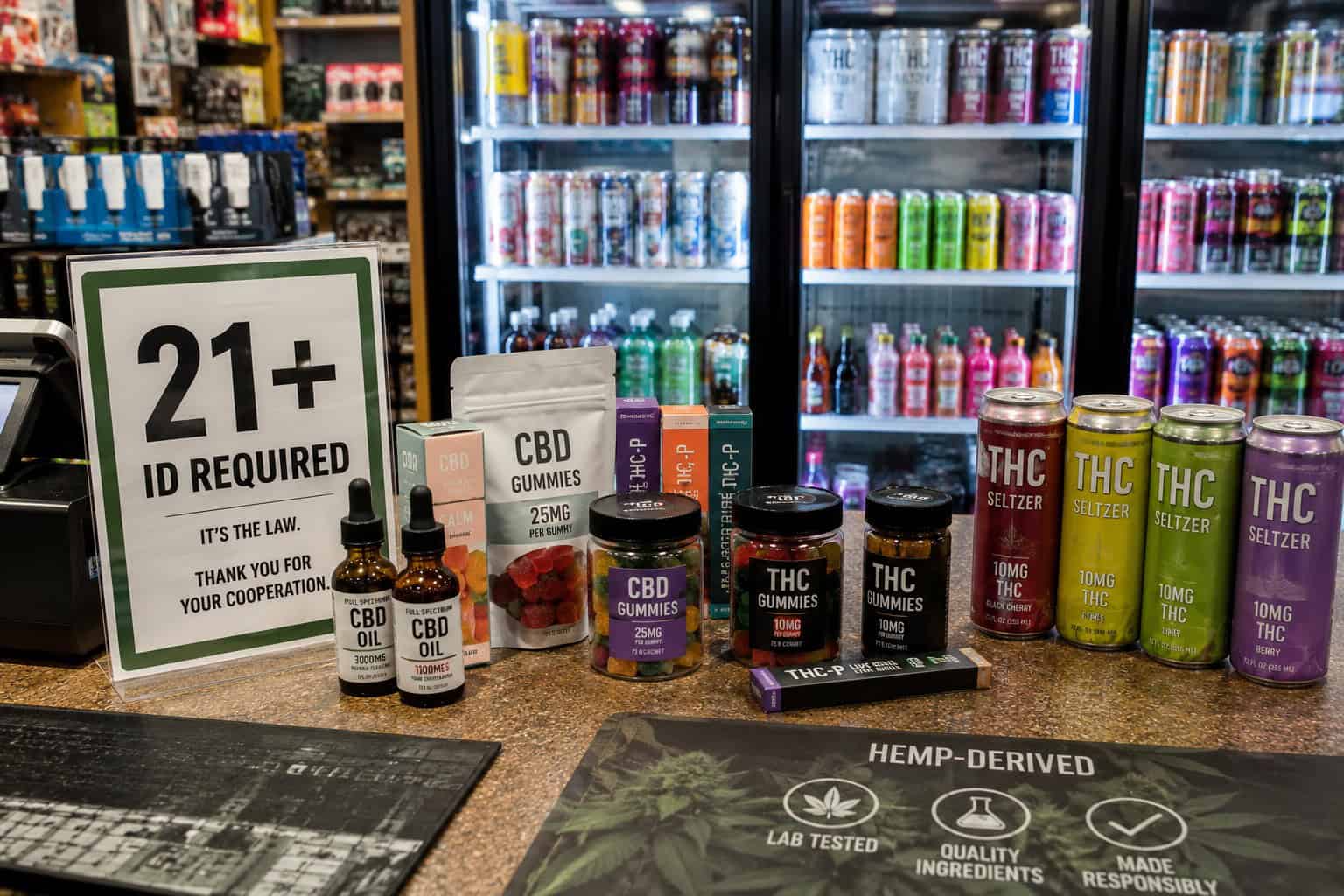
Companies like Fifty West and Rhinegeist had leaned into THC-infused seltzers as a way to offset declining alcohol consumption and tap into a new customer base. The products were gaining traction quickly, offering a low-dose alternative that appealed to both cannabis users and traditional beer drinkers.
That market disappeared almost overnight.
With the new law in effect, breweries and retailers can no longer sell intoxicating hemp-derived THC beverages outside the state’s licensed cannabis dispensary system. For many, that has meant:
- Pulling products from shelves
- Halting distribution agreements
- Shipping inventory out of state or writing it off entirely
For an industry already under pressure, the timing couldn’t be worse.
More Than a Ban — A Market Reset
While the impact on breweries is the most visible consequence, the broader strategy is more significant.
Ohio didn’t just restrict THC beverages—it effectively shut down a parallel marketplace that had developed around hemp-derived THC products.
For years, those products were sold widely in:
- Smoke shops
- Convenience stores
- Beverage retailers
- Bars and breweries
They existed alongside the regulated cannabis system, often with fewer restrictions on testing, distribution, and taxation.
That dual system is now gone.
Under the new law, most intoxicating THC products must be sold through licensed cannabis dispensaries, bringing them under stricter oversight and consolidating control within the regulated market.
A Coordinated Policy Shift
Ohio’s move followed a series of actions that signaled a clear direction toward tighter control.
- In 2025, Gov. Mike DeWine issued an emergency order targeting intoxicating hemp products
- Lawmakers followed with Senate Bill 56, restructuring how THC products are regulated and sold
- A key provision that would have allowed limited sales of low-dose THC beverages was removed, effectively closing the door on the category outside dispensaries
Taken together, those steps amount to a clear policy direction:
Eliminate the gray market and centralize THC sales within the licensed cannabis system.
Why Michigan Businesses Are Paying Attention
For Michigan’s cannabis industry, the implications are immediate.
Unlike Ohio, Michigan has one of the most mature cannabis markets in the country—but it’s also one of the most competitive.
Operators are already dealing with:
- Persistent oversupply
- Declining prices
- Margin compression across product categories
In that environment, THC beverages and hemp-derived products have emerged as a rare area of growth, offering higher perceived value and broader consumer appeal.
That makes Ohio’s move especially relevant.
If similar restrictions were introduced in Michigan, it could:
- Eliminate key retail channels outside dispensaries
- Shift more power to large, licensed operators
- Accelerate consolidation in an already crowded market
Cross-Border Effect: Michigan Could See a Boost
Ohio’s restrictions may also have an unintended consequence: sending more cannabis dollars across state lines.
Consumers in northern Ohio have long traveled to Michigan—particularly to border communities like Monroe, Adrian, and Morenci—to take advantage of lower prices and wider product selection.
The THC beverage ban could accelerate that trend.
With some products no longer available in Ohio outside licensed dispensaries, Michigan retailers may become the closest and most convenient option for consumers seeking those products.
The result is not likely to be a statewide surge—but rather a concentrated boost in border-region sales and specific product categories, including beverages and edibles.
For dispensaries already serving out-of-state customers, that could translate into meaningful near-term revenue gains.
The Core Issue: Control vs. Competition
At the center of the debate is a fundamental question about how THC products should be regulated.
On one side:
- Licensed cannabis operators argue that all THC products should meet the same standards for testing, tracking, and taxation
On the other:
- Hemp retailers and beverage companies have built businesses around federally legal products that operate outside the traditional cannabis system
Ohio resolved that conflict by choosing control.
Michigan has not—at least not yet.
Winners and Losers Emerging
Even at this early stage, the outlines of who benefits—and who doesn’t—are becoming clear.
Potential Winners:
- Licensed cannabis dispensaries
- Large, well-capitalized operators
- Border-region retailers capturing out-of-state demand
Potential Losers:
- Craft breweries
- Hemp retailers
- Small independent businesses operating outside the dispensary model
For Michigan businesses, those same fault lines already exist—and could widen depending on future policy decisions.
What Happens Next
Legal challenges to Ohio’s law are already underway, and the outcome could influence how other states approach THC regulation.
If the law holds, it may provide a roadmap for states looking to:
- Close hemp-derived THC loopholes
- Protect regulated cannabis markets
- Increase control over product distribution and taxation
That puts Michigan in a familiar position—watching a neighboring state test a policy shift that could eventually cross the border.
Ohio’s THC beverage ban is crushing a fast-growing segment of the beverage market.
But the bigger story is what it represents:
A deliberate shift to eliminate open-market THC sales and bring everything under a tightly controlled cannabis system.
For Michigan’s cannabis industry, the question isn’t just what happened in Ohio.
It’s what happens next—and whether the same pressures begin to build here, even as Michigan businesses benefit from Ohio consumers crossing the border in search of products they can no longer easily find at home.