LANSING – Michigan’s cannabis industry delivered another paradox in April: total marijuana sales increased sharply thanks in part to the annual 4/20 holiday surge, yet many cannabis operators remain trapped in an increasingly brutal price war that continues squeezing profits across the state.
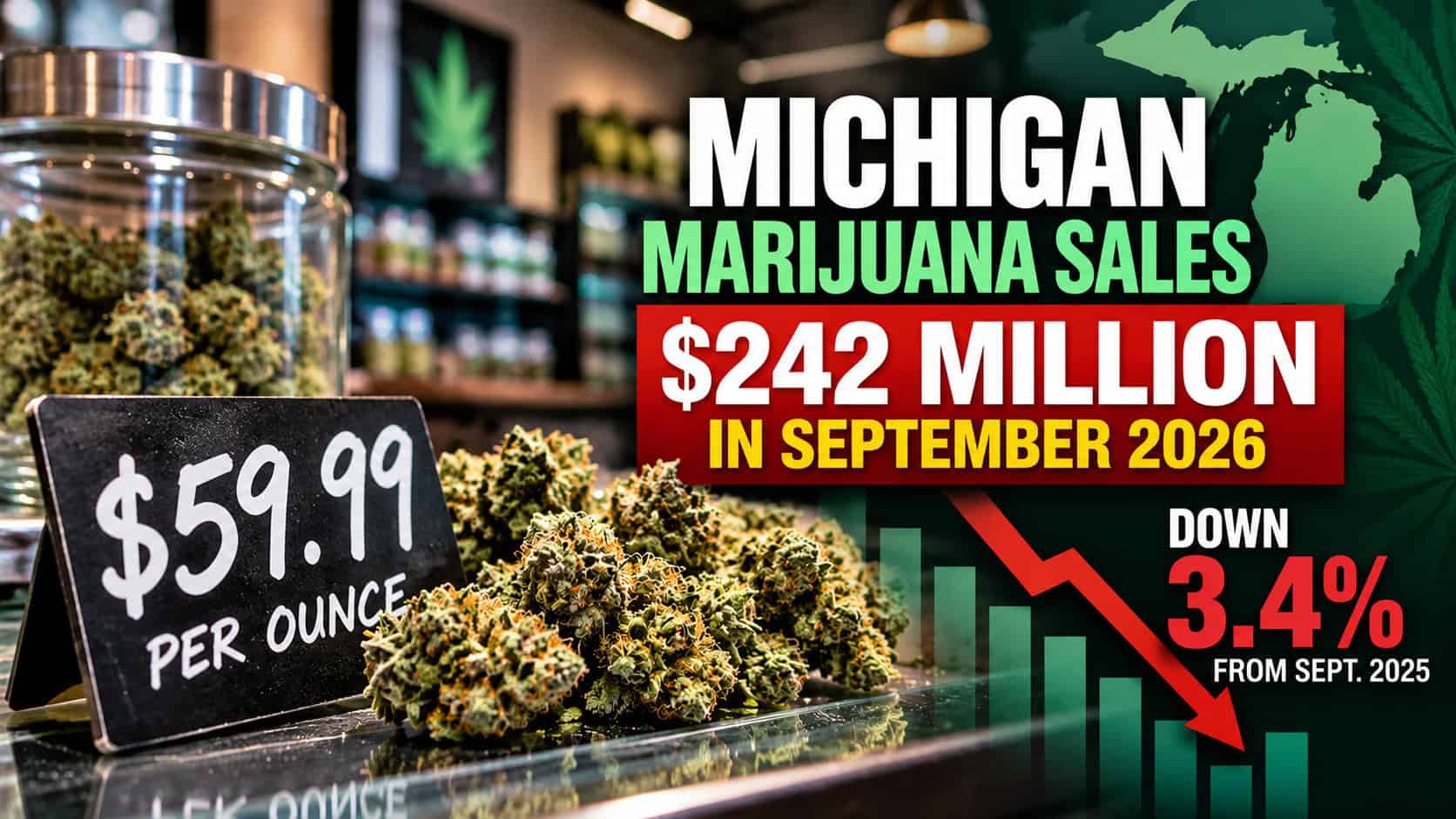
According to data released by Michigan’s Cannabis Regulatory Agency and reported by WZZM 13, combined adult-use and medical cannabis sales reached approximately $276 million in April, up from March and boosted by aggressive retailer promotions tied to the April 20 cannabis holiday.
But beneath the headline growth lies a much harsher reality. A separate industry analysis published by New Cannabis Ventures shows Michigan’s long-term trend remains one of falling prices, shrinking margins, and mounting financial stress for cannabis businesses struggling to survive in one of America’s most competitive marijuana markets.
Industry analysts say Michigan has effectively become the “Walmart of weed” — a massive volume market driven by ultra-low prices, constant discounting, and relentless competition.
Michigan Consumers Win As Prices Keep Falling
For consumers, Michigan remains one of the cheapest legal cannabis markets in the United States.
CRA data shows the average retail price for adult-use cannabis flower fell again in April to roughly $62 per ounce, down dramatically from more than $240 per ounce just a few years ago.
That pricing collapse has helped fuel continued consumer demand, especially from neighboring states like Ohio, Indiana, and Wisconsin where legal marijuana access remains more restricted or significantly more expensive.
Border communities such as Monroe, Niles, and Benton Harbor have become major cannabis retail hubs drawing large out-of-state traffic, particularly from Ohio consumers seeking lower prices and broader product availability.
The annual 4/20 promotional cycle amplified the trend further in April, with dispensaries across Michigan offering deep discounts, giveaways, bulk pricing deals, and heavily advertised promotions.
Many stores used “loss leader” pricing strategies — selling certain products at razor-thin margins simply to attract customer traffic.
The Problem: More Sales, Less Profit
The challenge for operators is that rising sales volumes are not necessarily translating into healthier businesses.
The New Cannabis Ventures analysis found Michigan cannabis sales have softened on a year-over-year basis despite massive unit volume increases because wholesale and retail prices continue falling faster than demand is growing.
That creates a dangerous cycle:
- Growers produce more cannabis to maintain revenue
- Oversupply pushes prices even lower
- Retailers slash prices further to compete
- Profit margins continue collapsing
The result is an increasingly Darwinian business environment where only the most efficient operators may survive.
Michigan’s cannabis market now faces many of the same pressures seen earlier in states like Oregon and Colorado, where oversupply and commoditization devastated smaller independent operators.
Industry observers say Michigan’s regulatory structure, combined with aggressive license issuance and rapid cultivation expansion, helped create a flood of supply that the market still has not fully absorbed.
Small Cannabis Businesses Under Growing Pressure
The low-price environment is especially difficult for smaller independent cannabis companies.
Large multi-state operators and vertically integrated cannabis firms can often survive prolonged price compression because they control cultivation, processing, distribution, and retail operations simultaneously.
Smaller growers and standalone dispensaries frequently lack those advantages.
Many operators now report:
- declining margins,
- rising compliance costs,
- increased insurance expenses,
- higher labor costs,
- expensive municipal licensing fees,
- and growing competition from larger chains.
Some Michigan cannabis businesses have already exited the market or entered receivership over the past two years as debt pressures intensified.
Others continue operating but with significantly reduced profitability.
Industry analysts increasingly warn that consolidation across Michigan’s cannabis industry is likely inevitable.
Michigan’s Cannabis Economy Still Massive
Despite the financial strain, Michigan remains one of the largest cannabis markets in America.
Adult-use marijuana sales alone exceeded $3 billion in 2025, placing Michigan among the nation’s top recreational cannabis states by total sales volume.
The industry supports thousands of jobs across:
- cultivation,
- retail,
- processing,
- logistics,
- construction,
- security,
- marketing,
- and technology services.
Cannabis tax revenue has also become increasingly important for local governments and the state budget.
Earlier this year, Michigan distributed tens of millions of dollars in marijuana tax revenue to municipalities and counties hosting licensed cannabis businesses.
For many local communities — particularly smaller cities that embraced marijuana businesses early — cannabis taxes have become a meaningful source of infrastructure and public safety funding.
Ohio Could Send More Buyers Into Michigan
Michigan’s low-price advantage may grow even stronger as neighboring Ohio continues debating stricter cannabis regulations and limits on hemp-derived THC products.
If Ohio lawmakers pursue tighter restrictions, analysts believe even more consumers could cross into Michigan for broader product access and lower pricing.
That dynamic already appears visible in southern Michigan border communities where Ohio license plates are common in dispensary parking lots.
Michigan’s mature supply chain and intense retail competition have created pricing conditions that are difficult for newer Midwest cannabis markets to match.
Industry Faces Critical Turning Point
The central question now confronting Michigan’s cannabis industry is whether the market can stabilize before more operators fail.
Some analysts believe the worst of the price collapse may eventually ease as weaker operators leave the market and cultivation capacity declines.
Others argue Michigan’s cannabis industry may simply remain permanently oversupplied due to continued competition and consumer expectations for ultra-low prices.
Either way, the April sales surge highlights the unusual reality of Michigan marijuana economics:
Consumers are benefiting enormously.
Businesses increasingly are not.
For now, Michigan remains one of America’s hottest cannabis markets for buyers — and one of its toughest for operators trying to make money.