Cannabis Industry Says It Has No Voice In Upcoming DEA Hearing That Could Affect Taxes, Research And Future Growth
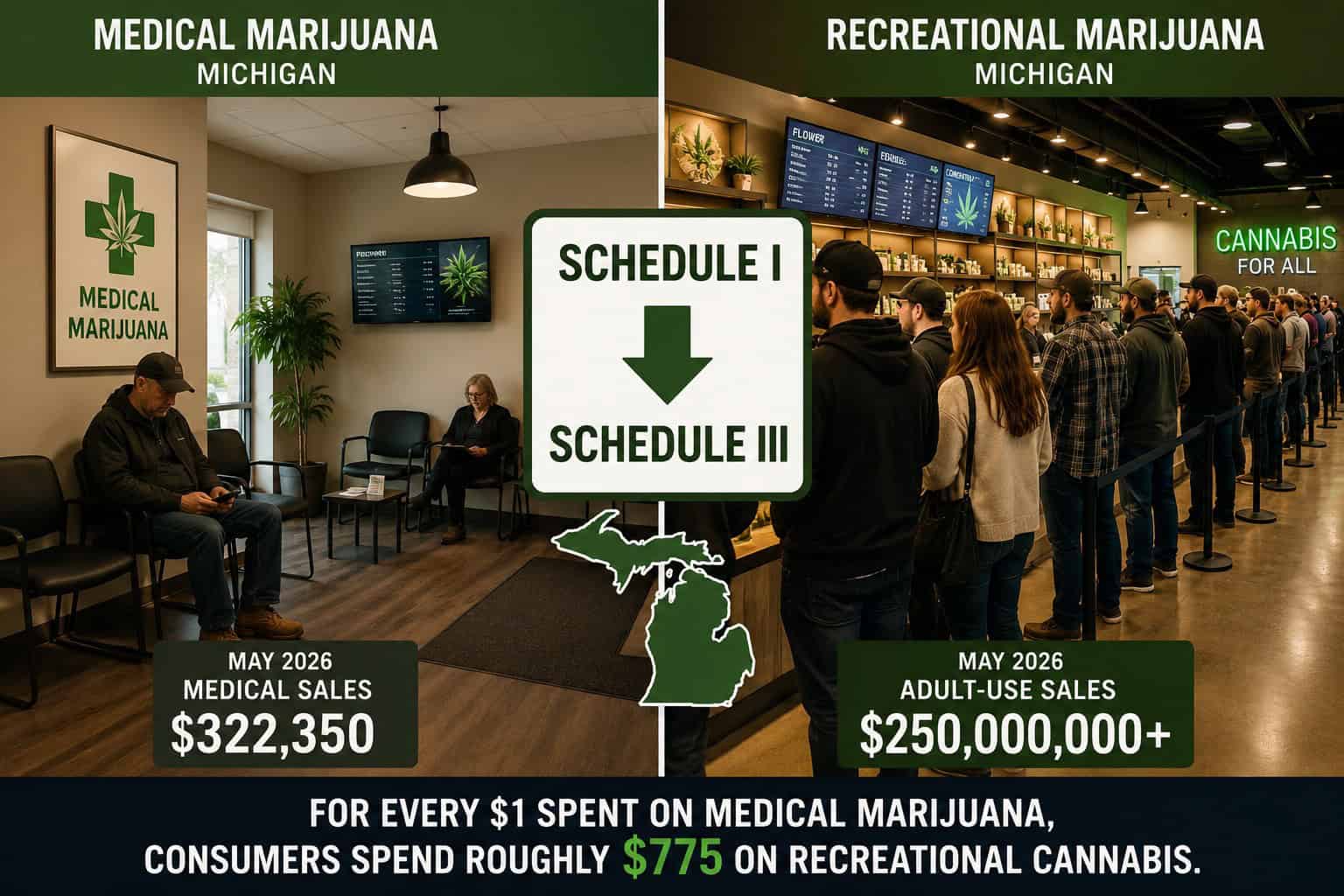
LANSING – Michigan’s medical marijuana market has nearly vanished, generating just $322,350 in sales during May, according to the Michigan Cannabis Regulatory Agency. Yet a federal debate centered on marijuana’s medical value could have sweeping consequences for cannabis businesses throughout Michigan and Ohio. That debate took a new turn this week when the National Organization for the Reform of Marijuana Laws (NORML) formally asked the Drug Enforcement Administration to reconsider its decision to exclude cannabis reform advocates, patients, consumers and industry representatives from a federal marijuana rescheduling hearing scheduled to begin June 29.
The hearing will examine whether marijuana should remain a Schedule I controlled substance under federal law or be moved to Schedule III, a change supporters say could reduce taxes, expand research opportunities and provide greater legitimacy to state-regulated cannabis programs.
Critics argue the hearing is already tilted against reform because the DEA selected participants primarily from organizations and individuals opposed to marijuana legalization or rescheduling.
For cannabis businesses in Michigan and Ohio, billions of dollars could ultimately be affected by the outcome.
Why The Marijuana Rescheduling Hearing Matters
Most Americans have never heard of federal drug schedules, but they have enormous consequences.
Marijuana is currently classified as a Schedule I controlled substance, the federal government’s most restrictive category. Schedule I drugs are considered to have no accepted medical use and a high potential for abuse. Heroin and LSD are also listed as Schedule I substances.
In 2023, the U.S. Department of Health and Human Services concluded marijuana has accepted medical uses and recommended moving cannabis to Schedule III.
Schedule III drugs remain controlled substances but are recognized as having legitimate medical applications. Examples include ketamine, anabolic steroids and certain medications containing codeine.
The proposal does not legalize marijuana federally and would not legalize recreational marijuana nationwide. States would continue operating under their own marijuana laws.
The practical impact, however, could be substantial.
Because marijuana remains a Schedule I substance, cannabis businesses are subject to a federal tax provision known as IRS Section 280E. The rule prevents marijuana companies from deducting ordinary business expenses such as payroll, rent, utilities, insurance, marketing and equipment costs.
Most businesses can deduct those expenses before calculating taxable income. Cannabis companies generally cannot.
As a result, many marijuana operators pay significantly higher effective tax rates than traditional businesses.
Industry advocates argue moving marijuana to Schedule III would largely eliminate those tax penalties. As a result, cannabis companies could operate more like any other legal business.
Supporters also contend the change would make it easier for researchers to study cannabis and could encourage development of new cannabis-derived medicines and treatments.
Michigan’s Medical Market Has Almost Disappeared
The irony is that the federal hearing centers on marijuana’s medical uses at a time when Michigan’s medical marijuana market has nearly disappeared.
Michigan voters approved medical marijuana in 2008, and for more than a decade a medical marijuana card was the only legal way to purchase cannabis in the state. Before recreational marijuana sales began in December 2019, Michigan’s medical marijuana program included more than 300,000 registered patients, making it one of the largest medical cannabis programs in the nation.
Today, that market has largely evaporated.
According to CRA data, licensed medical marijuana facilities reported just $322,350 in sales during May 2026.
By comparison, Michigan’s adult-use market generated more than $250 million in sales during the same month.
For every $1 spent on medical marijuana in Michigan today, consumers spend roughly $775 on recreational cannabis.
Medical marijuana now accounts for only a tiny fraction of Michigan’s overall cannabis market after years of consumers migrating to recreational products.
That means many Michigan cannabis operators are paying closer attention to the potential tax and business benefits of rescheduling than to the medical market itself.
Ohio May Have Even More At Stake
The issue could be even more significant in Ohio.
Unlike Michigan, Ohio continues to maintain a substantial medical marijuana program alongside its recreational market.
State records show Ohio had 165 dual-use dispensary certificates of operation in 2025, allowing retailers to serve both registered medical marijuana patients and adult-use consumers. Ohio also maintains a medical marijuana patient base exceeding 459,000 registered patients.
Because the federal rescheduling proposal is rooted in recognition of marijuana’s accepted medical uses, Ohio’s continuing medical market could make the outcome particularly important for operators there.
Businesses in both states would benefit from any relief from Section 280E tax restrictions.
Industry Says It Has No Seat At The Table
NORML’s filing argues that consumers, patients, physicians and state-licensed cannabis businesses have effectively been excluded from the proceeding.
The organization contends that none of the selected hearing participants directly represent the interests of marijuana consumers or the legal cannabis industry.
The DEA hearing is expected to feature testimony from organizations and individuals who largely oppose marijuana reform or question whether marijuana should be moved to Schedule III.
NORML argues that excluding supporters creates the appearance that the outcome may already be predetermined.
The DEA has not publicly indicated whether it will reconsider the witness list before proceedings begin June 29.
Even after the hearing concludes, legal experts expect additional procedural challenges and litigation that could delay any final rescheduling decision.
For cannabis businesses across Michigan and Ohio, the stakes extend far beyond the shrinking medical marijuana market.
The outcome could determine whether one of the nation’s fastest-growing industries continues operating under a tax system designed for illegal drug traffickers—or gains treatment more comparable to other regulated businesses.
Conclusion:
The marijuana rescheduling hearing carries major weight for Michigan and Ohio. Michigan’s medical marijuana market has nearly disappeared, but the tax stakes remain high. However, Ohio’s larger medical program means even more is riding on the outcome. Meanwhile, NORML says the process already excludes cannabis supporters. For now, businesses in both states wait to see if rescheduling brings real relief.
FAQs:
1. Why has Michigan’s medical marijuana market nearly disappeared?
Consumers have largely shifted to recreational cannabis, leaving medical marijuana sales at just $322,350 in May 2026.
2. How could the marijuana rescheduling hearing affect Michigan businesses?
Rescheduling could eliminate costly IRS Section 280E tax restrictions that currently prevent cannabis companies from deducting normal business expenses.
3. Is NORML part of the marijuana rescheduling hearing?
No. NORML says it and other reform advocates were excluded, and it has formally asked the DEA to reconsider its participant list.