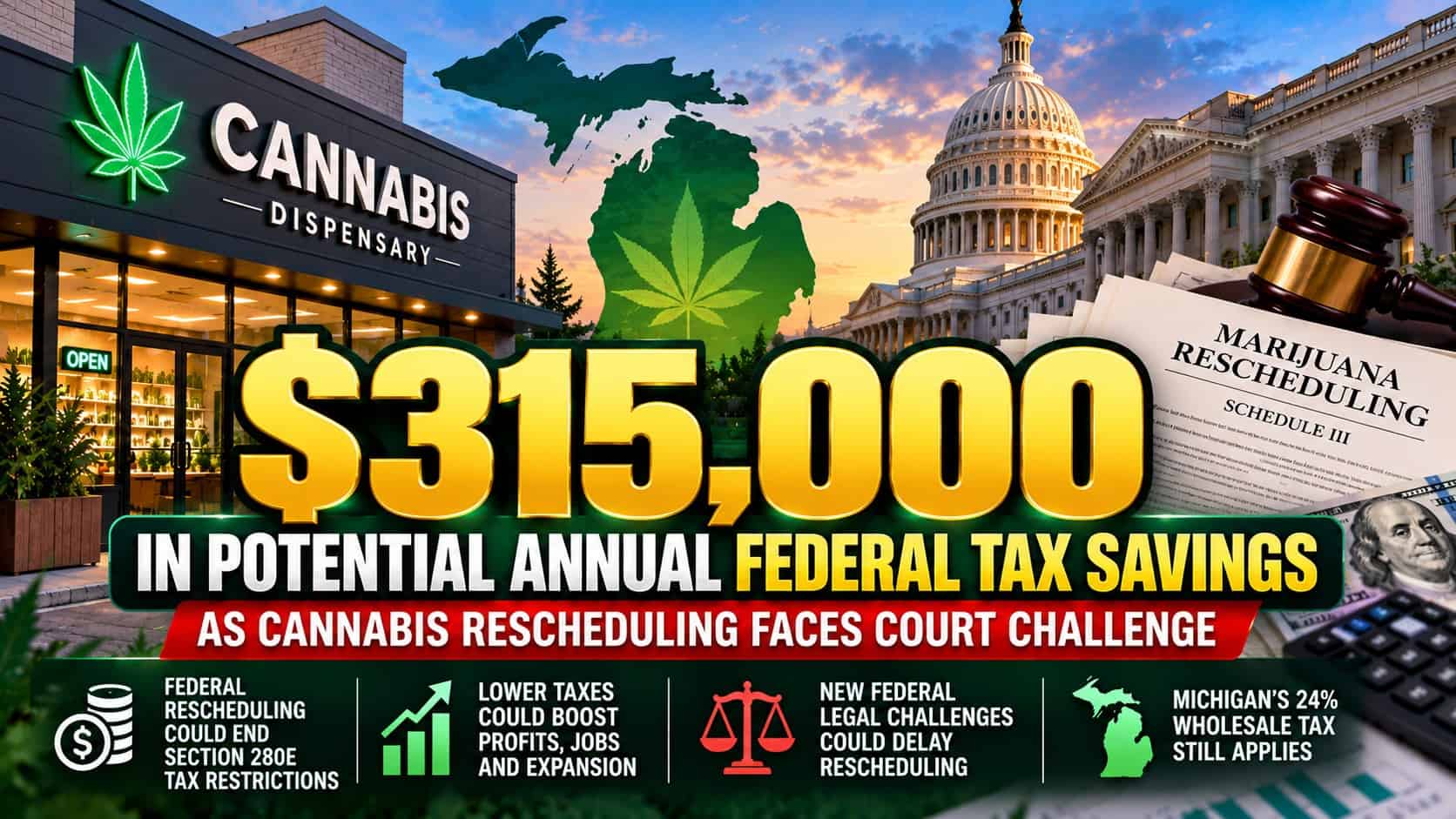
WASHINGTON, D.C. — After weeks of testimony, the federal hearing that could reshape the future of the U.S. cannabis industry has officially ended. Now marijuana businesses across Michigan and Ohio are waiting to learn whether the biggest federal cannabis policy change in more than 50 years will finally become reality—or whether the process will drag on for months, or even longer.
The hearing before DEA Chief Administrative Law Judge Derek Julius concluded this week after testimony from scientists, physicians, federal officials and attorneys representing both supporters and opponents of moving marijuana from Schedule I to Schedule III under the federal Controlled Substances Act.
The judge has ordered post-hearing briefs to be filed by Aug. 17, after which he will prepare a recommendation for the DEA administrator, who will make the final decision. There is no deadline for that recommendation, meaning the process could extend well into 2027.
For the more than 800 licensed cannabis retailers, processors, cultivators and other marijuana businesses operating in Michigan and Ohio, the outcome could have significant financial consequences—even though it would not legalize marijuana under federal law.
Five Things That Won’t Change If Marijuana Is Rescheduled
1. Marijuana won’t become federally legal. Recreational cannabis would still violate federal law.
2. You still couldn’t transport marijuana across state lines. Every state’s legal market would remain separate.
3. Banks won’t automatically begin serving the industry. Congress would still need to address many banking barriers.
4. State cannabis laws stay in place. Michigan and Ohio would continue regulating their own legal marijuana industries.
5. The legal uncertainty doesn’t disappear. Federal and state laws would still conflict in many important areas.
What Would Actually Change?
Perhaps the biggest benefit would be federal tax relief.
Today, state-licensed marijuana companies are generally subject to Internal Revenue Code Section 280E, which prevents businesses trafficking in Schedule I or II controlled substances from deducting most ordinary business expenses.
If marijuana ultimately moves to Schedule III, many legal analysts expect those restrictions would no longer apply to qualifying cannabis businesses.
For operators in Michigan, where wholesale prices have fallen dramatically and profit margins have been squeezed by intense competition and market oversupply, eliminating much of the federal tax burden could provide badly needed breathing room.
Many businesses currently pay effective federal tax rates far above those faced by companies in most other industries.
Why Michigan Has More At Stake
Michigan has become one of America’s largest cannabis markets, generating billions of dollars in annual sales while also becoming one of its most competitive.
Success has come with significant challenges.
Wholesale cannabis prices have steadily declined as cultivation capacity expanded faster than consumer demand. Dozens of licenses have been surrendered, companies have announced layoffs, and consolidation continues throughout the industry.
Earlier this year, Michigan operators also faced uncertainty after lawmakers approved a controversial 24 percent wholesale tax that remains tied up in court.
Industry leaders say relief from Section 280E would not solve every problem, but it could improve cash flow, encourage reinvestment and help financially healthy companies survive a difficult business environment.
Ohio Operators Also Stand To Benefit
Ohio’s adult-use cannabis market is newer and generally enjoys higher prices and stronger margins than Michigan.
While Ohio businesses would also benefit from potential federal tax relief, analysts say Michigan operators may have more to gain because of the state’s intense price competition and thinner profit margins.
Companies in both states could use tax savings to expand operations, hire workers, invest in automation, reduce debt or improve financial stability.
What Won’t Change
One of the biggest misconceptions surrounding rescheduling is that it would legalize marijuana nationwide.
It would not.
Even if marijuana moves to Schedule III:
- Recreational marijuana would remain illegal under federal law.
- Interstate cannabis commerce would remain prohibited.
- State licensing systems would continue regulating legal marijuana businesses.
- Individual states could still prohibit cannabis.
- Federal banking challenges would continue unless Congress separately passes legislation addressing financial services.
The conflict between state legalization and federal prohibition would remain largely intact.
Research Could Expand
One area expected to benefit significantly is scientific research.
Researchers have long argued that Schedule I classification has made studying marijuana unnecessarily difficult.
Moving cannabis to Schedule III could make it easier for universities and medical researchers—including institutions such as the University of Michigan, Michigan State University and Ohio State University—to conduct research into cannabis’s medical uses, risks and therapeutic potential.
Supporters argue better research ultimately benefits patients, physicians, regulators and policymakers.
Investment Could Become Easier
Industry observers also believe rescheduling could improve investor confidence.
Institutional investors and lenders have historically approached cannabis cautiously because marijuana remains a Schedule I controlled substance.
Although many federal legal uncertainties would remain, a Schedule III designation could make the industry appear less risky to some investors, potentially improving access to capital over time.
That could become increasingly important as cannabis companies seek financing for expansion, acquisitions and new technology.
What Happens Next
With testimony complete, both sides will submit detailed legal briefs by Aug. 17.
Judge Julius will then issue a recommended decision to the DEA administrator.
The administrator is not required to follow that recommendation and is under no statutory deadline to act.
Regardless of the ultimate decision, legal challenges are widely expected, meaning the issue could remain tied up in the courts even after the DEA reaches a final determination.
For Michigan and Ohio cannabis businesses, the hearing’s conclusion marks an important milestone—but not the finish line.
After years of uncertainty, the industry remains in a holding pattern, waiting to see whether Washington delivers meaningful reform or extends the status quo.