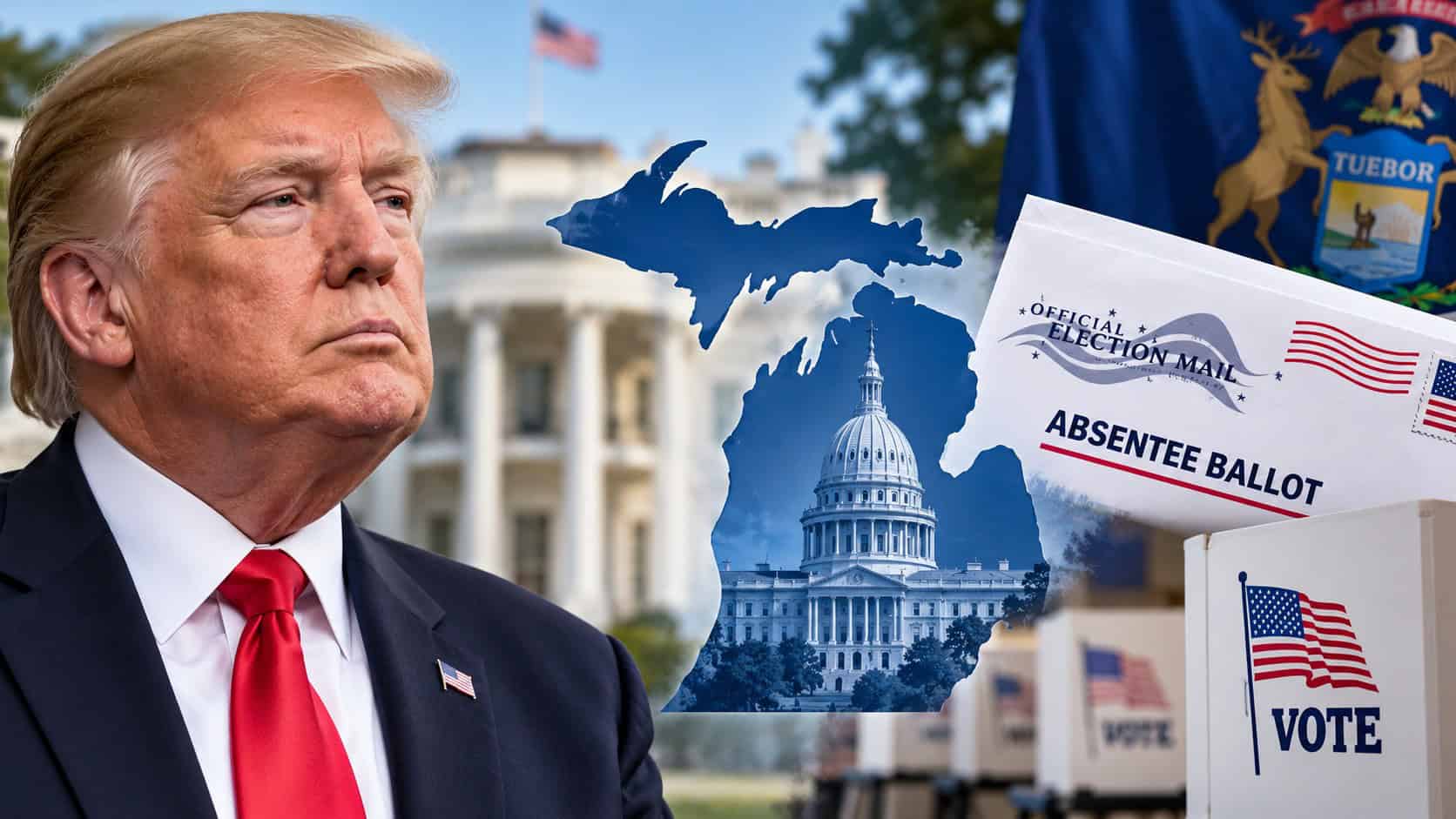
For Michigan, where manufacturing and global supply chains are central to the economy, the impact could be immediate and significant.
The refunds stem from years of tariffs imposed on imported goods—many of which were later challenged in court or reversed through policy changes. Now, more than 300,000 companies have filed claims to recover those costs, with roughly $127 billion already in the pipeline as of mid-April.
While the payments are expected to roll out over the coming months, economists say the implications stretch far beyond a one-time financial adjustment.
Where the Money Could Hit Michigan First
Then go straight into:
- auto suppliers
- manufacturing inputs
- retailers
A Sudden Cash Injection for Business
At its core, the tariff refund program functions like a targeted stimulus—except instead of new spending, it returns previously collected funds.
For businesses, particularly those reliant on imported materials, that means a sudden improvement in cash flow.
“This is real money going back into the private sector,” said one trade analyst tracking the refunds. “For some companies, especially manufacturers, it could free up capital for hiring, expansion, or stabilizing operations.”
For these firms, tariffs had acted as a cost burden for years. Their removal—and now reversal—could improve margins almost overnight.
Will Consumers See Any Benefit?
One of the biggest unanswered questions is whether consumers will share in the windfall.
Tariffs are often described as taxes on imports, but in practice, much of the cost is passed along through higher prices. That means consumers effectively paid at least part of the bill.
However, the refunds are going back to businesses—not households.
Whether that translates into lower prices is uncertain.
Companies facing tight competition may pass savings along to customers. Others may use the funds to rebuild margins, invest in operations, or simply strengthen their balance sheets after years of higher costs.
Inflation Impact: Slightly Downward Pressure
From a macroeconomic standpoint, tariff refunds could exert modest downward pressure on inflation.
By reversing import taxes, the policy reduces cost inputs across sectors that rely on global supply chains. That, in theory, lowers pricing pressure at multiple points in the economy.
Still, economists caution that the effect will likely be gradual and uneven, depending on how businesses choose to use the refunded funds.
The Bigger Issue: A Growing Federal Deficit
While the private sector may benefit, the refunds come at a cost to the federal government.
Every dollar returned is a dollar no longer counted as revenue—adding to a federal deficit already under strain from rising spending and interest payments.
Institutions like the International Monetary Fund have repeatedly warned that persistent deficits could eventually pressure U.S. borrowing costs and financial stability.
The U.S. is already spending close to $1 trillion annually just to service its debt. Adding another $166 billion in lost revenue—even spread over time—adds to that burden.
“This doesn’t move markets overnight,” one economist noted. “But it contributes to a larger trend that investors are watching very closely.”
Michigan’s Strategic Position
Michigan’s economy makes it particularly sensitive to trade policy shifts.
With deep ties to global manufacturing, the state has long been exposed to tariffs—both as a cost burden and as a policy tool intended to protect domestic industry.
Now, the reversal offers a different kind of opportunity.
Auto suppliers, in particular, could see meaningful financial relief if they successfully recover tariff costs tied to imported parts and materials.
That could:
- Improve profitability
- Support hiring in a still-tight labor market
- Increase capital investment in automation and production
At the same time, the broader uncertainty around trade policy remains.
If tariffs can be imposed—and later refunded—businesses face ongoing unpredictability in long-term planning.
Global Implications and the Dollar
Beyond domestic effects, the scale of the refunds feeds into a larger global conversation about U.S. fiscal stability.
As deficits expand, questions continue to surface about long-term confidence in the U.S. financial system and the dominance of the dollar.
Countries like China have been actively working to expand the global role of the Chinese Yuan, positioning it as an alternative in international trade.
While the dollar remains the world’s dominant reserve currency, analysts say sustained fiscal pressure—including moves like large-scale refunds—adds incremental weight to that long-term shift.
The $166 billion tariff refund program represents a rare economic moment with mixed consequences.
For businesses, it’s a significant financial boost—one that could ripple through hiring, investment, and pricing.
For the federal government, it’s another hit to already strained finances.
And for consumers, the outcome remains uncertain.
What is clear is that the refunds are not just a technical policy adjustment—they are a major economic event, with implications that will play out across industries, markets, and government balance sheets in the months ahead.