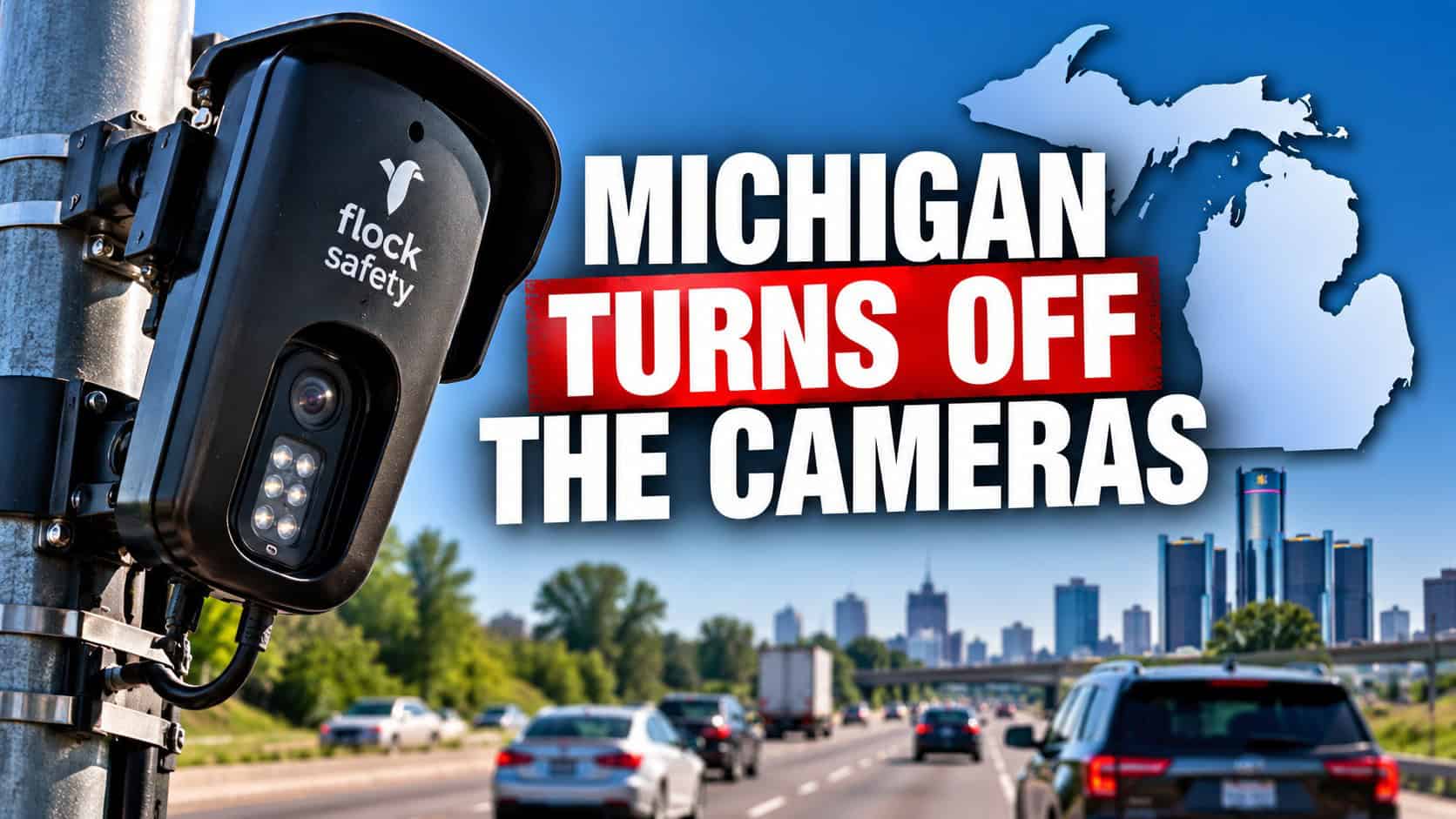
Concerned about Big Brother? Michigan lawmakers are moving to put guardrails on a growing surveillance network before artificial intelligence makes it even more powerful.
LANSING — Every day, millions of Michigan motorists drive to work, school, stores, restaurants and doctor’s appointments. Along the way, hundreds of police-operated cameras may be recording far more than their license plates.
Artificial intelligence is rapidly making those surveillance systems more powerful. Modern license plate reader technology can already identify a vehicle’s make, model, color, bumper stickers, roof racks and even visible damage, creating what industry experts describe as a unique “vehicle fingerprint.”
A recent national report highlighting the next generation of AI-powered surveillance capabilities has renewed questions about how much information governments should be allowed to collect, store and analyze about citizens who have done nothing more than drive down a public road.
Privacy advocates worry the growing capabilities could eventually allow governments to create searchable databases showing where law-abiding citizens live, work, shop, worship and spend their time.
The concern is not a single camera sighting. It is the ability to store and search thousands of vehicle sightings collected over weeks, months or years, potentially creating detailed records of people’s daily movements.
To address those concerns, a bipartisan package of bills pending in the Michigan House would generally require police agencies to delete most captured license plate reader data after 14 days.
Lansing Wants Guardrails Before AI Advances Further
House Bills 5492 and 5493, introduced in January by Rep. Doug Wozniak, R-Shelby Township, and Rep. Jimmie Wilson Jr., D-Ypsilanti, would establish Michigan’s first statewide rules governing how automatic license plate reader data is collected, stored, shared and used.
The legislation remains before the House Judiciary Committee and has not yet been scheduled for a House floor vote.
Supporters argue lawmakers should establish safeguards now rather than wait until surveillance technology becomes significantly more powerful.
The 14-day retention limit is the centerpiece of the legislation. Data could be retained longer only when connected to an active criminal investigation, missing person case, warrant, court order or other limited exception.
The bills would also require privacy policies, automatic deletion of expired data and public reporting on how the systems are used.
Notably, the legislation has generated relatively little organized opposition.
While some law enforcement groups have raised concerns about preserving the effectiveness of the technology, the debate has largely focused on how much data should be retained and how broadly it should be used rather than whether regulation is needed.
“We can support effective policing while still demanding safeguards that protect civil liberties,” Wilson said in a statement announcing the legislation. He added that the bills are designed to prevent what he described as “routine mass surveillance.”
WHAT THE BILLS WOULD DO
HB 5493 (Government Agencies)
- Requires most data to be deleted after 14 days
- Limits acceptable uses of ALPR technology
- Requires public privacy policies
- Requires transparency and reporting
- Restricts retention and sharing of data
HB 5492 (Private Operators)
- Regulates private license plate reader databases
- Limits when police can access privately held data
- Requires legal processes in many circumstances
- Creates penalties and civil remedies for misuse
What Police Cameras Can See Today
Many drivers assume license plate readers simply photograph license plates.
Today’s systems can capture substantially more information.
Modern systems may identify vehicle make, model, color, roof racks, bumper stickers, custom wheels, visible damage and other distinguishing characteristics. Investigators can use those characteristics to locate a specific vehicle even when a plate number is unavailable.
WHAT AI-POWERED CAMERAS CAN IDENTIFY
- License plate numbers
- Vehicle make and model
- Vehicle color
- Roof racks and cargo carriers
- Custom wheels
- Visible damage
- Other unique vehicle characteristics
Industry experts increasingly refer to this collection of identifiers as a vehicle “fingerprint.”
Privacy Advocates: The Database Is The Real Concern
Civil liberties groups argue the public often focuses on the cameras while overlooking what happens to the information afterward.
“That’s an extensive amount of travel data that’s being held on people just traversing the roadways, doing nothing wrong,” Gabrielle Dresner, policy strategist for the ACLU of Michigan, told Bridge Michigan.
The ACLU of Michigan has supported efforts to establish statewide retention limits and data-sharing restrictions.
WHY PRIVACY ADVOCATES ARE WORRIED
Large databases of vehicle movements could potentially reveal:
- Home and work locations
- Daily commuting routes
- Religious activities
- Medical visits
- Political activities
- Shopping habits
- Frequent travel patterns
Police Say The Technology Saves Time And Solves Crimes
Law enforcement agencies strongly defend the systems as valuable public-safety tools.
Police departments across Michigan credit automated license plate readers with helping recover stolen vehicles, locate missing persons, identify suspects and generate investigative leads.
In a January report by Bridge Michigan, Waterford Township Police Chief Scott Underwood rejected claims that the technology amounts to government surveillance.
“We do not spy on residents,” Underwood said during a public hearing on expanding the township’s camera network, according to Bridge Michigan.
Underwood also said police use the technology “in a responsible, ethical way to investigate and solve crimes.”
Michigan Sheriffs’ Association Executive Director Matt Saxton told Bridge Michigan that law enforcement is not opposed to regulation but does not want lawmakers to weaken what many departments consider an effective investigative tool.
WHY POLICE SUPPORT THE TECHNOLOGY
Police agencies say license plate reader systems help:
- Recover stolen vehicles
- Locate missing persons
- Assist with Amber Alerts
- Identify suspects
- Generate investigative leads
- Improve efficiency
Supporters argue the technology automates observations officers could already make on public roads.
The Bigger Question
The debate over license plate readers is ultimately a debate about how much surveillance society is willing to accept in exchange for public safety.
Artificial intelligence is making surveillance systems faster, smarter and more capable.
Supporters see license plate readers as effective tools that help solve crimes and locate missing persons.
Critics see the potential foundation of a surveillance network capable of tracking the daily movements of ordinary citizens.
Michigan lawmakers now face a question that is likely to become more urgent as AI advances:
How much information should government be allowed to collect, store and analyze about people who have done nothing more than drive down a public road?