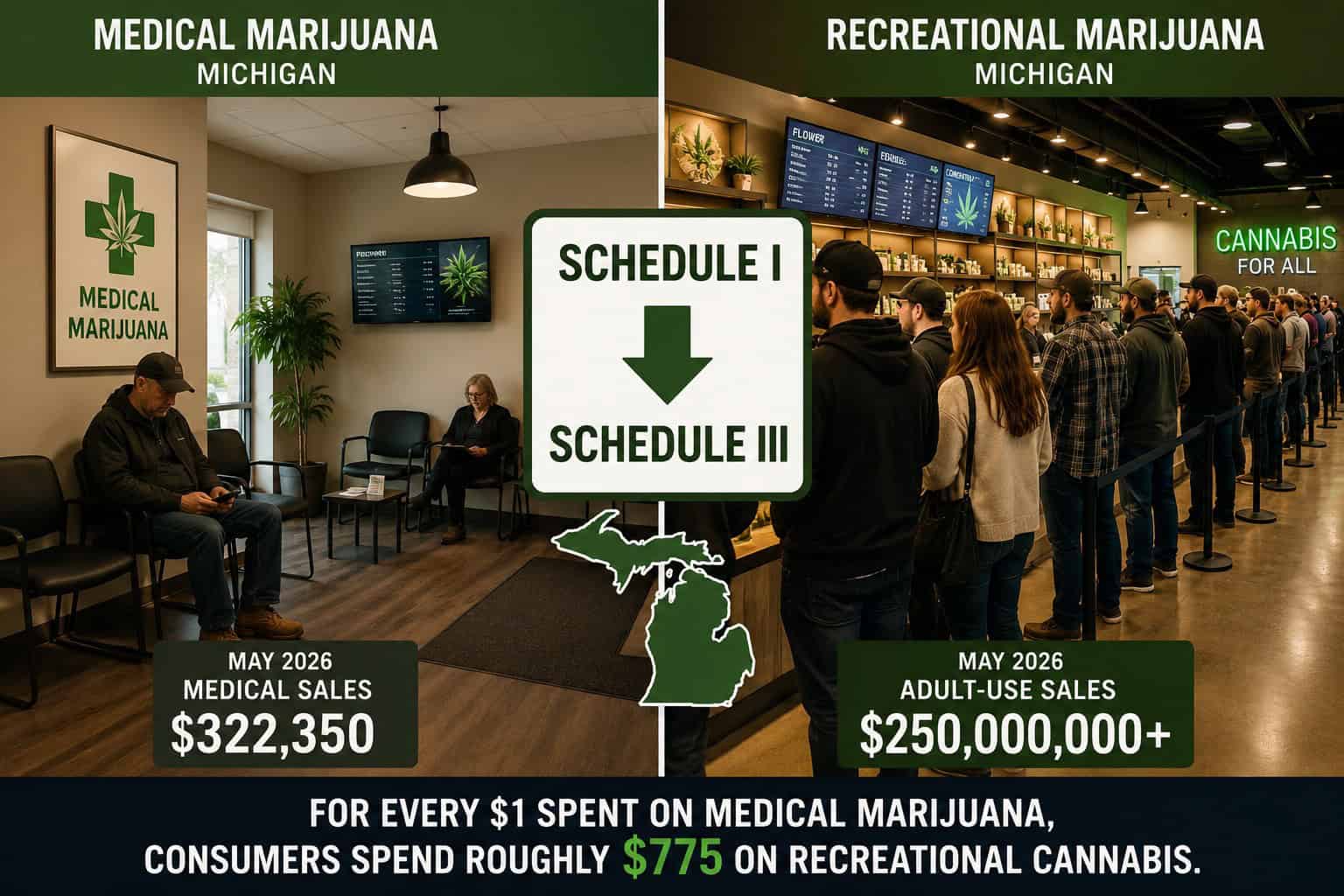
DETROIT – For years, state-legal cannabis companies operated under a unique federal tax penalty that prevented them from deducting ordinary business expenses such as payroll, rent, marketing and utilities. That changed in April when the U.S. Department of Justice moved federally recognized medical cannabis from Schedule I to Schedule III, potentially saving cannabis businesses billions of dollars and opening the door to expanded medical research.
But what does it really mean for Michigan operators, investors and patients?
Cannabis attorney Thomas LaVigne of Cannabis Counsel joins MITech TV to explain.

Five Key Takeaways Lavagne discussed.
1. Schedule I To Schedule III Is A Huge Federal Shift Schedule. I is reserved for substances the federal government says have no accepted medical use and a high potential for abuse. Marijuana had been classified alongside heroin and LSD for decades. Schedule III includes drugs with accepted medical uses and lower abuse potential, such as ketamine and certain codeine-based medications. The move represents the first major federal acknowledgment that cannabis has legitimate medical value.
2. The Biggest Impact Is Tax Relief For Michigan cannabis businesses, the biggest issue is Section 280E of the Internal Revenue Code. Under 280E, cannabis companies could not deduct most normal business expenses because they were considered traffickers of a Schedule I controlled substance. That meant many operators paid taxes on gross income rather than net profit, often resulting in effective tax rates far higher than traditional businesses. Schedule III largely removes that penalty for qualifying medical cannabis operators.
3. Cannabis Companies May Finally Be Treated Like Normal Businesses The tax changes allow deductions for: Payroll Rent Utilities Marketing Professional services Other ordinary operating expenses For struggling operators in Michigan’s oversupplied cannabis market, this could mean the difference between profitability and continued losses.
4. Research Becomes Easier Researchers have long complained that Schedule I status made it difficult to study cannabis. The federal government has cited evidence supporting cannabis use for pain management, chemotherapy-related nausea and appetite stimulation in certain medical conditions. Schedule III should make clinical research easier and potentially accelerate development of cannabis-based medicines.
5. It Does NOT Legalize Cannabis Nationwide. Nor does it apply to recreational marijuana.
To learn more watch this video.
You also can connect with Lavigna at www.cannabiscounsel.com.