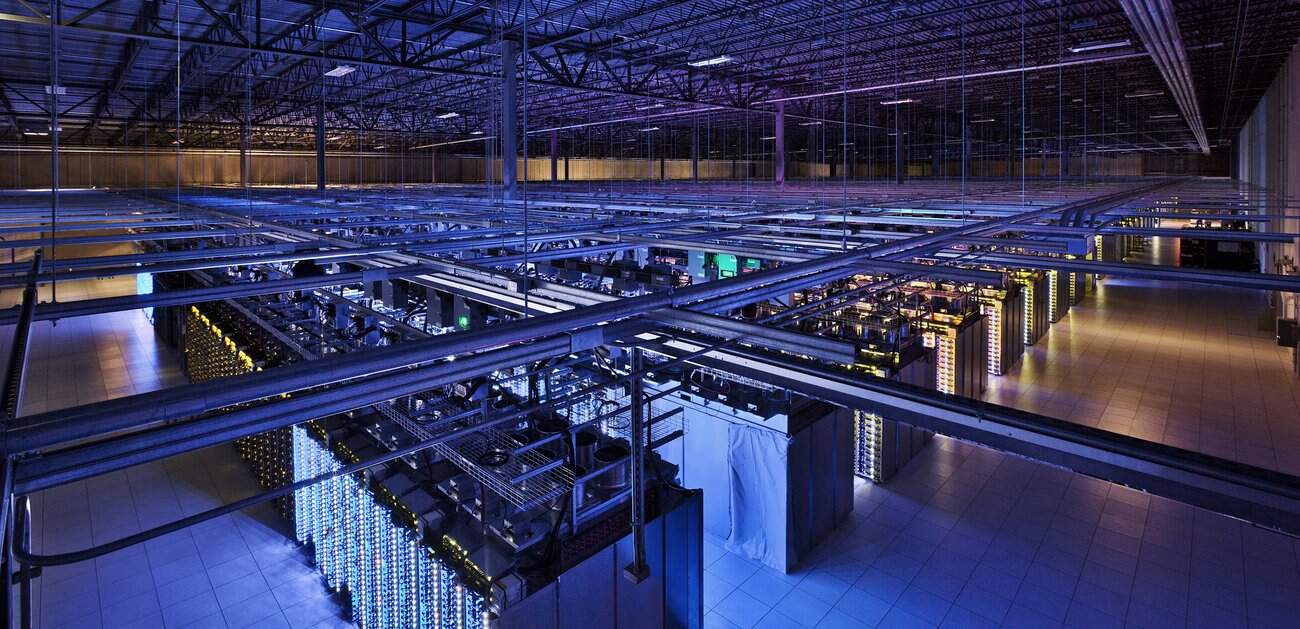
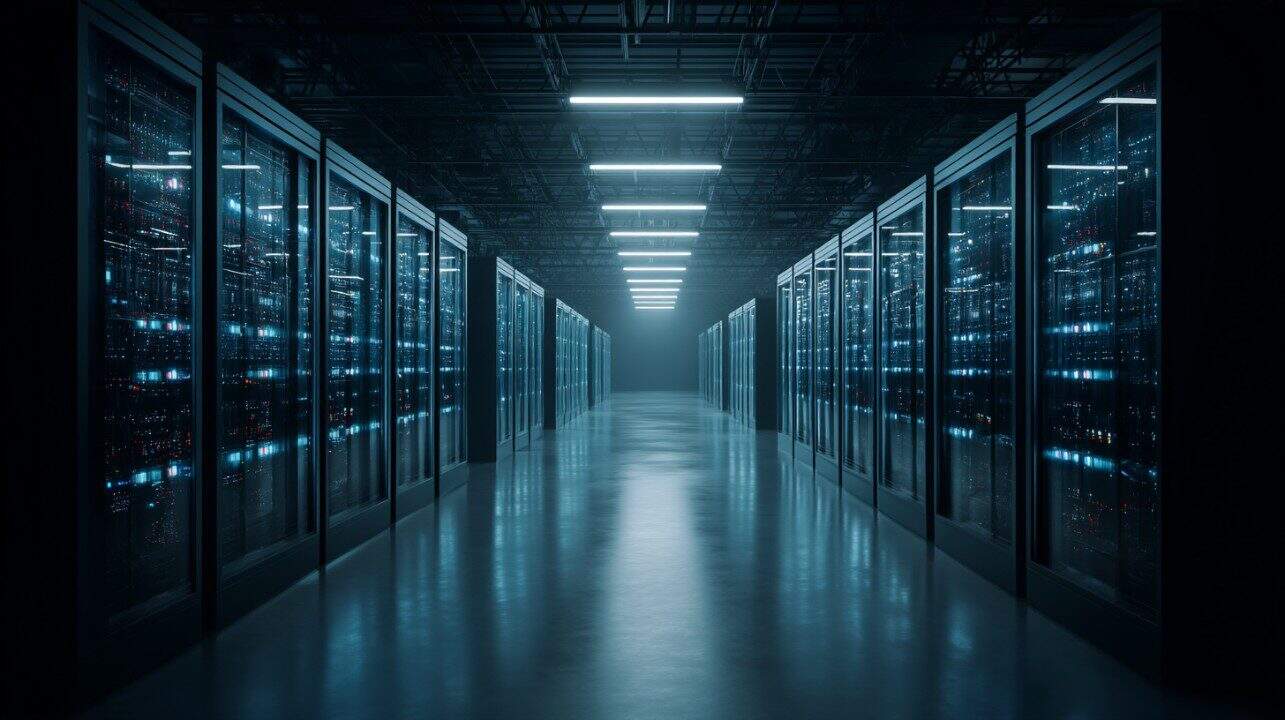
VAN BUREN TWP. — A new proposal for a massive hyperscale data center has emerged in southeast Michigan, adding to a growing list of projects aimed at powering artificial intelligence and high-performance computing.
Panattoni Data Center Group wants to develop a data center campus on roughly 280 acres in Van Buren Township, near Belleville in Wayne County. The proposed site sits north of an I-94 service drive, south of I-275, east of Haggerty Road and west of Hannan Road, according to materials distributed at an informational open house held Thursday, Dec. 11.
Panattoni has not identified a potential tenant, but similar data center projects across Michigan have attracted backing from major technology companies such as OpenAI, Oracle and Meta, the parent company of Facebook.
Residents packed the open house to hear presentations from Panattoni representatives and DTE Energy, WEMU reported. Adam Kramer, who leads data center development for Panattoni, said the property’s zoning already allows data centers by right.
Data Center Produce Less Traffic
Kramer told attendees the company had weighed traditional industrial uses for the land but concluded a data center would generate far less truck traffic — a key concern raised by residents — than a large warehouse or manufacturing facility.
Despite those assurances, opposition surfaced quickly. Some residents voiced concerns about the scale of the project and its potential impacts, according to WEMU and Fox 2 News.
The Van Buren Township proposal mirrors resistance seen elsewhere in Michigan as hyperscale data centers multiply across the state. Critics frequently point to the enormous electricity demand required to operate the facilities — often measured in gigawatts — along with concerns about water usage, environmental impacts and effects on nearby neighborhoods.
Supporters counter that data centers bring major economic benefits, including thousands of construction jobs and long-term, high-paying technology positions. They also note that Michigan’s tax incentives and available land have made the state increasingly attractive as Big Tech companies race to expand AI-driven computing infrastructure.
Several Hyperscale Data Centers Proposed In Michigan
Several hyperscale data center projects are already proposed or under review in the greater Ann Arbor region. Most notable is the OpenAI- and Oracle-backed “Stargate” data center planned for Saline Township, which would be Michigan’s first hyperscale facility and has sparked intense local debate. Additional projects have surfaced in Ypsilanti, Augusta, York and Howell townships, underscoring how rapidly the data center boom is reshaping Michigan’s development landscape.
Beyond land use and traffic, residents repeatedly raised concerns about how hyperscale data centers could affect electricity costs and strain Michigan’s power grid.
“These facilities don’t just use a lot of power — they use an extraordinary amount of power, 24 hours a day,” one resident said during the discussion. “That raises real questions about who ultimately pays for the upgrades needed to support them.”
Hyperscale data centers often consume as much electricity as a small city, requiring utilities to build new substations, transmission lines and generation capacity. Critics worry that those investments will not be absorbed by corporate users alone.
“We keep hearing about economic development, but ratepayers are nervous,” another attendee said. “If utilities have to spend hundreds of millions of dollars to serve these projects, it’s hard to believe that won’t show up on our bills.”
Higher Electricity Costs?
Utilities, including DTE Energy, have argued that large data center customers can strengthen the grid by anchoring new infrastructure investment. But skepticism remains, particularly in communities that have experienced repeated outages.
“Our grid already struggles during storms,” one resident said. “Before we add facilities that run nonstop and demand massive amounts of power, we should be confident the system can handle it without hurting reliability for everyone else.”
Similar concerns have surfaced in Saline Township, where residents have challenged the proposed OpenAI- and Oracle-backed “Stargate” data center. There, speakers at public meetings questioned whether the long-term strain on the grid and potential upward pressure on electricity rates justified the project’s promised economic benefits.
“This isn’t just about one township,” a Saline-area resident said at a recent meeting. “It’s about how Michigan plans for energy-intensive development and whether communities are being asked to shoulder risks while the benefits flow elsewhere.