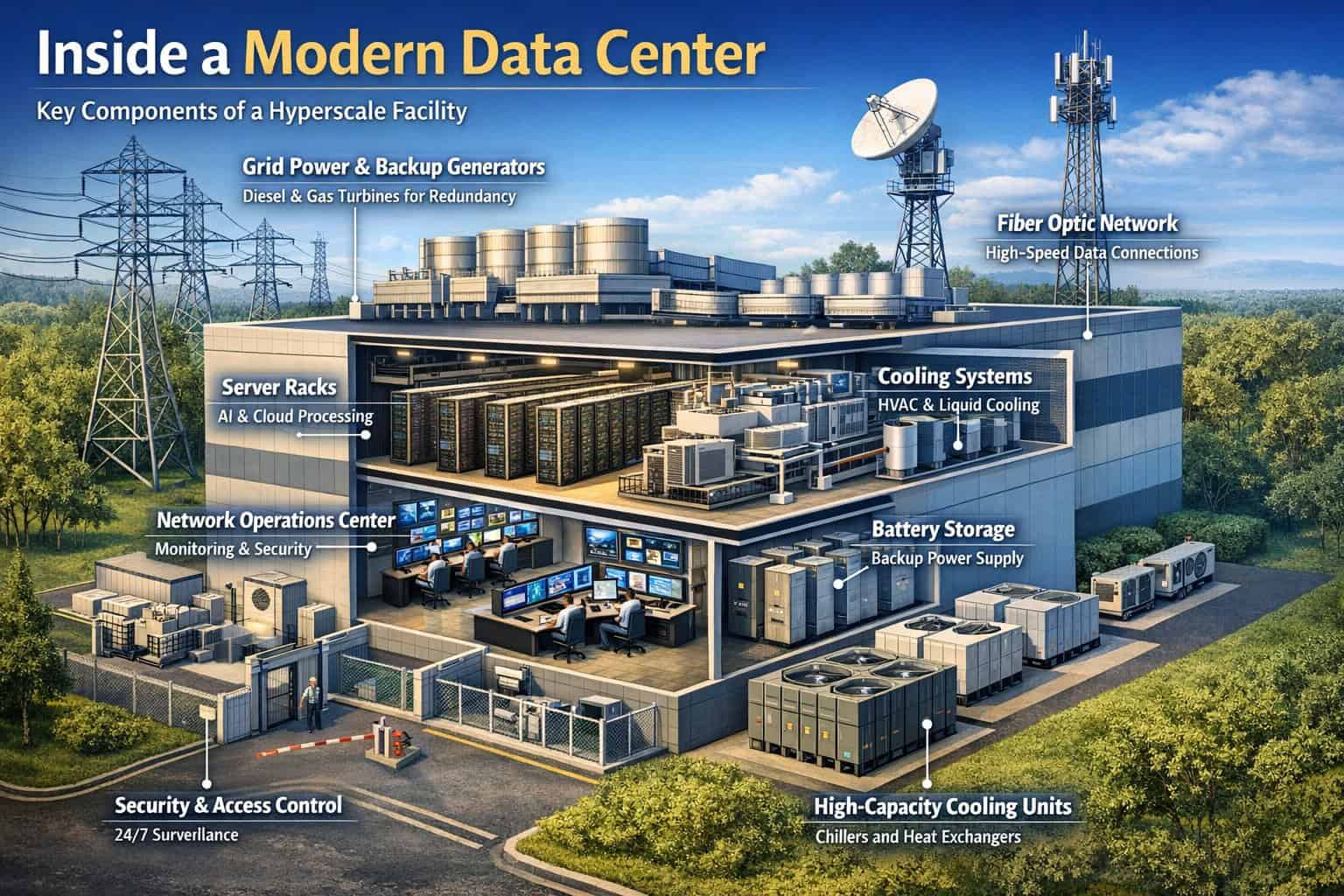
LANSING – Michigan regulators have approved custom electric rate agreements for a massive new data center proposed in Washtenaw County, a move supporters say will attract investment without raising rates — and critics say risks overloading an already stressed electric grid and pushing costs onto residents and businesses.
In a December order, the Michigan Public Service Commission (MPSC) approved special contracts between DTE Electric and Green Chile Ventures for a hyperscale data center planned in Saline Township. The Commission concluded the deal would not raise current customer rates and includes safeguards to prevent cost shifting.
Green Chile Ventures is the company tied to the proposed Saline Township data center, but it’s not the local developer most residents are talking about.
According to regulatory filings and reporting, Green Chile Ventures LLC is the named customer in the electric service contracts with DTE Electric and is a subsidiary of Oracle Corporation. That means Oracle (through Green Chile Ventures) is the entity DTE is contracting with for power service to the new hyperscale data center.
However, the broader data center development in Saline Township is being built and advanced by Related Digital, a data center developer working with major tech partners including Oracle and OpenAI on the multi-billion-dollar project.
But opposition is growing — from Michigan Attorney General Dana Nessel, consumer advocates, and nearby residents — all arguing the decision underestimates real-world grid constraints and long-term rate pressure.
Why the MPSC Approved the Deal
The approved contracts lock the data center into long-term, high-volume electricity purchases, with minimum demand payments for nearly two decades. The customer is also required to fund roughly 1.4 gigawatts of grid-scale energy storage that DTE would build, own, and operate.
The MPSC said the structure:
-
Ensures the data center pays for its own infrastructure and storage
-
Helps recover fixed system costs, potentially easing pressure on other customers
-
Protects existing ratepayers through collateral and early-exit penalties
Commissioners also cited competition with other states for AI, cloud computing, and digital infrastructure projects, arguing Michigan must be flexible to win large loads without embedding them in standard rate cases.
Attorney General: Grid Stress and Rate Risk Are Being Downplayed
Attorney General Nessel’s request for a rehearing adds a broader warning: Michigan’s grid is already heavily taxed, and the Commission approved the contracts without fully examining cumulative impacts.
Among her concerns:
-
Grid congestion and reliability: Michigan utilities are already investing billions in grid hardening, storm recovery, renewable integration, and electrification. Nessel argues adding one of the largest single electric loads in state history deserves a deeper evidentiary review.
-
Future rate pressure: Even if current rates do not immediately rise, she warns that long-term infrastructure upgrades — transmission, substations, backup generation — may ultimately be rolled into general rate cases affecting households and employers.
-
Insufficient testing of assumptions: Without a contested case, her office says there was no opportunity to challenge whether projected benefits truly offset the risks over time.
Her position: approving such a deal through an expedited process shifts uncertainty from the data center onto everyone else.
Residents: Grid Is Stressed — and Communities Will Pay the Price
Local residents opposing the Saline Township project echo those concerns, arguing the grid is already stretched thin by outages, weather events, and rising demand.
Their arguments include:
-
Electric rates are already rising: Residents and small businesses have seen repeated rate increases tied to grid upgrades, storm recovery, and fuel costs. Opponents fear the data center accelerates that trend.
-
Infrastructure expansion has ripple effects: New substations, transmission lines, and storage facilities often require ratepayer-funded investments that persist long after a single customer’s contract expires.
-
Risk of stranded costs: If the data center scales back, relocates, or closes early, residents worry they will be left paying for oversized infrastructure built to serve it.
Critics argue that while the contracts attempt to isolate costs, history shows that utility investments rarely stay confined to one customer forever.
Local Quality-of-Life Concerns Add to the Pushback
Beyond rates and grid stress, residents near the proposed site have raised objections related to:
-
Noise from substations, generators, and cooling systems
-
Visual and land-use impacts from industrial-scale facilities
-
Increased demand on local roads, water systems, and emergency services
-
Limited job creation compared with the project’s footprint and energy use
Community members say decisions at the state level are moving faster than local review, leaving towns to manage long-term impacts with little leverage.
A Broader Fight Over Who Pays for the Data Economy
At its core, the dispute reflects a larger policy question: Who should bear the cost of powering the AI economy?
Utilities argue special contracts make data centers pay their fair share. The Attorney General, consumer advocates, and residents counter that when the grid is already strained, even well-designed contracts can translate into higher rates as utilities expand systems for extreme loads.
The MPSC has said it plans to require standardized tariffs for future large-load customers, rather than one-off negotiations. Whether that happens — and how transparent those tariffs are — will be critical in determining if Michigan can grow its data economy without pricing out residents and businesses.
What Happens Next
DTE has 30 days to accept the Commission’s conditions. If the MPSC grants a rehearing, the case could be reopened for deeper scrutiny of grid impacts and rate risk. Even if it does not, local opposition and future rate cases suggest the issue is far from settled.
For Michigan’s business community, the outcome will signal how the state balances economic development, grid reliability, affordability, and community trust as electricity demand accelerates.