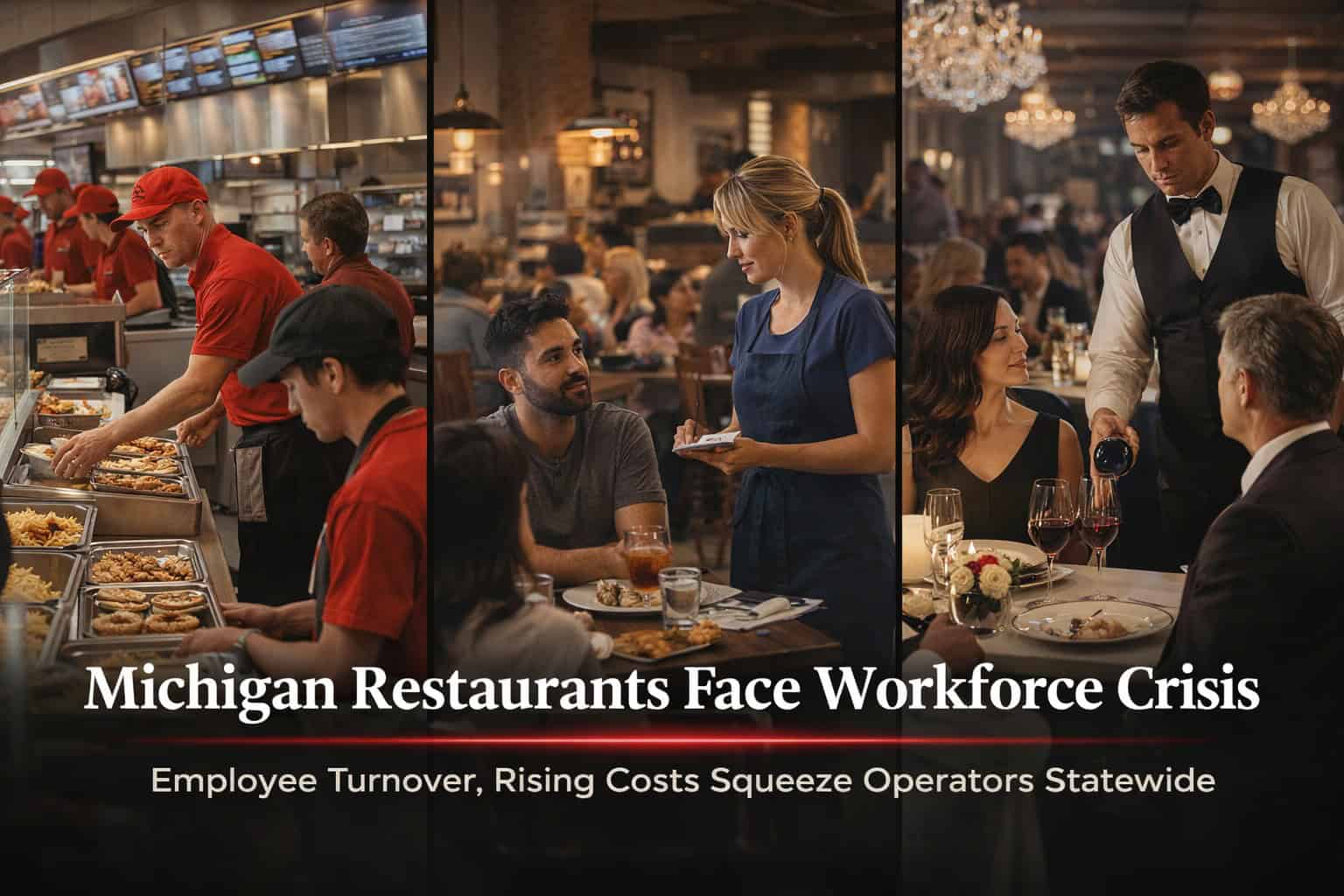
ANN ARBOR – Restaurant owners across Michigan are increasing wages in an effort to stabilize their workforce—but many are finding the strategy has limits.
Despite higher hourly pay, turnover remains stubbornly high across the hospitality industry.
The reason, workforce analysts say, is that employees are making decisions based on more than just wages.
“Compensation is only one piece of the puzzle,” said industry observers. “Workers are also looking for stability, flexibility, and access to basic benefits that improve their quality of life.”
In many cases, employees are leaving not for significantly higher pay, but for jobs that offer a more complete compensation package.
That includes predictable schedules, supportive work environments, and access to healthcare-related benefits—areas where many restaurants have traditionally struggled to compete.
The result is a costly cycle.
Operators raise wages to attract workers, only to see those employees leave for opportunities that offer better overall value.
“Restaurants are competing not just with each other, but with retail, logistics, and other industries that have expanded benefits offerings,” analysts note.
The shift is forcing restaurant owners to rethink how they define compensation.
Instead of focusing solely on hourly pay, some operators are beginning to explore broader strategies that improve the overall employee experience—without significantly increasing labor costs.
That includes looking at ways to enhance take-home pay and provide access to benefits that employees actually use.
As the labor market continues to evolve, restaurants that adapt to these changing expectations may have an advantage in retaining workers.
Second in a series on Michigan restaurant workforce crisis