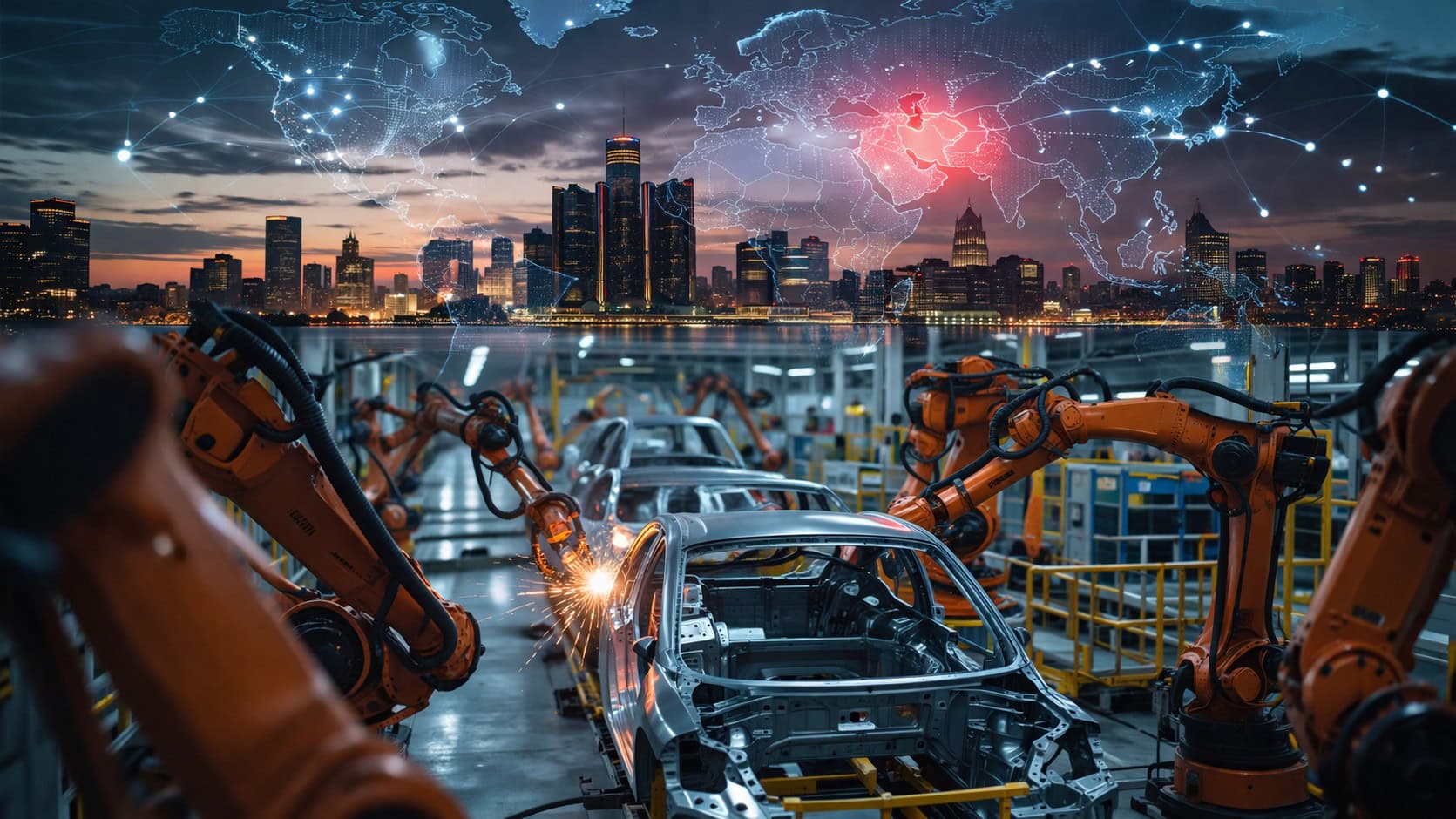
WASHINGTON DC – The U.S. economy lost momentum at the end of 2025, expanding at a slower pace than economists expected and raising fresh questions about growth in 2026 — particularly for manufacturing-heavy states like Michigan.
According to the U.S. Bureau of Economic Analysis, fourth-quarter gross domestic product (GDP) grew at an annualized rate of 1.4%, a sharp drop from earlier in the year. For all of 2025, the economy expanded roughly 2.2%, down from the stronger pace seen in 2024.
The economy is still growing. But it is clearly cooling.
For Michigan — where autos, advanced manufacturing and capital investment drive output — that shift matters.
Why U.S. Economic Growth Slowed in 2025
Several forces combined to drag down late-year growth:
1. Slower Consumer Spending
Consumer spending accounts for roughly two-thirds of U.S. GDP. While Americans are still spending, growth moderated in the fourth quarter, particularly among middle-income households facing higher borrowing costs.
Higher-income households remain resilient. But broad-based demand is no longer accelerating.
2. Government Shutdown Impact
A lengthy federal government shutdown reduced federal spending in late 2025, trimming GDP growth for the quarter. Economists estimate it shaved more than a full percentage point off overall output.
3. Trade and Tariff Uncertainty
Ongoing tariff volatility and trade tensions continue to weigh on manufacturing, equipment orders and export activity.
For industrial states, that uncertainty hits harder.
Inflation and Interest Rates Remain Key Risks
Inflation has cooled from peak levels but remains above the Federal Reserve’s long-term target in several categories. As a result, interest rates remain elevated compared to the ultra-low era of the 2010s.
That directly affects:
-
Auto loans
-
Commercial real estate development
-
Factory expansion
-
Small business financing
If rate cuts are delayed, investment-heavy states like Michigan could see prolonged softness.
Michigan Economic Snapshot: 2025–2026 Outlook
National GDP (Q4 2025): 1.4% annualized growth
Full-Year U.S. Growth (2025): ~2.2%
Michigan Growth Trend: Modest, tracking national pace
Key Risk Sectors: Auto manufacturing, parts suppliers, housing
Bright Spots: EV battery plants, AI-driven factory automation, defense contracts
Interest Rate Sensitivity: High — due to auto loans and industrial financing
Primary Watch Indicator for 2026: Vehicle sales and capital equipment orders
Manufacturing and Autos Drive Exposure
Auto production, parts suppliers and industrial machinery remain central to the state’s economic engine.
Economists at the University of Michigan have previously warned that tariff-related cost pressures could add thousands of dollars to vehicle prices, dampening demand.
If consumers delay big-ticket purchases like cars and trucks, Michigan factories feel it first.
That ripple spreads to:
-
Steel and materials producers
-
Tool and die manufacturers
-
Logistics and freight operators
-
Technology firms supporting mobility innovation
Michigan Growth Expected to Track National Pace
Analysts at Comerica Bank projected Michigan would grow roughly in line with the national economy in 2025 — modestly, but not robustly.
That appears consistent with current data trends.
Bright spots in Michigan include:
-
Electric vehicle and battery plant construction
-
AI-driven automation upgrades in factories
-
Defense and aerospace activity
-
Infrastructure projects
But job growth has cooled compared to the strong post-pandemic rebound years. Wage gains are moderating. Housing activity has softened.
The risk is not collapse. The risk is stagnation.
AI Investment: A Key Offset for Michigan
One reason the national economy avoided sharper slowdown in late 2025 was heavy corporate investment in artificial intelligence infrastructure.
That trend benefits Michigan in several ways:
-
Robotics upgrades on factory floors
-
Smart manufacturing integration
-
Data center development
-
Mobility software innovation
Technology investment tied to industrial modernization is helping offset slower consumer demand.
For a state trying to position itself as a leader in advanced manufacturing and mobility tech, that matters.
If AI and automation spending holds steady in 2026, it could cushion Michigan from broader softness. If it weakens, the drag would be more visible.
What Happens Next?
The central question heading into 2026 is whether the slowdown represents:
-
A temporary cooling phase
-
Or the beginning of a longer downshift
If consumer spending stabilizes and the Federal Reserve begins cutting interest rates mid-year, growth could reaccelerate modestly.
If households pull back further — especially on vehicles and housing — Michigan would likely feel disproportionate pressure.
States with diversified economies can absorb slowdowns more easily. States heavily tied to manufacturing cycles face sharper swings.
Michigan sits squarely in that second category.
The U.S. economy is still expanding — but at a slower pace.
For Michigan, that means:
-
Expect cautious consumer behavior
-
Watch auto sales trends closely
-
Monitor tariff and trade policy developments
-
Track Federal Reserve rate decisions
Growth is positive. Momentum is weaker.
For business leaders across Michigan — from Detroit to Grand Rapids to the Upper Peninsula — the coming months will test whether industrial investment and technology modernization can offset softer demand.
The economy hasn’t stalled.
But it is clearly shifting into a lower gear.