Arctic “Greening” May Accelerate Warming — With Economic Impacts Far Beyond the Tundra
DETROIT – As the Arctic warms nearly four times faster than the rest of the planet, scientists are tracking a surprising development: expanding and “greening” peatlands across northern regions. At first glance, more vegetation sounds like positive environmental news.
But new research suggests it could signal a dangerous Arctic climate feedback loop — one that may accelerate global warming rather than slow it.
Arctic peatlands store enormous quantities of carbon accumulated over thousands of years. As permafrost thaws and soils warm, microbes break down that long-frozen organic material, releasing carbon dioxide and methane back into the atmosphere. Those greenhouse gases trap additional heat, fueling more warming — and potentially more carbon release.
For Michigan businesses, this isn’t just a distant environmental story. It’s a developing economic risk.
Michigan Economic Exposure Snapshot
Tourism Revenue: ~$26 billion annually
Great Lakes Recreational Fishing: Billions in annual economic impact
Manufacturing Contribution: Nearly 20% of state GDP
Agriculture: $100+ billion economic footprint including food processingWeather volatility influences all four.
Why Arctic Warming Matters to Michigan
University of Michigan Professor Emeritus of Atmospheric Science Richard B. Rood has previously noted that Arctic warming can disrupt atmospheric circulation patterns that affect the Midwest. Arctic amplification — the rapid warming in northern latitudes — weakens temperature contrasts that help stabilize the jet stream.
When that jet stream destabilizes, weather patterns in mid-latitude regions like Michigan can become more erratic.
For Michigan’s economy — heavily dependent on stable seasons for agriculture, tourism, manufacturing logistics and Great Lakes recreation — increased volatility represents a measurable business risk, not just an environmental concern.
More intense rain events. Wider winter temperature swings. Warmer lake waters. Longer summer heat waves. Each carries economic consequences.
Great Lakes Tourism and Recreational Fishing at Risk
Tourism is a cornerstone of Michigan’s economy. The state’s travel industry generates roughly $26 billion annually, supporting hundreds of thousands of jobs across hotels, restaurants, marinas and recreational outfitters.
Recreational fishing alone contributes billions in economic activity tied to charter operations, equipment sales, marina services and tourism spending.
Climate-driven shifts can disrupt that ecosystem in several ways:
-
Warmer lake temperatures alter fish migration and spawning cycles
-
Increased storm intensity damages shorelines and marina infrastructure
-
Fluctuating water levels complicate docking and boating access
-
Reduced ice cover affects winter tourism and ice fishing
Lake trout, salmon and walleye fisheries depend on temperature stability. Even modest warming trends can shift habitat ranges and impact catch reliability — affecting both commercial and recreational operators.
For small coastal communities, that volatility translates directly into revenue swings.
Manufacturing, Energy and Insurance Pressures
Michigan’s manufacturing base — particularly automotive production — depends on predictable logistics and stable infrastructure. Climate volatility can increase:
-
Flood risk to plants and suppliers
-
Freight delays due to extreme weather
-
Energy demand spikes during heat waves or cold snaps
-
Insurance premiums tied to climate risk modeling
Stormwater systems and roads were not engineered for increasingly frequent extreme rainfall events. Repair and resilience investments come at a cost.
For CFOs and supply chain managers, Arctic feedback loops may feel abstract — but the downstream impacts show up in balance sheets.
Agriculture Faces Growing Seasonal Uncertainty
Michigan’s agricultural sector — from cherries and apples to corn and soybeans — relies heavily on consistent seasonal timing.
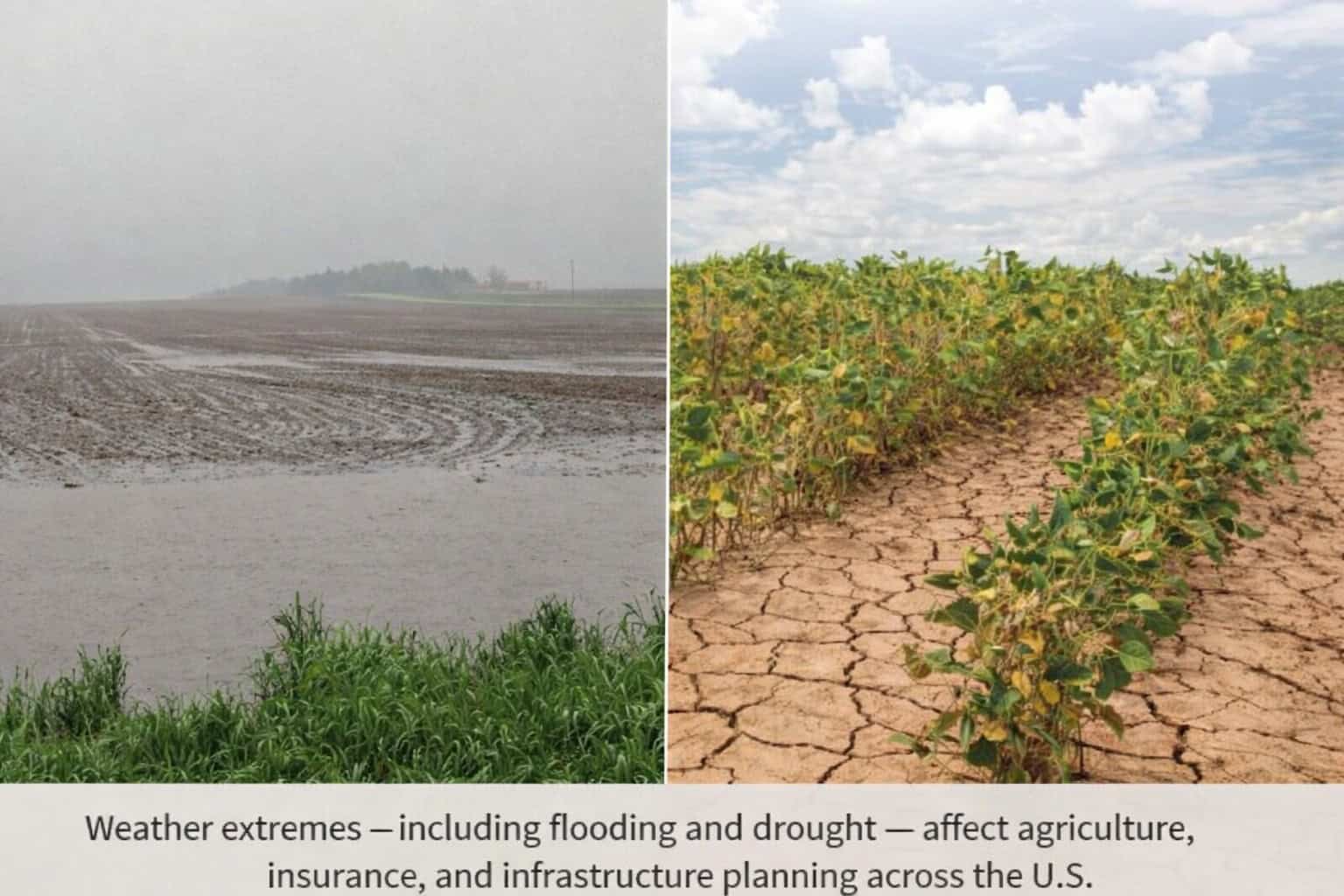
Earlier springs, unpredictable frost events, heavier precipitation and drought swings complicate planting and harvest cycles. Crop disease and pest pressures can increase under warmer conditions.
For rural communities, agricultural volatility cascades into equipment sales, transport services and seasonal employment.
Business Risk Is Now Climate Risk
The emerging Arctic feedback research underscores a larger point: climate change is no longer a distant policy debate. It is an operational and strategic planning issue.
Business leaders must now evaluate:
-
Long-term infrastructure resilience
-
Commodity price volatility
-
Insurance and financing exposure
-
Energy cost variability
-
Workforce productivity under heat stress
-
Supply chain geographic diversification
Climate risk increasingly intersects with credit risk and investment valuation.
What Can Michigan Control?
Michigan cannot slow Arctic thaw on its own. But it can mitigate risk.
Forward-looking companies and policymakers are:
-
Integrating climate scenario modeling into enterprise risk management
-
Hardening infrastructure against flood and storm damage
-
Investing in diversified energy portfolios
-
Supporting water quality and shoreline protection initiatives
-
Encouraging climate-informed agricultural adaptation
Businesses that treat climate volatility as a strategic variable — rather than a regulatory burden — may gain competitive advantage.
The Bottom Line
Arctic peatland greening may seem remote from Michigan’s shores. But feedback loops that accelerate global warming ripple outward — affecting jet stream stability, precipitation patterns, lake ecosystems and economic predictability.
For Michigan’s tourism operators, fishing charters, farmers, manufacturers and insurers, climate volatility is not theoretical.
It is a cost driver.
Understanding how global systems connect to local economic outcomes is now part of responsible leadership.
The Arctic may be warming thousands of miles away — but its economic signals are arriving here.