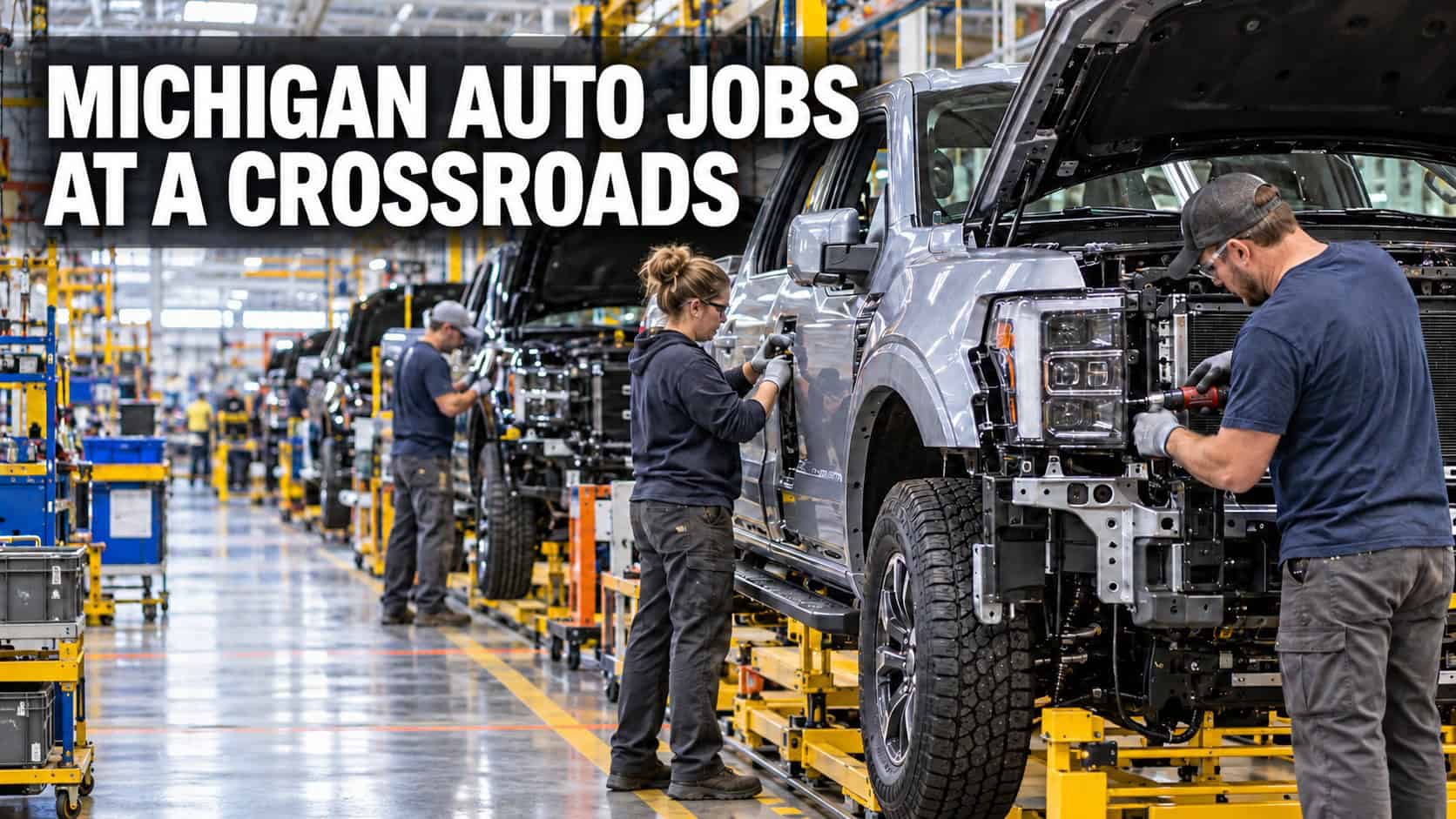
ANN ARBOR – From connected cars rolling off Detroit assembly lines to smart devices inside homes across the state, a significant portion of Michigan’s digital infrastructure relies on Chinese-made communication components—often without consumers or businesses realizing it.
A new report highlighted by The Hill is raising alarms in Washington over the dominance of two Chinese firms—Quectel and Fibocom—in a critical but largely invisible piece of technology: the cellular module.
These modules don’t get headlines. But they quietly power how devices connect to wireless networks—and increasingly, they sit at the center of Michigan’s economy.
Why This Hits Michigan First—and Harder
This isn’t abstract policy. It’s deeply local.
Michigan’s economy is built on industries that rely heavily on connected devices:
- Automotive: Every modern vehicle now includes cellular connectivity for navigation, diagnostics, and software updates
- Manufacturing: Smart factories depend on wireless sensors and machine-to-machine communication
- Logistics & trucking: Fleet tracking systems rely on always-on connectivity
- Retail and healthcare: From payment systems to remote monitoring
👉 Here’s the aggressive but accurate takeaway:
If you live or work in Michigan, you are more exposed to this issue than the average American.
Why? Because Michigan isn’t just using connected tech—it’s building entire industries on top of it.
The Hidden Backbone: Cellular Modules
At the center of the concern are cellular modules—small components that allow devices to connect to mobile networks.
Think of them as:
- The “signal translator” inside connected devices
- The reason your car can talk to the cloud
- The link between smart devices and your phone
And right now, Chinese companies dominate this space.
- Quectel alone has controlled roughly 30–40% of the global market in some segments
- Combined with Fibocom and others, Chinese firms hold about 50% market share globally
That level of concentration is what’s triggering concern in Washington.
What About Your Smartphone?
Here’s where readers expect alarm—and where you need to stay precise.
Your phone itself is mostly NOT the issue
- Core smartphone modems are typically made by companies like Qualcomm or MediaTek
- That means your iPhone or Android device is unlikely to rely directly on these Chinese modules
👉 So no—your phone is not secretly “running on Chinese modules.”
But Everything Around Your Phone Might Be
This is where the story gets real—and more interesting.
The risk isn’t your phone. It’s your ecosystem.
Devices that often use these modules include:
- Smart home systems (cameras, alarms, thermostats)
- Connected vehicles
- Backup cellular connections in laptops and routers
- Industrial and commercial IoT systems
👉 Translation for readers:
Your phone is the hub—but many of the devices it controls may rely on Chinese-built communication hardware.
Why Security Experts Are Concerned
The concern isn’t that something bad is happening today—it’s about capability and control.
Cellular modules can:
- Transmit data back to remote servers
- Receive firmware updates
- Operate as persistent network connections
In the wrong scenario, that could allow:
- Data collection at scale
- Network disruption
- Remote access vulnerabilities
No widespread consumer abuse has been proven—but policymakers are focused on the risk potential, especially given China’s national security laws.
What Happens If the U.S. Cracks Down?
If Washington moves to restrict companies like Quectel and Fibocom—similar to past actions against Huawei and ZTE—the impact could hit Michigan fast.
Expect:
1. Higher costs for connected products
Automakers and manufacturers may need to switch suppliers quickly—never cheap, never smooth.
2. Supply chain disruptions
Many companies don’t have immediate alternatives at scale.
3. Slower innovation
Connected vehicle rollouts, factory upgrades, and smart infrastructure projects could stall.
👉 For Michigan businesses, this is not theoretical—it’s operational risk.
What It Means for the Average Michigan Consumer
Let’s make this crystal clear:
- Your smartphone itself is likely safe from this issue
- Your car, home devices, and workplace tech may not be
- Any disruption in this supply chain could raise prices and slow new features
And because Michigan is so tied to automotive and manufacturing:
👉 Consumers here will feel the ripple effects sooner—and more directly—than most of the country.
This isn’t about a hidden chip inside your phone.
It’s about something bigger:
The connected world around your phone—your car, your home, your workplace—is increasingly dependent on technology dominated by foreign suppliers.
And in a state like Michigan, that dependency isn’t just a tech story.
It’s an economic one.