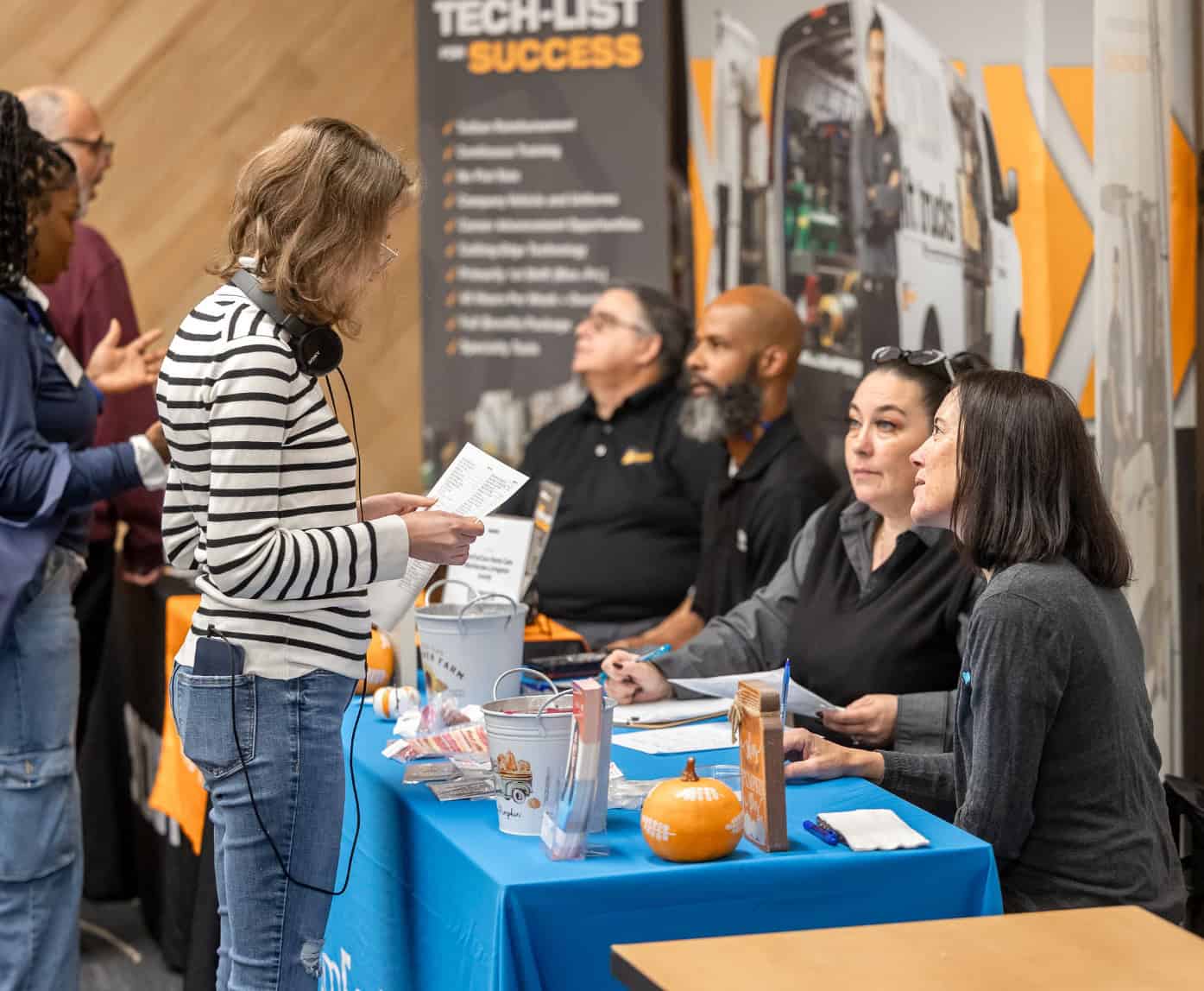
ANN ARBOR – Artificial intelligence is beginning to influence who gets hired as workers face growing uncertainty about their skills and career paths in a rapidly evolving economy.
AI Is Quietly Reshaping Hiring Decisions
Artificial intelligence is beginning to influence who gets hired — and many workers worry they may not be ready.
A new national survey from career platform MyPerfectResume found that 70 percent of workers questioned their career path over the past year, while more than half say they lack clarity about their long-term professional future.
The report describes the phenomenon as “career fog,” a growing sense of uncertainty about career direction and advancement in a rapidly changing workplace.
The survey also found 66 percent of workers say their careers feel stalled or on autopilot, highlighting widespread concern about long-term career prospects.
Behind that uncertainty may be a deeper shift in the labor market: the growing importance of AI skills in hiring decisions.
As companies adopt artificial intelligence to boost productivity and automate routine tasks, employers are increasingly looking for candidates who know how to work with AI-powered tools effectively.
Workers who understand how to integrate these technologies into their daily work may gain a significant advantage in hiring and promotion decisions.
Workers Feel Stuck Between Job Dissatisfaction and Economic Risk
The survey suggests many employees feel trapped in their current roles.
About 54 percent of respondents said they have considered leaving their employer, but many are hesitant to take that step.
Nearly 45 percent of workers said economic uncertainty is preventing them from switching jobs, reflecting widespread caution in a labor market shaped by inflation, layoffs in parts of the technology sector, and global economic uncertainty.
The shift represents a significant change from just a few years ago during the “Great Resignation,” when millions of Americans voluntarily left their jobs in search of better opportunities.
Today, many economists say the workforce has moved into what some analysts call the “Great Stay,” where workers remain in jobs even if they are dissatisfied because the economic outlook feels uncertain.
AI Job Skills Are Becoming a Requirement in Many Industries
Artificial intelligence is rapidly changing what skills employers value.
Across industries, AI-powered tools are helping companies automate tasks, analyze massive datasets, generate content, write code, and streamline operations.
Employees who understand how to use these tools can often complete work faster and more efficiently.
Recruiters increasingly report that candidates who demonstrate familiarity with AI tools stand out in hiring decisions.
In fields such as marketing, software development, finance, journalism, and engineering, workers who combine professional expertise with AI capabilities may gain a significant advantage in the job market.
Technology leaders say the shift is already underway.
“AI will not replace humans, but people who use AI will replace those who don’t,” said Andrew Ng, an artificial intelligence pioneer and founder of the online education platform Coursera.
Workers Fear Being Left Behind by Technology
The rapid pace of AI development is creating a sense of urgency across the workforce.
New AI tools are emerging at a remarkable rate, and companies are racing to integrate them into everyday business operations.
For many employees already managing demanding jobs, keeping up with these technological changes can feel overwhelming.
Workers often recognize they should be learning AI tools but may not know where to begin or which technologies will matter most in the future.
That uncertainty may contribute to the “career fog” described in the survey.
Employees who spent years developing traditional professional skills may worry those abilities could become less valuable as automation spreads across industries.
Employers Often Fail to Provide Clear Career Paths
The survey also found that many workers feel their employers are not helping them navigate the changing workplace.
Nearly 76 percent of respondents said their company does not provide a clear career path or advancement opportunities.
In many organizations, traditional corporate ladders have become less defined as companies adopt flatter management structures and reduce layers of middle management.
While these structures can improve efficiency, they can also leave employees uncertain about how to advance professionally.
Without clear guidance or training opportunities, workers may struggle to understand how to prepare for future roles — particularly as artificial intelligence continues transforming many professions.
Michigan Workers Face Major Industry Transformation
Workers in Michigan may feel these pressures particularly strongly as the state’s economy undergoes significant technological change.
Michigan’s automotive industry, a cornerstone of the state’s economy, is investing billions of dollars in electric vehicles, automation, and advanced manufacturing technologies.
Artificial intelligence is also becoming increasingly integrated into manufacturing operations, from predictive maintenance systems to AI-assisted robotics.
These technological shifts have the potential to create new opportunities but also require workers to adapt quickly by learning new digital and technical skills.
At the same time, Michigan is expanding its technology economy through investments in semiconductor manufacturing, data centers, and artificial intelligence research.
While these industries could generate new jobs, they may also increase demand for workers who possess advanced digital and AI-related skills.
Learn AI — Or Risk Being Left Behind
For many career experts, the message emerging from the transformation of the workforce is becoming increasingly clear.
Some analysts are beginning to frame the choice bluntly: learn artificial intelligence tools or risk being left behind.
Workers who integrate AI into their daily work can dramatically increase productivity and value to employers, while those who fail to adapt may find themselves at a disadvantage in an increasingly technology-driven economy.
Former world chess champion and AI researcher Garry Kasparov has expressed the shift in similar terms, noting that “AI will not replace humans, but humans with AI will replace humans without AI.”
A Workforce Searching for Direction
The survey’s findings highlight a workforce navigating one of the most significant technological transitions in decades.
Employees are balancing economic uncertainty, evolving corporate structures, and the accelerating impact of artificial intelligence on the workplace.
For many workers, that combination has created uncertainty about what their career paths should look like in the future.
As artificial intelligence continues reshaping industries, workers may increasingly face a simple challenge: adapt to new technologies or risk falling behind in a job market evolving faster than ever.