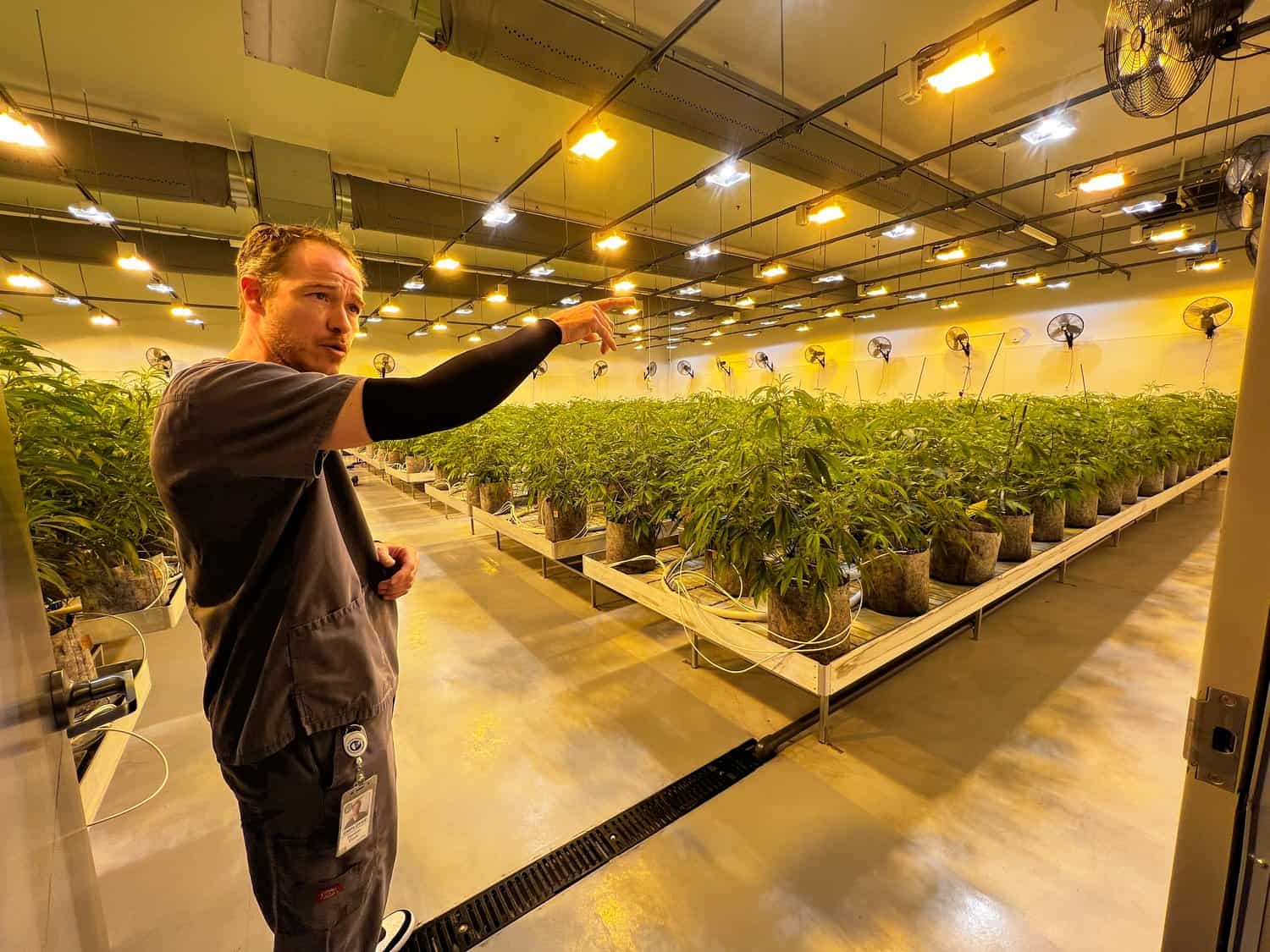
COLUMBUS – Ohio communities hosting recreational marijuana dispensaries are still waiting for their share of cannabis tax revenue — despite the state collecting tens of millions of dollars since adult-use sales began in September 2024.
So far, none of that money has reached local governments. That could change in December if the Ohio Senate returns and passes Senate Bill 56, clearing the way for Governor Mike DeWine’s signature.

Host Community Cannabis Fund
The legislation, which also updates recreational cannabis laws and regulates intoxicating hemp products, would give the state the authority it says it currently lacks to distribute funds from the Host Community Cannabis Fund.
Pete LuPiba, spokesperson for the Ohio Office of Budget and Management, emphasized that communities aren’t technically “owed” anything yet, even though the fund was a major feature of Issue 2 — the ballot initiative voters approved to legalize recreational cannabis.
“The authors of Issue 2 made no appropriations, nor is there any appropriation in current Ohio law; therefore, it is not actually accurate that a local government in the state is owed any specific amount,” LuPiba said.
He also pointed to a constitutional restriction: Ohio cannot withdraw money from its treasury without legal appropriation.
As of late October, the Host Community Cannabis Fund held $28.3 million, according to LuPiba.
Once SB 56 becomes law, funds will flow to communities in proportion to the tax revenue generated by their local dispensaries. For example, if one dispensary generated $10,000 in tax revenue, the city would receive 36% ($3,600) while the state retains 64% ($6,400) for its general fund.
Although this formula is set, the state has not yet calculated distribution amounts. LuPiba said officials will begin computing local shares once the appropriation becomes law.
Community Frustration Mounts
The delay has frustrated many cities in Southwest Ohio’s Miami Valley, which hosts nearly 20 dispensaries across:
-
Montgomery County (7)
-
Butler County (5)
-
Warren County (4)
-
Clark County (3)
-
Greene County (1)
In Monroe, which has four dispensaries straddling the Butler-Warren county line, officials expected cannabis excise revenues to already be flowing.
“It is disappointing that Monroe and other host communities have not received the cannabis excise tax revenues we were told to expect,” said City Manager Larry Lester. “Our city has four dispensaries operating responsibly, and those funds were intended to help support local services.”
In Oxford, which also has two dispensaries, City Manager Doug Elliott said the state has provided no estimates on what the city might receive.
“The only problem is, it doesn’t do us any good unless there’s an appropriation,” Elliott said. He added that Oxford plans to allocate its share to the police department.
Meanwhile, Dayton, which hosts five dispensaries, hasn’t yet designated where its share will go. City spokesperson Toni Bankston said funds will be folded into planning efforts determined by the city commission.
“We expect the revenue to be meaningful but modest relative to the city’s overall budget — likely in the hundreds of thousands of dollars, not millions,” she said.