ANN ARBOR — Americans are sending a mixed economic signal: they don’t trust the national economy, but they still believe in their own ability to navigate it.
That’s the central finding from a new study by Appinio, which reveals a widening gap between national pessimism and personal financial confidence. While 47% of Americans rate the U.S. economy as “poor,” nearly 44% remain cautiously optimistic about their own financial outlook over the next year.
The disconnect reflects what researchers describe as a “resilience mindset,” where households are adapting in real time—even as broader economic concerns intensify.
“Americans don’t necessarily trust the broader system to fix itself, but they haven’t lost faith in their own ability to adapt,” said Matt Ayers.
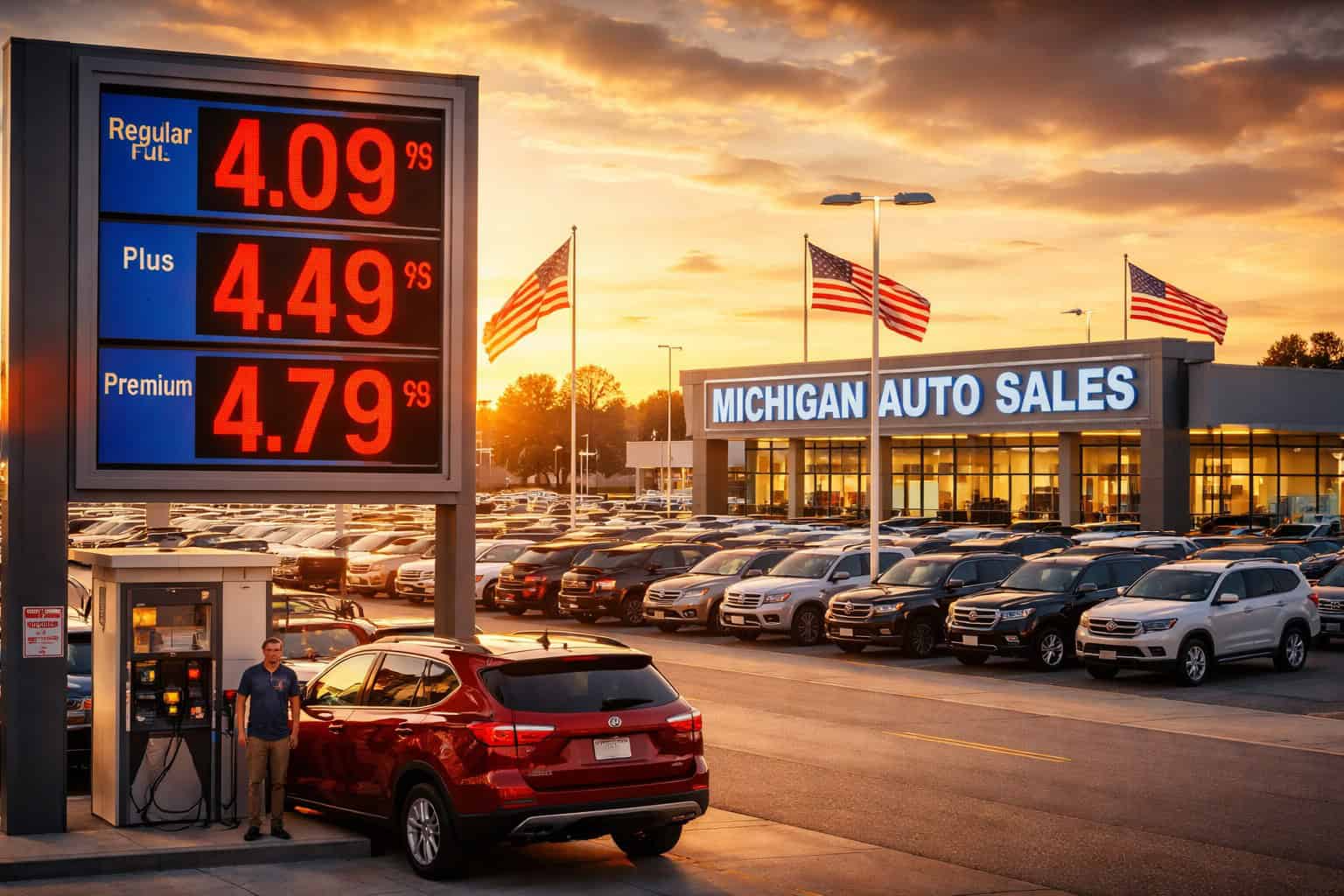
The $5 Gas Threshold That Could Change Everything
That personal optimism, however, may be tested by a clear tipping point: gasoline prices.
The study identifies $5 per gallon as the level at which two-thirds of Americans say they would significantly change their behavior—driving less, switching to public transportation, or staying home altogether.
For Michigan, where commuting by car is a necessity for most residents, that threshold carries added weight.
Regional data shows Midwestern consumers are already adjusting. Nearly 29% report driving less today, compared to 19% in the Northeast, where public transit is more accessible.
The report also identifies a “captive class”—roughly 10% to 13% of Americans who cannot reduce driving regardless of fuel costs due to job or geographic constraints.
Discretionary Spending Is Already Shrinking
As fuel and living costs rise, consumers are quietly reshaping their budgets—protecting essentials while cutting back on non-essential spending.
The Appinio data shows:
- 66% plan to reduce dining out
- 49% will cut travel and vacations
- 49% expect to spend less on clothing
That pattern is already being felt across key sectors of the economy.
Restaurants, bars, and travel businesses are typically the first to experience the impact of consumer pullbacks. Industry analysts say the shift begins with fewer visits and smaller spending per trip.
Consumers are also “trading down”—choosing cheaper options rather than eliminating spending entirely. That means fewer sit-down restaurant meals, more fast-food purchases, and increased grocery spending as households cook at home.
Bars and nightlife venues are often hit even harder. Alcohol spending is highly discretionary, and consumers can easily substitute a night out with lower-cost alternatives.
Travel tends to adjust rather than collapse. Families may shorten vacations, choose closer destinations, or delay trips altogether—especially if gas prices continue rising.
For Michigan’s tourism regions, including northern resort communities, that could translate into shorter stays and reduced per-visitor spending during peak seasons.
A Warning Sign for Lower-Income Households
While many consumers are still managing through budget adjustments, lower-income households are already under greater strain.
Among Americans earning under $35,000 annually, 39% report cutting back on groceries—a signal that financial pressure is moving beyond discretionary categories into essentials.
Economists view that shift as a key warning sign in the consumer cycle.
Energy Prices and Global Tensions Add Pressure
The study comes amid ongoing global uncertainty that continues to influence energy markets.
Tensions involving Iran, along with supply constraints and trade pressures, have contributed to volatile oil prices. At the same time, tariffs and supply chain disruptions are increasing costs across multiple sectors, including automobiles.
In Michigan, where the auto industry plays a central role, higher fuel prices could also influence vehicle purchasing behavior—potentially dampening demand for larger vehicles while accelerating interest in fuel-efficient and electric models.
Midterm Elections Could Turn on Economic Sentiment
With the 2026 United States midterm elections approaching, economic perception—not just reality—may shape voter behavior.
Historically, midterms often serve as a referendum on the national economy.
“In midterm elections, voters tend to evaluate the direction of the country more than their individual situation,” said Charles Ballard in prior public commentary.
That pattern has held in recent cycles, including the 2010 and 2022 elections, where economic dissatisfaction played a central role in outcomes.
Gas prices, in particular, could become a defining political issue.
“Fuel costs are one of the most visible economic signals consumers experience,” said Betsey Stevenson in national interviews. “They directly shape how people feel about the economy.”
If prices approach the $5 threshold heading into late summer and fall, the impact could extend beyond household budgets and into voting behavior—especially in car-dependent states like Michigan.
No More “Average” Consumer
One of the study’s key conclusions is that the idea of an “average” American consumer is rapidly disappearing.
Instead, spending decisions are increasingly shaped by individual circumstances—income level, geography, and job requirements—leading to sharply different financial strategies across households.
At the policy level, the Michigan Public Service Commission has acknowledged that energy affordability remains a growing concern as demand rises and infrastructure costs increase.
Americans may not trust the broader economy—but they still trust themselves.
For now, that confidence is holding.
But it is being sustained by careful trade-offs: cutting back on dining out, delaying travel, and adjusting daily habits to manage rising costs.
If fuel prices climb further or economic pressures intensify, those adjustments may not be enough.
And when consumer pullback moves from discretionary spending into essentials, both the economy—and the political landscape—could shift quickly.