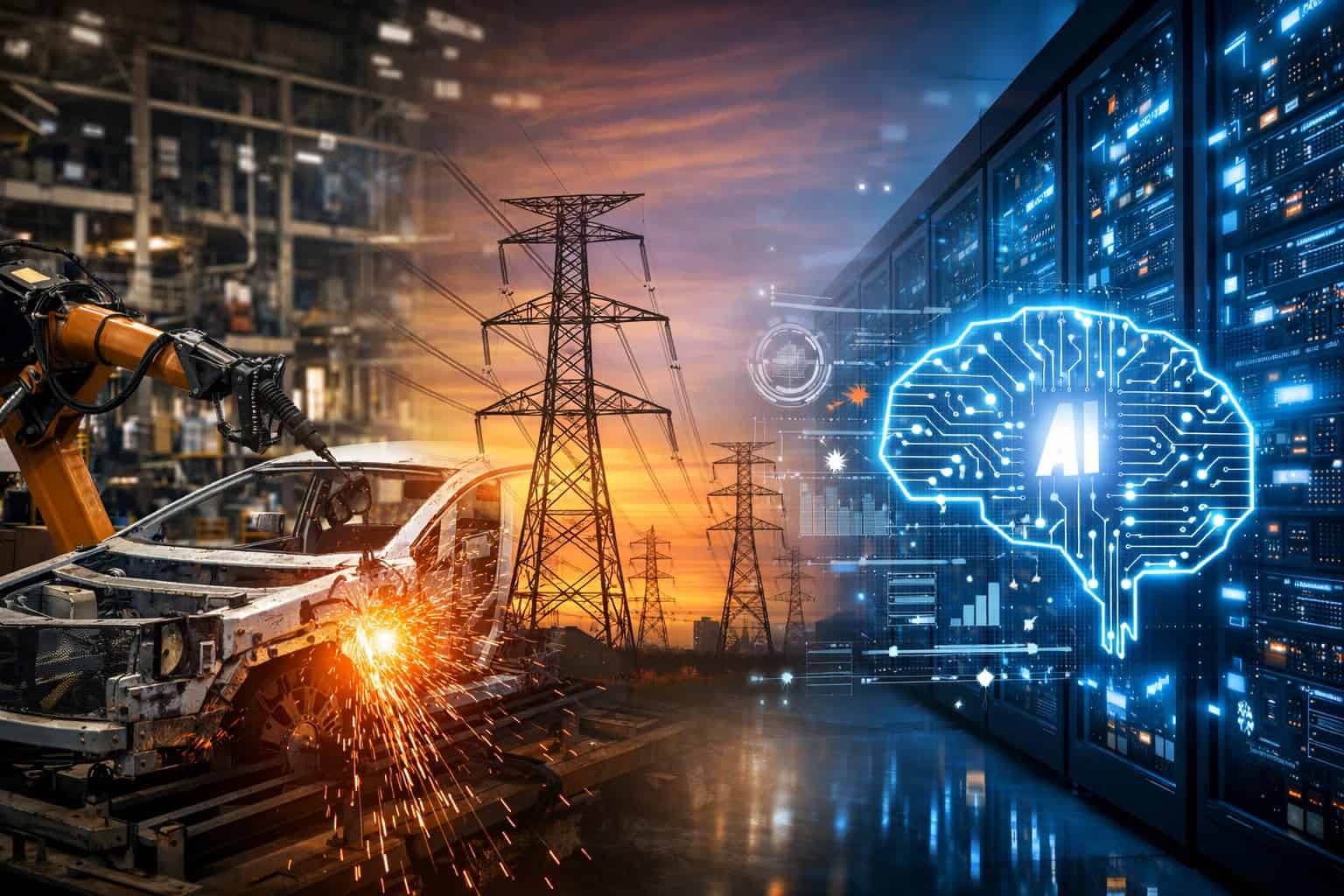
Companies in Michigan are already supplying critical materials, engineering expertise, and manufacturing technologies used to build the semiconductor chips powering the global artificial intelligence revolution.
Artificial Intelligence Is Driving a Massive Chip Investment Boom
DETROIT – Artificial intelligence is fueling one of the largest technology investment waves in decades.
Companies developing AI systems—from cloud computing giants to automakers—are spending billions of dollars on powerful semiconductor chips needed to train and run advanced machine-learning software.
Those chips power everything from AI chatbots and robotics to autonomous vehicles and data centers.
To meet surging demand, the United States is pouring billions into rebuilding its semiconductor manufacturing capacity.
The CHIPS and Science Act committed roughly $52 billion in federal incentives to expand domestic chip production and reduce reliance on overseas suppliers.
Since the law passed in 2022, semiconductor companies have announced more than $200 billion in new U.S. manufacturing investments, including massive chip fabrication plants in Arizona, Texas, and Ohio.
While Michigan may not host the largest semiconductor factories, the state is already connected to the rapidly expanding AI chip supply chain—and could capture a share of the jobs and investment tied to the boom.
How Michigan Fits Into the $200 Billion AI Chip Boom
Michigan companies participate in several stages of the semiconductor supply chain:
Raw Materials:
Hemlock Semiconductor produces hyper-pure polysilicon used to manufacture silicon wafers.Manufacturing Equipment:
KLA Corporation develops inspection tools used in semiconductor fabrication plants.Industrial Automation:
Michigan manufacturers produce robotics and precision equipment used in advanced manufacturing environments.End Users:
Automakers including General Motors and Ford Motor Company rely heavily on semiconductor chips for electric vehicles, safety systems, and AI software.Together, these industries position Michigan inside the global semiconductor ecosystem powering artificial intelligence.
Hemlock Semiconductor Anchors Michigan’s Role
One of the most important links between Michigan and the global semiconductor industry is Hemlock Semiconductor.
The company operates a large manufacturing complex near Saginaw that produces hyper-pure polysilicon, a critical raw material used to manufacture silicon wafers.
Those wafers form the foundation for semiconductor chips used in AI processors, smartphones, electric vehicles, and cloud computing infrastructure.
Because semiconductor chips must be manufactured with extraordinary precision, the silicon used to produce them must be refined to extremely high purity levels. Only a handful of companies worldwide can produce semiconductor-grade polysilicon.
Hemlock Semiconductor recently secured up to $325 million in federal CHIPS Act funding to expand its Michigan operations.
The project is expected to create approximately 180 new manufacturing jobs and more than 1,000 construction jobs while strengthening the domestic semiconductor supply chain.
For Michigan, the expansion reinforces the state’s role as an upstream supplier to one of the fastest-growing sectors of the global technology economy.
Michigan Engineers Help Build the Machines That Make Chips
Michigan’s semiconductor connections extend beyond raw materials.
Engineers in Ann Arbor are helping develop the highly specialized equipment used inside semiconductor fabrication plants.
One example is KLA Corporation, a global leader in semiconductor inspection and measurement systems.
KLA develops sophisticated tools that scan silicon wafers during production to detect microscopic defects.
Modern semiconductor chips contain billions of tiny transistors packed onto extremely small surfaces. Even a tiny flaw can ruin a chip.
Inspection equipment like the systems designed by KLA is essential for maintaining quality and yield inside semiconductor manufacturing plants around the world.
That means engineers working in Michigan contribute directly to the technology used to produce chips powering artificial intelligence systems globally.
The Automotive Industry Is Driving Semiconductor Demand
Michigan’s historic role as the center of the U.S. auto industry also strengthens its connection to the semiconductor economy.
Modern vehicles rely heavily on semiconductor chips to control everything from engine systems and battery management to navigation, safety sensors, and entertainment systems.
Electric vehicles and autonomous driving technologies require even more computing power.
Automakers such as General Motors and Ford Motor Company are investing billions of dollars in vehicle software, artificial intelligence, and advanced electronics.
During the COVID-19 pandemic, semiconductor shortages forced several auto plants to temporarily halt production, costing the global automotive industry billions of dollars in lost output.
That disruption highlighted how critical semiconductor supply chains have become to Michigan’s manufacturing economy.
Billions in Semiconductor Investment Could Create Jobs Across the Midwest
The economic stakes surrounding semiconductor production are enormous.
Industry analysts estimate that the expansion of semiconductor manufacturing in the United States could support more than 500,000 American jobs, including roughly 70,000 direct semiconductor jobs, 120,000 construction jobs, and hundreds of thousands of additional positions across supplier networks.
Many of those supply-chain opportunities align with Michigan’s strengths in advanced manufacturing.
The state already hosts companies specializing in robotics, precision machining, industrial automation, and materials science—technologies widely used in semiconductor production.
Universities such as University of Michigan and Michigan State University also conduct research in microelectronics, advanced materials, and semiconductor design.
As semiconductor fabrication plants expand across the Midwest—particularly the massive Intel complex under construction in Ohio—Michigan companies could increasingly supply equipment, engineering expertise, and manufacturing components.
Michigan Could Capture a Share of the AI Economy
Artificial intelligence is expected to reshape industries around the world in the coming decades.
The semiconductor chips powering those systems will remain at the center of that transformation.
While Michigan may not host the largest chip fabrication plants, the state already participates in several stages of the semiconductor supply chain—from raw materials and engineering to advanced manufacturing capabilities.
For Michigan’s economy, the AI chip boom represents more than a technology story.
It represents the potential for new investment, high-tech manufacturing jobs, and supply-chain opportunities tied to one of the fastest-growing industries in the global economy.
As billions of dollars flow into semiconductor manufacturing across the United States, Michigan companies and engineers may find themselves playing an increasingly important role in powering the technologies behind artificial intelligence.