SALINE TOWNSHIP — A proposed hyperscale data center tied to OpenAI has reignited controversy in Washtenaw County after township officials acknowledged a documentation mistake that added to public confusion over how the project was approved.
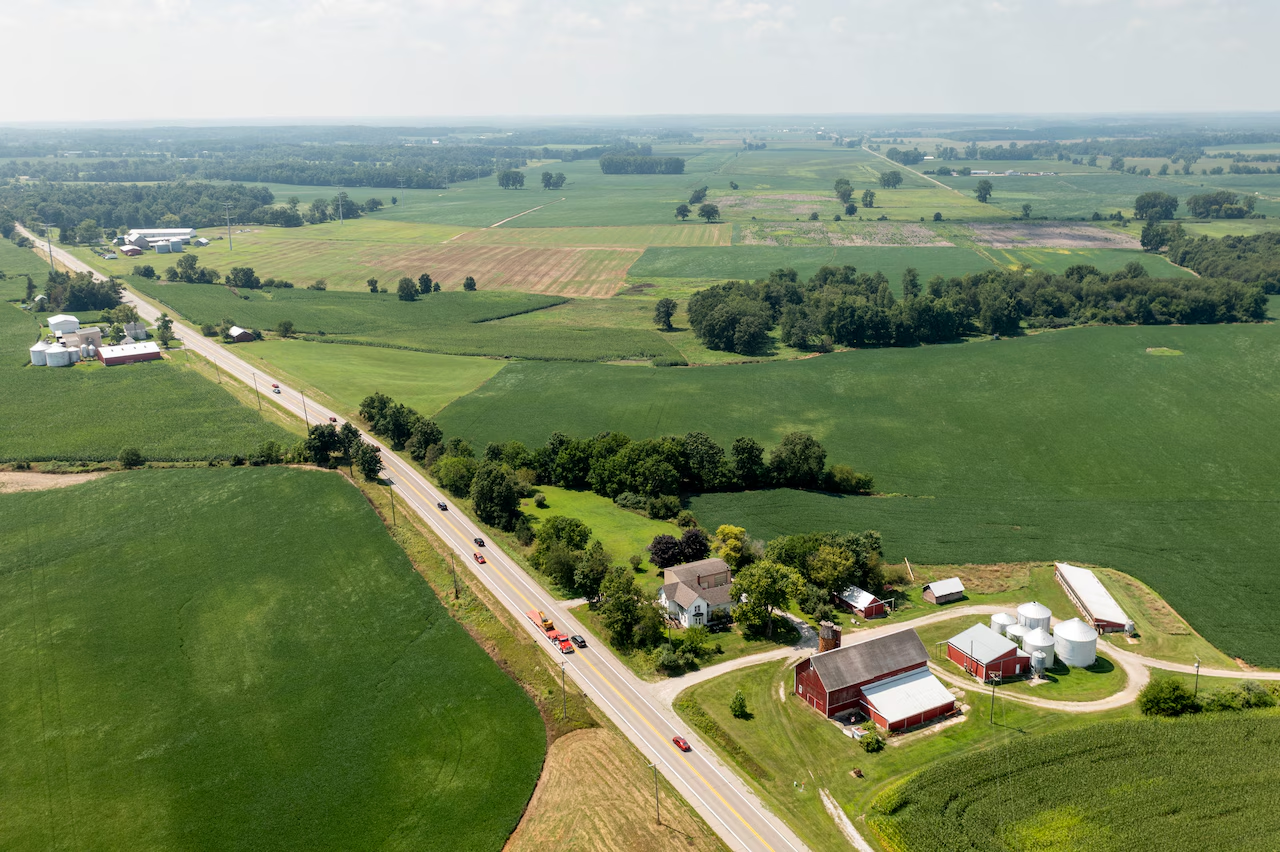
The development — part of a broader national push to build massive computing infrastructure for artificial intelligence — is planned for farmland in Saline Township, south of Ann Arbor. While supporters frame it as a once-in-a-generation economic investment, critics argue the approval process lacked transparency and could saddle residents with higher electric costs.
What Is Being Proposed
The project calls for a multi-building, hyperscale data center campus occupying hundreds of acres. Developments of this size typically consume enormous amounts of electricity, drawing power loads comparable to those of small cities.
For Michigan, the Saline proposal is among the largest data center investments ever discussed — placing it at the center of a growing debate over how aggressively the state should court AI infrastructure.
The “Mistake” That Sparked New Outrage
According to township officials, meeting minutes were drafted incorrectly, creating the impression that the township board approved a settlement related to the data center outside of public view.
That perception quickly spread among residents already skeptical of the project. Township leaders later said the vote did occur in an open meeting, and that the language in the minutes was an error — not an attempt to hide the decision.
For opponents, the explanation did little to calm tensions.
How the Project Advanced Despite Initial Rejection
The controversy traces back to last fall, when township officials initially rejected a rezoning request needed to allow a large-scale industrial data center on agricultural land.
Developers responded by filing suit, arguing the denial amounted to exclusionary zoning under Michigan law. Facing the risk of prolonged litigation and mounting legal costs, the township ultimately entered into a settlement that allowed the project to move forward under negotiated conditions.
That settlement — not the rezoning vote itself — is now at the heart of legal and political scrutiny.
Why Residents Are Concerned
Opposition in Saline Township reflects concerns being raised across Michigan as data center proposals multiply:
Power Demand and Electric Rates
AI data centers require extraordinary amounts of electricity. Critics worry new grid investments needed to support the facility could drive up rates for residential and small-business customers.
Loss of Farmland and Community Character
Residents say the project would permanently alter the township’s rural identity, replacing productive farmland with industrial infrastructure.
Transparency and Local Control
The admitted documentation error has amplified distrust in the approval process, fueling claims that decisions were rushed and poorly communicated.
Supporters Point to Economic Impact
State leaders and project supporters counter that the Saline data center represents a major win for Michigan’s economy.
They point to:
-
Billions of dollars in private investment
-
Thousands of construction jobs during build-out
-
Long-term, high-skill technology and operations positions
-
Community benefit commitments tied to infrastructure and emergency services
Gov. Gretchen Whitmer has repeatedly emphasized that advanced computing infrastructure is essential if Michigan wants to compete for next-generation technology investment.
Regulatory Review Still Ahead
Despite local approvals, the project is not a done deal.
Key elements remain under review, including power supply arrangements overseen by the Michigan Public Service Commission. Those decisions could determine whether the data center proceeds on its current timeline — or at all.
Legal challenges tied to Michigan’s Open Meetings Act could also slow or complicate the project.
Why This Matters Beyond Saline
The Saline Township fight is becoming a test case for Michigan.
As AI-driven data centers proliferate, communities across the state are grappling with the same questions:
-
Who pays for grid upgrades?
-
How much transparency is enough?
-
Should farmland be traded for digital infrastructure?
-
And how do local governments balance economic development with resident concerns?
For now, Saline sits at the center of that debate — with residents, developers and regulators all watching what happens next.